Off-Page SEO 2026- Have you ever wondered why some websites rank on the first page of search results even with average content, while others with excellent, well-written articles struggle to get visibility? The real difference is Off-Page SEO 2026.
Today, publishing content alone is not enough. Search engines, especially Google, evaluate your reputation across the internet. They analyze who is mentioning your brand, who is linking to you, and how much authority and trust your website has built.
In simple terms:
Your content shows your knowledge.
Off-Page SEO proves your credibility.
In this advanced guide, you will learn modern, practical, and future-focused Off-Page SEO strategies that not only improve your rankings but also help you build a trusted and authoritative brand.
Section 1: What is Off-Page SEO (Modern Definition – 2026 Reality)
In modern SEO, Off-Page SEO is no longer limited to building backlinks. It is a complete process of building your website’s reputation and authority across the web.
Modern Definition (Advanced Explanation)
Off-Page SEO is the process of improving your website’s authority, trust, and reputation through external signals that exist outside your website.
These signals are not created directly on your website, but they exist across the internet through other websites, platforms, and users.
These signals include:
• Backlinks
• Brand mentions
• Digital PR coverage
• Author credibility
• Social media presence
• Business listings
Real-World Example
If multiple trusted websites reference your content, search engines interpret this as a strong signal that your content is valuable and trustworthy.
This works exactly like real life.
When respected professionals recommend you, people trust you more.
Simple Understanding
Your website is your business office.
Off-Page SEO is your public reputation.
The stronger your reputation, the higher your chances of ranking.
Section 2: Why Off-Page SEO Matters More Than Ever in 2026
Millions of articles are published every single day. Most topics already have hundreds or even thousands of similar articles.
So the key question is:
How do search engines decide which website deserves to rank higher?
The answer is:
Authority and trust.
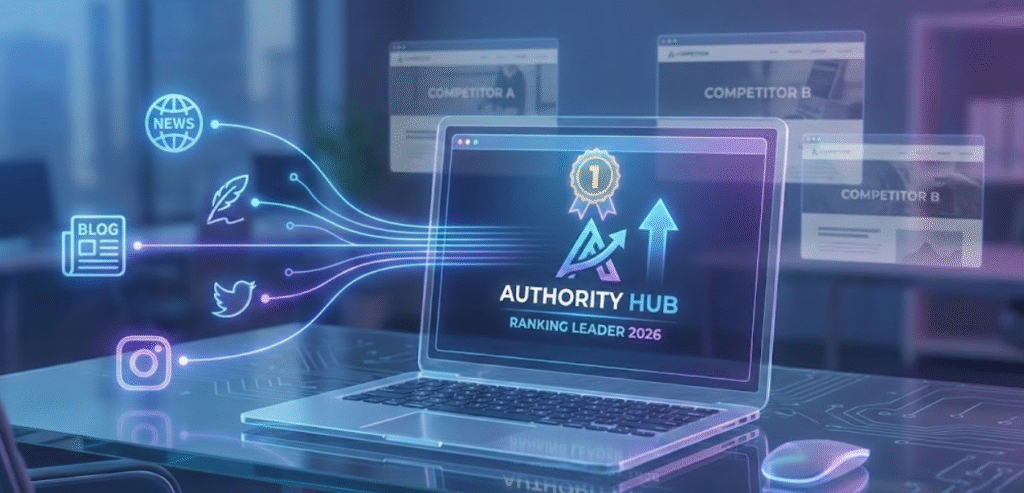
Search Engine Priority
Search engines aim to provide users with the most reliable and trustworthy information.
They prefer:
Trusted websites
Authoritative websites
Recognized websites
Critical Ranking Reality
If two articles have similar content quality, the website with stronger Off-Page SEO will rank higher.
Not because the content is longer.
But because the website has earned more trust.
The Psychological Logic Behind It
Search engines work similarly to human judgment.
If many trusted sources recommend someone, that person is naturally seen as an expert.
The same principle applies to websites.
Section 3: Backlinks in 2026 – Quality Over Quantity Revolution
Backlinks are still one of the core foundations of Off-Page SEO. However, the way they are evaluated has completely changed.
Old SEO vs Modern SEO
Before:
More backlinks meant higher rankings.
Now:
Better backlinks mean higher rankings.
Why Quality Matters More
A single backlink from a trusted website can be more powerful than hundreds of low-quality backlinks.
Because search engines evaluate credibility, context, and relevance.
Read Also:- On-Page SEO 2026: Latest Strategies to Rank Higher Fast (Advanced, Practical & Human-Focused Guide)
Search Engines Evaluate These Key Factors
1. Website Authority
How trustworthy and credible the linking website is.
2. Content Relevance
Whether the linking content is related to your topic.
3. Link Placement
Whether the link appears naturally within the content.
4. Natural Linking Pattern
Whether the link was earned naturally or artificially created.
Real-World Example
If you receive a backlink from a well-known SEO blog, your authority increases significantly.
But links from unknown or low-quality websites have minimal impact.
Simple Analogy
Backlinks are like professional recommendations.
A recommendation from a respected expert carries real value.
A recommendation from an unknown source carries less influence.
Section 4: Understanding Link Authority (Link Equity Concept Explained)
Link authority, also known as Link Equity, is the mechanism through which authority flows from one website to another.
What is Link Equity
When one website links to another, it passes a portion of its credibility and authority.

This helps search engines trust the linked website more.
How Authority Transfer Works
Trusted website → Links to your website → Your authority increases
This improves your overall SEO strength.
Important Reality
Not all backlinks pass the same value.
High-value backlinks come from:
• Trusted websites
• Relevant websites
• Active websites
• Websites with real traffic
Low-value backlinks come from:
• Spam websites
• Irrelevant niche websites
• Inactive websites
Why This Matters
Strong backlinks improve:
Search rankings
Website trust
Indexing speed
Domain authority
Section 5: Topical Relevance – The Most Underrated Ranking Factor
In 2026, topical relevance has become one of the most powerful ranking factors.
Search engines do not evaluate authority alone.
They also evaluate relevance.
What is Topical Relevance
Topical relevance means the linking website and your website share a similar subject or niche.
Example
If you run an SEO website:
A link from another SEO website is extremely powerful.
A link from an unrelated niche like food or fashion has less impact.
Because the relevance is weaker.
Why Search Engines Prefer Relevant Links
Because it follows logical trust patterns.
Experts trust experts.
Professionals trust professionals.
Similarly, niche-relevant websites trust each other.
Powerful Insight Most Beginners Miss
Ten relevant backlinks are often more powerful than one hundred irrelevant backlinks.
Relevance builds real authority.
Not random links.
Final Thought of These Sections
The real goal of Off-Page SEO 2026 is not just building backlinks.
The real goal is:
Building authority
Building trust
Building reputation
When your website earns recognition across the internet, search engines naturally reward it with higher rankings.
In the next sections, advanced strategies like Digital PR, Brand Authority Building, and Natural Link Acquisition play a critical role.
Read Also:- Top SEO Strategies That Will Work in 2026 – Advanced Guide
Section 6: Brand Mentions Without Links (Implied Authority)
One of the most overlooked aspects of Off-Page SEO 2026 is that your website can build authority even without receiving a direct backlink. Many website owners assume that only clickable links pass value, but modern search engines are far more intelligent. They also analyze brand mentions, even when no link is attached.
A brand mention happens when your website name, business name, or author name is referenced on another platform, such as a blog, forum, online magazine, or news website. Even if users cannot click on it, search engines still recognize that your brand is being discussed.
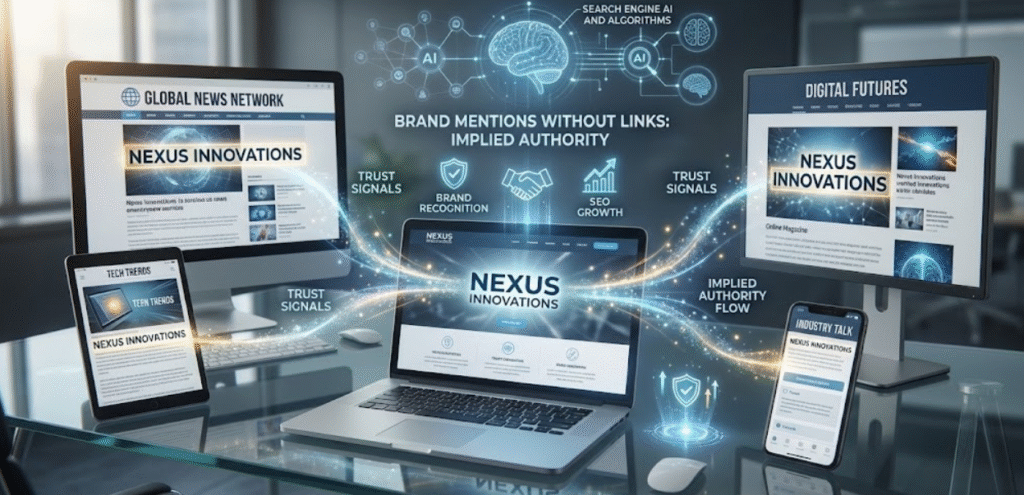
These mentions act as implied authority signals. They indicate that your brand exists, is active, and is part of real conversations happening across the internet.
For example, if a popular marketing blog mentions your company as a useful resource, search engines interpret that as a positive trust signal. Over time, consistent brand mentions strengthen your website’s credibility.
This process works similarly to real-world reputation. When people talk about your brand frequently, your recognition grows. Search engines mirror this behavior by increasing their trust in your website.
In 2026, building brand mentions through valuable content, expert contributions, and online participation has become a powerful Off-Page SEO strategy — even without traditional backlinks.
Section 7: Digital PR – The Future of Link Building
Traditional link building often involved manually requesting links from other websites. While this method still exists, it is gradually being replaced by a more advanced and sustainable approach known as Digital PR.
Digital PR focuses on earning links naturally rather than asking for them.
The core idea is simple: create content so valuable and unique that journalists, bloggers, and publishers want to reference it.
This can include:
• Original research reports
• Industry data and statistics
• Unique expert insights
• Case studies
• Trend analysis
When your content provides new information, it becomes a source.
Writers and journalists naturally cite your content when creating their own articles. This results in high-quality, editorial backlinks, which are among the most powerful links in SEO.
Digital PR provides two major benefits at the same time:
First, it builds strong backlinks from trusted websites.
Second, it increases your brand recognition across your industry.
This makes Digital PR one of the most effective Off-Page SEO strategies for long-term authority growth.
Section 8: Entity Building – Becoming a Recognized Brand
Search engines today do not just see your website as a collection of pages. They see it as an entity, which means a distinct and recognized identity.
An entity can be a business, a brand, or an individual.
The stronger your entity signals are, the easier it becomes for search engines to trust you.
One of the best ways to build your entity presence is by creating profiles on trusted platforms such as:
• LinkedIn
• Medium
These platforms help confirm that your brand exists beyond your website.
When your brand information appears consistently across multiple trusted platforms, search engines gain confidence in your authenticity.
Entity building also helps connect your website with your brand name, author name, and industry.
Over time, this strengthens your overall authority and improves your ability to rank.
Section 9: Link Velocity – The Natural Growth Pattern
Link velocity refers to the rate at which your website gains new backlinks over time.
Search engines carefully monitor this pattern to determine whether your growth appears natural or artificial.
Naturally growing websites earn backlinks gradually as more people discover and reference their content.

However, an unnatural pattern — such as gaining hundreds of links overnight — can appear suspicious.
This may signal manipulation rather than genuine authority.
Search engines prefer websites that show consistent and organic growth.
Slow and steady link growth indicates real popularity and long-term credibility.
Building backlinks gradually also creates a stronger and more stable SEO foundation.
In contrast, sudden spikes often result in unstable rankings.
Sustainable growth always outperforms artificial acceleration.
Section 10: Contextual Links vs Profile Links
Not all backlinks carry the same level of value. One of the most important differences is between contextual links and profile links.
Contextual links are links that appear naturally within the main content of an article.

For example, if a blog discusses SEO strategies and references your guide as a helpful resource, the link appears within meaningful content.
These links are highly valuable because they exist within relevant context.
Read Also:- SEO in 2026: A Practical Framework to Build Traffic, Trust & Topical Authority
They signal genuine recommendation.
On the other hand, profile links appear in author bios, forum profiles, or directory listings.
While they still have value, they are generally weaker compared to contextual links.
Search engines assign more trust to links that are surrounded by relevant, meaningful content.
Context strengthens credibility.
This is why contextual backlinks are considered the gold standard in Off-Page SEO.
Section 11: Anchor Text – Helping Search Engines Understand Your Content
Anchor text is the clickable text used in a hyperlink. It plays an important role in helping search engines understand the topic of the linked page.
For example:
An anchor text like:
Advanced SEO strategies guide
clearly indicates the topic of the destination page.
In contrast, generic anchor text such as:
Click here
provides no useful context.
Descriptive and relevant anchor text improves clarity and strengthens ranking signals.
However, balance is essential.
Using the exact same keyword repeatedly as anchor text can appear unnatural.
Search engines prefer natural variation.
A healthy anchor text profile includes:
• Brand name anchors
• Partial keyword anchors
• Natural phrases
• Generic anchors
This creates a natural and trustworthy link profile.
Section 12: Deep Page Link Building Strategy
One of the most common mistakes beginners make is building backlinks only to their homepage.
While homepage links are useful, advanced SEO focuses on building links to inner pages.
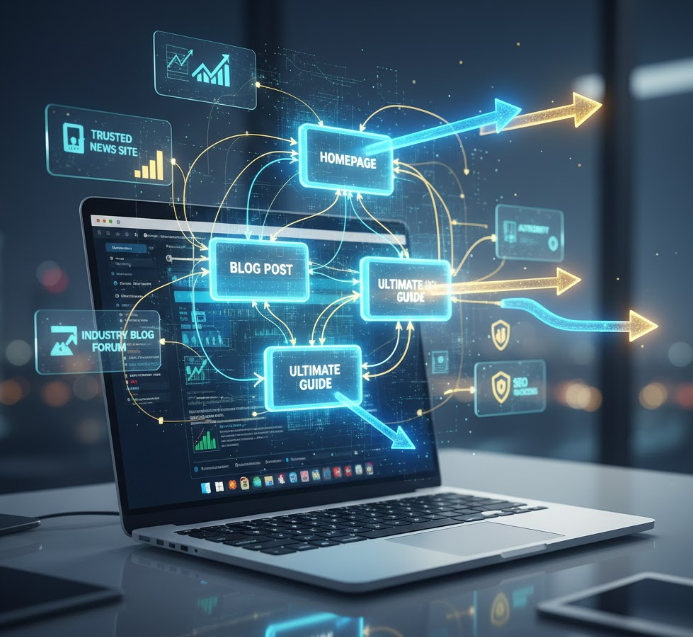
Inner pages often contain specific, detailed information.
These pages target focused keywords and can rank faster.
When inner pages gain backlinks, their authority increases.
This authority then spreads across your entire website through internal linking.
This strengthens your domain as a whole.
Deep page link building also helps multiple pages rank simultaneously.
This increases your overall organic traffic.
Section 13: Authority Funnel Strategy
The Authority Funnel Strategy is a structured method of transferring authority to your most important pages.
Instead of building links directly to sales or service pages, you first create valuable informational content.
This informational content attracts backlinks naturally.
Then, through internal linking, you connect that content to your key business pages.
This passes authority in a natural and safe way.
This approach provides two advantages:
It builds trust with users.
It strengthens your business pages without aggressive link building.
This strategy aligns with modern search engine expectations.
It focuses on value first, promotion second.
Section 14: Author Authority – The Human Trust Factor
Search engines no longer evaluate websites alone.
They also evaluate the people behind the content.
This is known as author authority.
When content is created by a real expert with proven knowledge, it builds stronger trust signals.
Creating a detailed author profile helps establish credibility.
A strong author profile includes:
• Real name
• Professional experience
• Subject expertise
• Consistent publishing
When search engines recognize the author as a reliable source, the content gains more trust.
This improves ranking potential.
Human trust strengthens algorithmic trust.
In 2026, building personal authority is as important as building website authority.
Read Also:_Best Free SEO Tools in the USA 2026: Keyword Research, Site Audit & Website Ranking
Section 15: Social Media’s Indirect Impact on Off-Page SEO
Social media does not directly increase rankings, but it plays an important indirect role in Off-Page SEO.
Social platforms increase your content’s visibility.
When more people see your content, more people may reference it.
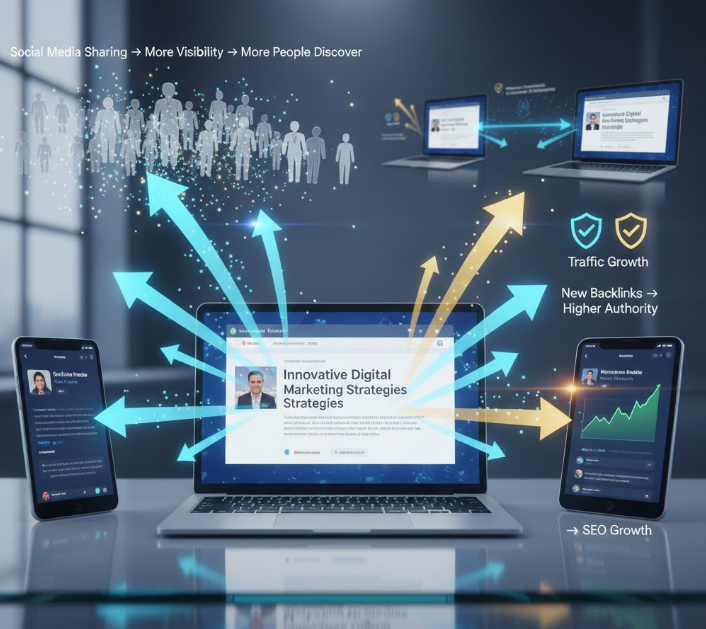
This creates new linking opportunities.
Platforms such as:
• YouTube
• X
help distribute your content to wider audiences.
This exposure increases brand awareness.
It also increases the chances of earning backlinks.
In simple terms:
Social media amplifies your reach.
Increased reach leads to increased authority.
And increased authority leads to stronger SEO performance.
These strategies represent the modern foundation of Off-Page SEO in 2026 — where authority, trust, brand recognition, and human credibility play a central role in rankings.
Section 16: Link Placement – Position Matters
Link placement directly affects how much SEO value your backlink provides. When your link appears naturally inside the main content, search engines treat it as a genuine recommendation because it supports the topic being discussed. This type of placement builds stronger trust and authority. However, links placed in less visible areas like footers or sidebars usually carry less impact because they are not part of meaningful content. In modern Off-Page SEO, contextual placement improves both credibility and ranking strength.
Key Points:
- Contextual links inside content pass the highest authority
- Footer and sidebar links provide lower SEO value
- Relevant placement improves trust and ranking power
Section 17: Creating Linkable Assets
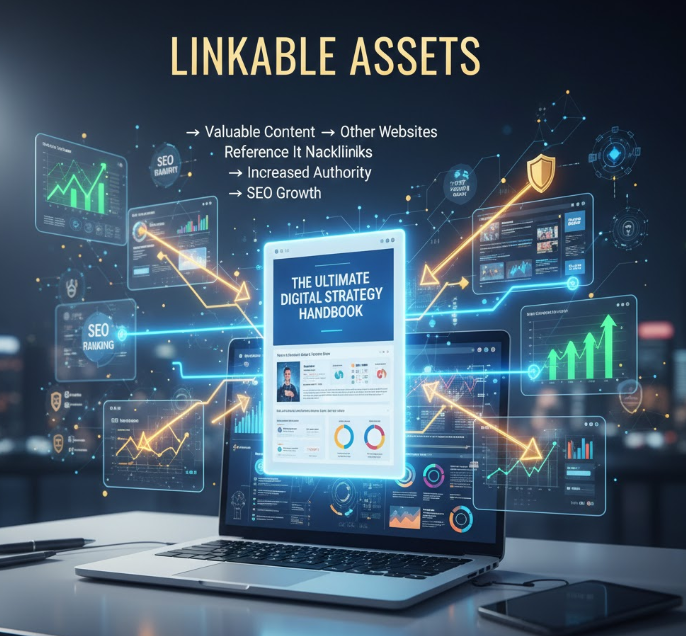
Linkable assets are pieces of content created specifically to attract backlinks naturally. When your content offers deep knowledge, solves problems, or presents unique insights, other websites reference it as a source. This builds authority without asking for links. Over time, strong linkable assets continue generating backlinks and help establish your website as an industry resource.
Key Points:
- Valuable content attracts backlinks naturally
- Guides, research, and tutorials work best
- Linkable assets build long-term authority
Section 18: Media and Journalist Link Opportunities
Media mentions are powerful because they come from highly trusted sources. Journalists often search for expert opinions and reliable information when writing articles. If your content provides useful insights, they may mention your website. These mentions improve your reputation and increase search engine trust. Media backlinks also strengthen your brand recognition.
Key Points:
- Media links provide very high authority
- Expert insights increase mention opportunities
- Journalist backlinks improve credibility
Section 19: Competitor Backlink Analysis Strategy
Competitor backlink analysis helps you find proven link opportunities. By studying competitor backlinks, you can identify websites already linking to similar content. Tools like Ahrefs and SEMrush help you discover these sources. This strategy improves efficiency and helps you build strong backlinks faster.
Key Points:
- Competitors reveal proven link sources
- SEO tools help analyze backlink profiles
- This strategy saves time and improves results
Section 20: Trust Signals – The Foundation of Rankings
Trust signals help search engines evaluate your website’s credibility. When your website shows strong brand presence, secure structure, and consistent reputation, it becomes easier to rank. Trust improves search engine confidence and increases visibility. Without trust signals, ranking becomes much harder even with good content.
Key Points:
- Trust improves ranking potential
- Brand reputation strengthens authority
- Credible websites rank faster
Section 21: Link Quality Checklist
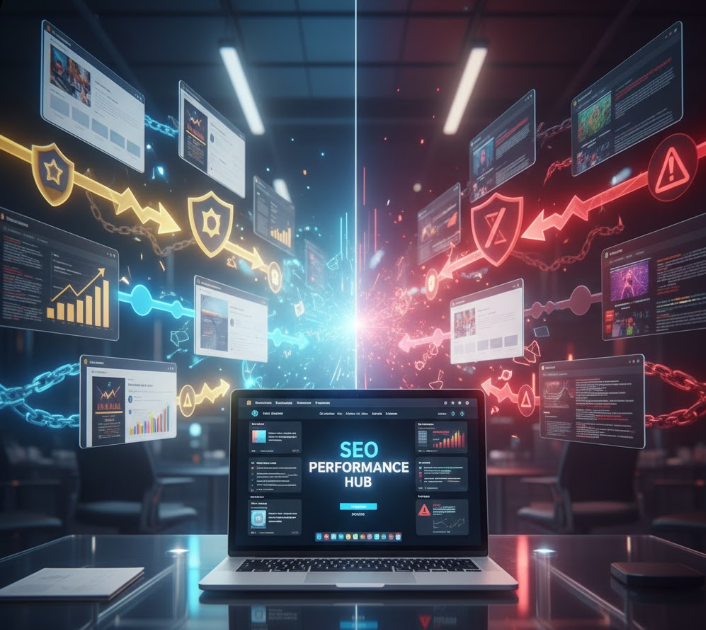
Link quality is more important than link quantity. Backlinks from relevant and trusted websites provide strong authority. However, low-quality backlinks from spam or irrelevant websites can harm your SEO. Focusing on quality helps build a safe and powerful link profile.
Key Points:
- Relevant backlinks provide strong value
- Trusted websites improve authority
- Avoid spam and low-quality links
Section 22: Modern Link Building Methods
Modern link building focuses on earning links naturally through value. Strategies such as guest posting, digital PR, and content promotion help build authority. These methods work because they focus on providing useful content instead of manipulating rankings.
Key Points:
- Guest posting builds authority
- Digital PR earns strong backlinks
- Content promotion increases link opportunities
Section 23: Common Off-Page SEO Mistakes
Many people damage their SEO by using wrong link-building methods. Buying backlinks, creating unnatural patterns, and using repetitive anchor text reduce trust. These mistakes make your link profile look artificial. Avoiding these practices protects your rankings.
Key Points:
- Avoid buying spam backlinks
- Do not create unnatural link spikes
- Maintain natural link patterns
Section 24: Authority Growth Cycle (Long-Term Success Model)
SEO authority grows through a continuous process. Valuable content attracts backlinks, which increase authority and rankings. Higher rankings bring more visibility, leading to more backlinks. This cycle continues and strengthens your website over time.
Key Points:
- Valuable content attracts links
- Backlinks increase authority
- Authority improves rankings
Section 25: The Future of Off-Page SEO
Off-Page SEO is moving toward brand authority and trust. Search engines now focus on real expertise and reputation. Websites that build genuine authority will achieve better rankings. The future belongs to trusted brands.
Key Points:
- Brand authority is becoming essential
- Trust signals influence rankings
- Reputation drives long-term SEO success
Final Conclusion
Off-Page SEO is about earning trust, not manipulating rankings. When your content provides value, people naturally mention and recommend it. These mentions increase authority and improve rankings. Long-term SEO success comes from helping users and building credibility.
Key Points:
- Trust is the core of SEO
- Authority grows through value
- Helping users improves rankings