Customer Value Journey (5A Framework) : In today’s digital era, marketing is not limited to just selling products, but it has become a process of building a long-term relationship with customers in a business. If you want to grow your business rapidly, then you need to deeply understand how a normal visitor gradually becomes your business’s loyal customer and then a strong brand promoter.
To explain this concept, Customer Value Journey (CVJ) and the 5A Framework are used. It is a business model that explains the entire journey of a customer step-by-step from awareness to advocacy.
In this article, we will understand the 5A Framework in simple language and learn how you can implement it in your business or digital marketing strategy.
What is Customer Value Journey
Let me tell you that Customer Value Journey is a structured process that explains how a normal person, who does not know anything about your brand, gradually connects with your brand and then converts into your loyal customer.
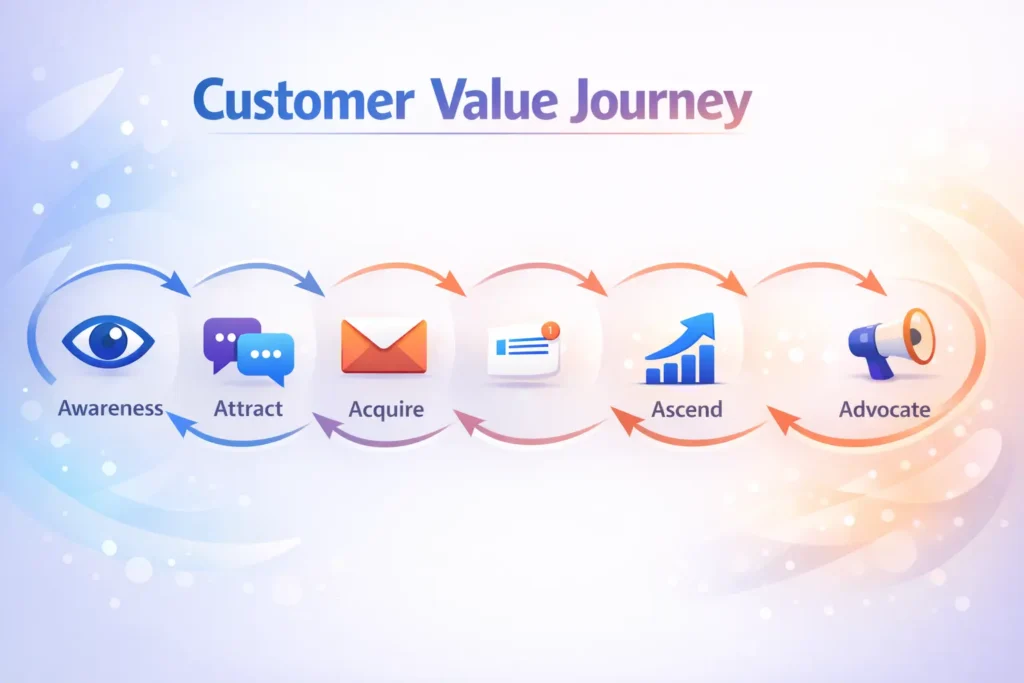
To understand this entire process, we need to understand multiple stages in this journey, where at every step the customer’s behavior and interaction change. In the beginning, they just hear about your brand, then they take interest, after that they make a purchase, and in the end they even recommend your brand to others.
In simple words:
Customer Value Journey = The complete process from Stranger to Loyal Customer
Its Importance in Today’s Digital Marketing
Today’s customer has become much smarter and more informed than before. They do not make any decision without research. Therefore, if you try to make a sale just by showing an ad once, it is very difficult to achieve long-term success.
Customer Value Journey helps you understand:
- which stage the customer is in
- what strategy should be used to move them forward
- and how they can be converted into a long-term customer
CVJ is important in digital marketing because it saves you from doing random marketing and gives you a proper direction. It shifts your focus from just sales to relationship building, which is the most important thing today.
Why 5A Framework is Important
To make Customer Value Journey easier to understand, the 5A Framework is used. This framework divides the entire journey into 5 simple stages — Awareness, Attract, Acquire, Ascend, and Advocate.
With the help of this framework, you can:
- create a different strategy for every stage of your business
- understand customer needs more effectively
- and give the right direction to your marketing efforts
The most important thing is that the 5A Framework does not only focus on bringing new customers, but also focuses on making existing customers loyal and turning them into brand promoters.
This is why in today’s modern marketing world, the 5A Framework is considered a powerful and practical approach.
How Customer Journey Evolves
Now let’s understand how the customer journey evolves. Customer journey is a step-by-step process, but it is not static — it keeps evolving over time.
In the beginning:
- A customer just hears about your brand
Then gradually:
- They take interest in your brand
- Then the same customer consumes your content properly
- By doing this, the customer develops trust
- And then makes a purchase decision
After that:
If the customer has a good experience with your brand, they make repeat purchases
And in the end, they also recommend the brand to others
The most important thing in this evolution is:
Providing the right value and experience to the customer at every stage
Let me tell you that if the experience is poor at any stage, then the customer journey process can completely stop.
Read also : Best WhatsApp Marketing Tools for Online Stores in India (2026 Advanced Guide)
Traditional vs Modern Marketing Approach
Traditional Marketing Approach
Earlier, marketing was focused on just one thing:
Making a sale
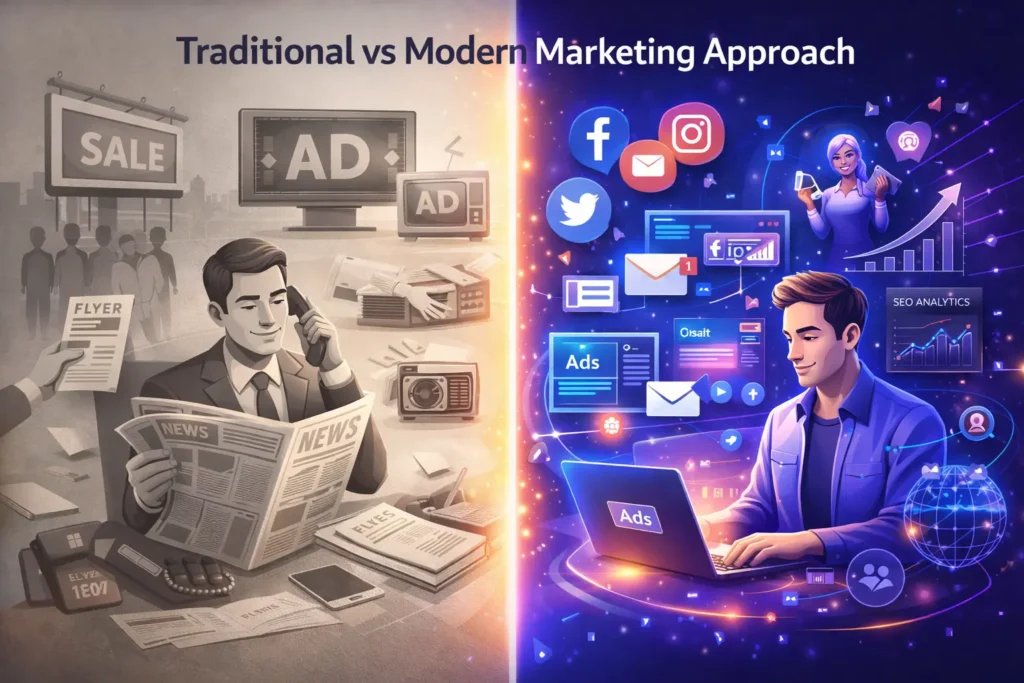
- Show ads
- Sell the product
- And move on
In this approach:
Customer relationship was not given much importance
The goal was only a one-time transaction
Modern Marketing Approach (CVJ Based)
In today’s time, marketing has completely changed.
Now the focus is on:
- Building relationships
- Improving customer experience
- Creating long-term value
In the modern approach:
- Customers are guided at every stage
- They are provided with value
- And trust is built
This is the core idea of CVJ:
To consider the customer not just as a buyer, but as a long-term asset
Customer Value Journey gives you a clear understanding of:
- How a customer thinks
- When they take action
- And what you should do to move them forward
If you understand CVJ correctly, your marketing is no longer random, but becomes a planned and result-oriented process.
3. What is 5A Framework?
Let me tell you that the 5A Framework is a simple and practical marketing model that divides the Customer Value Journey into 5 clear stages. This framework is designed to explain how a person gradually connects with your brand and eventually becomes a loyal customer and promoter.
This framework has 5 main stages:
- Awareness
- Attract
- Acquire
- Ascend
- Advocate
Each of these stages represents a different mindset and behavior of the customer. Therefore, each stage requires a different strategy and approach. This is what makes this model effective.
How This Model Works
Now let’s understand how this model works. The 5A Framework works on a step-by-step process, where the customer gradually moves from one stage to another.
First, a customer becomes aware of your brand (Awareness). After that, they show some interest in your brand and engage with your content or offers (Attract). When they develop trust, they make a purchase and become your customer (Acquire).
After this, the journey does not end. You provide more value to your customer, due to which they make more purchases or upgrade (Ascend). In the end, a satisfied customer also recommends your brand to others (Advocate).
The most important thing in this entire process is that the customer gets relevant value and a good experience at every stage.
Linear vs Circular Journey Concept
Linear Journey (Traditional Thinking)
In traditional marketing, the customer journey was seen as a straight line. The focus was only from awareness to purchase.
For example:
- The customer saw your brand’s ad
- Bought the product
- Journey ended
In this approach, customer relationship and long-term engagement were not given much importance.
Circular Journey (Modern Thinking – 5A Framework)
Let me tell you that the 5A Framework completely changes this thinking. In this, the customer journey is considered a continuous cycle.
The customer stays connected with the brand even after making a purchase
They make repeat purchases
And also recommend it to others
In this way, a customer creates value for the business multiple times. This is the concept of a circular journey, which is the biggest strength of modern marketing.
Read Also : AI Digital Marketing in 2026: Real Workflow, Tools, Strategy & Earning Guide
Stage 1: Awareness (Brand Discovery)
Meaning of Awareness
Awareness is the first stage of the customer journey, where people get to know about your brand for the first time. At this stage, the customer does not have complete information about your products or services, rather they only know your brand name and see your logo or basic idea.
This stage is very important because if people are not aware of your brand, then the entire journey cannot even begin. As it is said, what is seen is what gets sold.
How Customers Reach the Brand
In today’s digital world, customers reach a brand through many different ways. It completely depends on where and how you have done your marketing.
Some common ways:
- Seeing ads or posts while scrolling on social media
- Seeing your website while searching on Google
- Discovering the brand through YouTube videos or reels
- Getting recommendations from friends or family
- Knowing about the brand through influencers
At this stage, the customer may actively search or may randomly discover the brand.
Ways to Increase Awareness
The main goal of increasing awareness is to reach as many people as possible with your brand. For this, you need to use consistent and smart marketing strategies.
Some effective methods that are very important for a business:
- Regularly publishing content (blogs, videos, reels)
- Using paid advertising through social media
- Doing influencer collaborations
- Ranking on Google through SEO
- Running campaigns to increase brand visibility
At this stage, quantity is more important for a brand, meaning the more people see your brand, the better results you will get.
Common Channels (Social Media, SEO, Ads)
Some main channels are considered most effective for creating brand awareness:
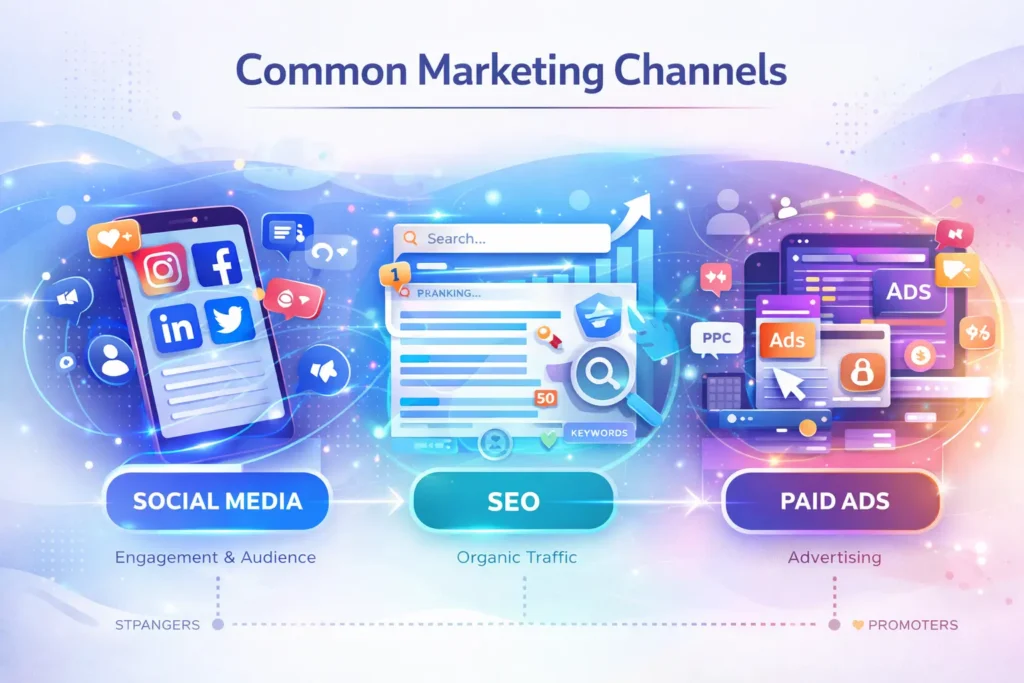
- Social Media
Through platforms like Instagram, Facebook, and LinkedIn, you can easily reach a large audience with posts, reels, and ads. - SEO (Search Engine Optimization)
By ranking your content on Google, you can bring organic traffic. This is a very powerful method for long-term awareness. - Paid Ads
Through Facebook Ads, Google Ads, and YouTube Ads, you can quickly reach a targeted audience and get fast results and also earn good profit.
By using the right combination of these channels, you can create strong awareness for your brand and make the beginning of your customer journey strong.
Read Also : Top 10 AI Tools to Make Money Online in 2026 (Beginner to Pro Guide)
Stage 2: Attract (Building Interest)
What is the Attract Stage
Let me tell you that the Attract stage is the step where people not only become aware of your brand but also start taking interest in it. In the Awareness stage, you showed them that your brand exists in the market, but in the Attract stage, you give them a reason to connect with your brand.
At this stage, the customer actively views your content, understands it properly, and decides whether your brand is useful for them or not.
Transition from Awareness to Attract
The transition from Awareness to Attract is very critical. Just showing your brand is not enough; you need to capture your audience’s attention and hold it.
This transition happens when:
- Your content is relevant
- It addresses the customer’s problem
- And it provides real value
If the customer does not find a strong reason after awareness, they leave without moving forward. Therefore, your focus at this stage should be on “providing value” rather than just promoting your brand.
Role of Content
Content is the most powerful tool in the Attract stage. It is the content that decides whether the user will stay connected with your brand or not.
Some key qualities of effective content:
- The content you provide should be problem-solving
- It should be easy to understand
- It should be informative and useful
- It should not be overly promotional
Content types that work well at this stage:
- Blog articles
- How-to guides
- Educational videos
- Social media posts
- Case studies
This content educates the user and gradually builds trust.
Audience Engagement Techniques
In the Attract stage, just creating content is not enough; you also need to actively engage your audience.
Some effective engagement techniques:
- Actively replying to comments and messages
- Conducting polls and Q&A sessions
- Creating interactive posts related to your brand
- Using storytelling
- Maintaining a consistent posting schedule
When the audience interacts with your content, the connection becomes stronger and trust starts building. This trust later helps in conversion.
Stage 3: Acquire (Lead to Customer Conversion)
Meaning of Acquire Stage
The Acquire stage is the stage where your interested audience (lead) finally becomes a customer. That means at this stage, the user is no longer just consuming information, but prefers to take action — such as buying a product, enrolling in a course, or taking a service, etc.
Let me tell you that this stage is the turning point of the entire customer journey because this is where actual revenue is generated.
Read Also : Top 5 Skills to Build a Career After 12th – Best for 2026
How Conversion Happens
Now let’s understand how conversion happens. Conversion is a process, it does not happen suddenly. There are many small factors working behind it.
When the customer:
- Has already received value from your content
- Starts trusting your brand
- And sees a solution to their problem
Then they decide to make a purchase.
To make conversion smooth, it is necessary to have:
- Clear messaging
- Simple buying process
- Offer at the right time
If your process is complicated or creates confusion, the customer may drop out in between.
Role of Offers, CTA, and Landing Pages
At this stage, three things are most important:
- Offers
Offers push the customer to make a decision.
For example:
- Discount
- Limited-time deal
- Bonus content
- Free trial
These create both urgency and value.
- CTA (Call-To-Action)
CTA is the instruction you give to the customer.
For example:
- Buy Now
- Enroll Now
- Get Started
Let me tell you that the CTA should be very clear and direct so that the user does not get confused and can take action immediately.
- Landing Pages
A landing page is the page where the user converts.
An effective landing page should have:
- Clear headline
- Benefits explanation
- Social proof (reviews, testimonials)
- Strong CTA
The simpler and more customer-focused your landing page is, the better the conversion will be.
Trust Building Factors
Trust is the biggest factor in the Acquire stage. If there is no trust, there will be no conversion.
Some important ways to build trust:
- Show real testimonials and reviews of your customers
- Share case studies related to your brand
- Keep transparent pricing
- Give money-back guarantee to the customer
- Professional branding and design
The customer should feel that they are making the right decision and that their risk is low.
When trust is strong, conversion automatically becomes easier.
7. Stage 4: Ascend (Customer Value Increase)
What is the Ascend Stage
The Ascend stage is the phase where your focus shifts from bringing new customers to increasing the value of existing customers. In this stage, you strengthen the relationship with the customer who has already trusted you and made a purchase.
Here, the goal is not just to make a sale, but to provide more value to the customer and improve their experience so that they keep coming back to you again and again.
Explain Upselling and Cross-selling
In the Ascend stage, the two most important techniques are — Upselling and Cross-selling.
What is Upselling
In upselling, you offer the customer a better or premium option than their current purchase.
Example:
- Took a basic course → Suggest a premium course
- Took a low plan → Offer a higher plan upgrade
The goal is to provide more value to the customer and at the same time increase revenue.
What is Cross-selling
In cross-selling, you offer related or complementary products to the customer.
Example:
Took an SEO course → Recommend an Ads course
Bought a laptop → Suggest accessories
This provides a complete solution to the customer and also increases your sales.
Concept of Customer Lifetime Value
Customer Lifetime Value (CLV) means how much total revenue a customer gives to your business during their entire relationship.
In simple words:
Not earning from a customer just once, but earning repeatedly is CLV.
If you:
- Increase repeat purchases
- Do upselling and cross-selling
- Keep the customer connected for the long term
Then your CLV automatically increases.
Revenue Growth Strategy
The Ascend stage is the most powerful part of business growth because here you do not need extra cost to acquire new customers.
Effective revenue growth strategies:
- Giving exclusive offers to existing customers
- Creating bundle deals
- Introducing subscription models
- Providing personalized recommendations
- Doing regular follow-ups and email marketing
When you focus on existing customers:
- Conversion becomes easier
- Trust is already built
- And profit margin is higher
That is why smart businesses take the Ascend stage seriously and make it the main driver of long-term growth.
8. Stage 5: Advocate (Loyal Customer to Promoter)
Meaning of Advocate Stage
The Advocate stage is the final and most powerful stage of the customer journey. At this stage, the customer not only uses your product but also recommends your brand to others.
That means the customer goes beyond being a buyer and becomes a brand promoter.
This becomes possible when:
- The customer’s experience is very good
- They receive real value
- And they fully trust your brand
Why Loyal Customers are Important
Loyal customers are the biggest strength of any business.
Because:
- They make repeat purchases
- They help bring new customers
- They reduce marketing costs
- They strengthen brand trust
A loyal customer not only buys themselves but also increases your brand’s credibility within their network. That is why building loyal customers is very important for long-term growth.
Referral and Word-of-Mouth Marketing
Referral and word-of-mouth marketing are among the most effective marketing methods.
When a customer recommends your brand to their friends, family, or audience, that recommendation is trusted more.
To make this stronger, you can:
- Create referral programs
- Give rewards or incentives
- Use a “Refer & Earn” model
This keeps existing customers motivated and helps bring new customers organically.
User-Generated Content (UGC)
User-generated content (UGC) is the content that your customers create themselves, such as:
- Reviews
- Testimonials
- Social media posts
- Videos or stories
The special thing about UGC is that it is real and authentic, which helps build trust quickly among new customers.
To increase UGC, you can:
- Encourage customers to give feedback
- Feature their content on social media
- Run hashtag campaigns
When customers themselves talk about your brand, it becomes the most powerful form of marketing.
9. How 5A Framework Works as a Cycle
Why It is a Continuous Process
The most important thing to understand about the 5A Framework is that it is not a one-time funnel, but a continuous cycle. This means that the customer journey does not completely end after a purchase, बल्कि a new cycle starts from there.
When a customer purchases your product or service once, even after that:
- They stay connected with the brand
- They see new offers and updates from the brand
- They look for opportunities to purchase again
Therefore, the goal of marketing should not be just to make a one-time sale, but to keep the customer engaged for a long time.
How Customers Re-enter the Journey
A customer re-enters the journey when their experience is positive and they continue to receive value.
This process works like this:
- Customer makes a purchase for the first time
- They get a good experience
- They interact with your brand again
- They try your new products or services
- And become your repeat customer
Gradually, they:
- Become a loyal customer of your brand
- And start recommending your products to others
In this way, a single customer creates value for the business multiple times.
Relationship-Based Marketing Concept
The focus of modern marketing is no longer just on selling, but on building relationships. This is called relationship-based marketing.
In this approach:
- The customer is not just considered a buyer, but a long-term partner
- Their needs and preferences are understood
- And a personalized experience is provided accordingly
When you build a strong relationship with the customer:
- Trust builds automatically
- Loyalty increases
- And referrals also increase
This is why in the 5A Framework, relationships play the most central role, and this is what makes it different from traditional marketing.
10. Benefits of 5A Framework in Business
Increasing Customer Retention
The biggest and best advantage of the 5A Framework is that it does not only focus on acquiring new customers, but also on retaining existing customers for a long time. When you provide the right experience and value at every stage, the customer stays connected with your brand.
The direct benefits of increased retention are:
- Your repeat purchases increase
- Your marketing cost decreases
- Stable revenue is generated
Let me tell you that a satisfied customer repeatedly buys your products or services, which keeps business growth consistent.
Improving Brand Trust
When the customer journey is managed properly, the customer’s trust in your brand gradually builds. If the experience is good at every stage from Awareness to Advocate, the customer starts trusting your brand.
Due to improved trust:
- Customers purchase products without hesitation
- Negative feedback decreases
- Brand credibility becomes stronger
Strong trust is the foundation of long-term success for any business.
Long-Term Growth
The 5A Framework focuses on long-term growth rather than short-term sales. Instead of selling to a customer just once, it focuses on keeping them engaged for a long time.
The result:
- Customer lifetime brand value increases
- A loyal customer base is created
- The business grows in a sustainable way
Long-term growth means that your business will not depend only on ads, but will also grow organically.
Better Marketing Planning
Let me tell you that the 5A Framework gives you a clear roadmap of what strategy to use at each stage. This makes your marketing structured and goal-oriented instead of random.
Its benefits:
- There is a clear action plan for each stage
- The budget is used properly
- Performance can be easily tracked
When planning is clear, the results are also better and more predictable.
5A Framework vs Traditional Marketing Funnel
Key Differences
Both 5A Framework and Traditional Marketing Funnel aim to attract and convert customers, but if understood properly, their approach is quite different. Customer Value Journey (5A Framework)
Traditional Marketing Funnel:
- It is a linear process (Awareness → Interest → Purchase)
- Focus is limited only to making a sale
- Customer journey is considered to end after purchase
- Less focus on relationship and engagement
5A Framework:
- It is a circular process (continuous cycle)
- Focus is on long-term relationship
- Customer journey continues even after purchase
- Emphasis is on making customers loyal and turning them into advocates
That means the Traditional funnel is limited only to conversion, whereas the 5A Framework covers the entire customer lifecycle.
Why 5A is More Effective
In today’s time, customers have become more aware and selective than before. They do not just buy a product, but also value the brand experience.
The 5A Framework is more effective because:
- It provides value to the customer at every stage
- It focuses on building trust
- It encourages repeat purchases
- It converts customers into brand promoters
Apart from this, this model turns marketing into a long-term strategy, where the business does not depend only on new customers.
Need in Modern Business
In today’s competitive market, just selling products is not enough. If you want sustainable growth, then you must focus on customer relationships.
The need for the 5A Framework in modern business is because:
- Competition has increased a lot
- Customers have multiple options
- Trust and experience play a major role in decision-making
The 5A Framework helps you understand:
- How to attract customers
- How to retain them
- And how to turn them into brand advocates
That is why today this framework has become an essential strategy for digital and service-based businesses.
12. How to Implement 5A Framework (Practical Guide)
Step-by-Step Implementation
To implement the 5A Framework in your business, you need to create a clear strategy according to each stage. Below is a practical step-by-step approach:
Step 1: Build Awareness
If you want growth in your business, first you need to reach your brand to as many people as possible.
- Build a strong presence of your brand on social media
- Run ads for your business
- Make your business visible on Google through SEO
Step 2: Attract the Audience
Now focus on providing value to customers so that more people connect with your content.
- Create educational content related to your brand
- Publish problem-solving posts on social media
- Provide free resources (PDF, webinar)
Step 3: Convert Leads into Customers (Acquire)
At this stage, the conversion system should be strong.
- Use clear CTA
- Optimize landing pages
- Provide attractive offers
Step 4: Increase Customer Value (Ascend)
Provide more value to existing customers.
- Do upselling and cross-selling
- Offer premium products
- Create a follow-up system
Step 5: Turn Customers into Advocates
Encourage satisfied customers to promote your brand.
- Start a referral program
- Collect reviews and testimonials from customers for your brand
- Provide loyalty rewards
Small Business vs Digital Business Approach
The 5A Framework can be used by every business, but the approach is slightly different.
Small Business Approach:
- Focus on local marketing (WhatsApp, referrals, local ads)
- Easy to build personal relationships
- Word-of-mouth is more powerful
Digital Business Approach:
- Use of online funnels and automation
- Focus on SEO, ads, and content marketing
- Use of email marketing and CRM tools
In both cases, the basic framework remains the same, only the execution method is different.
Tools and Strategies
If you want to implement the 5A Framework effectively, then it is necessary to use the right tools and strategies.
For Awareness:
- Google Ads, Facebook Ads
- SEO tools (Ahrefs, SEMrush)
For Attract:
- Content creation tools (Canva, ChatGPT)
- Social media scheduling tools
For Acquire:
- Landing page builders (ClickFunnels, WordPress)
- Email marketing tools (Mailchimp, ConvertKit)
For Ascend:
- CRM systems
- Automation tools
- Upsell funnels
For Advocate:
- Referral software
- Review collection tools
- Community platforms
With the combination of the right tools and clear strategy, you can easily implement the 5A Framework and grow your business in a structured way.
Real-Life Example of Customer Journey
Simple Example (From Social Media to Purchase)
Suppose there is a student who wants to learn digital marketing. Their journey starts like this:
One day, while scrolling Instagram in their free time, they see a reel that explains “How to build a career in Digital Marketing.” This is their first interaction.
After that, they visit that profile where ads are running. After coming to the profile, they watch some posts and videos, then through the link given in the bio, they reach the website or landing page. From there, they read all the details about the course and finally purchase the course.
If they have a good experience, they continue to take more courses and also recommend it to their friends.
Understanding Each Stage Practically
Now let’s understand the same example according to the 5A Framework:
1. Awareness
The student saw a reel on Instagram for the first time.
Here, they only noticed the brand.
2. Attract
They went to the profile, saw posts and videos, and engaged with the content.
They felt that the content is useful and relevant to them.
3. Acquire
They went to the website and bought the course.
Here, they became a customer from a lead.
4. Ascend
After taking the course, they were offered an advanced course or premium training.
They upgrade to learn more or purchase another course.
5. Advocate
Now they tell their friends that the course is good.
They give a review on Instagram or share the link on WhatsApp.
From this example, it is clearly understood how a simple social media interaction turns into a complete customer journey. This is the real-life application of the 5A Framework, which every business can use in its own way.
14. Common Mistakes to Avoid
Focusing Only on Awareness
Many businesses make the mistake of focusing only on increasing awareness for their brand. They continuously run ads, post content on social media, and try to increase reach, but ignore the next stages.
The problem is:
People know the brand
But they do not become customers
If you do not have a proper strategy for Attract, Acquire, and Ascend, then awareness alone does not give much benefit. Therefore, it is important to manage the entire journey in a balanced way.
Weak Conversion Strategy
If your strategy is weak in the conversion stage (Acquire), your entire funnel can fail.
Common problems you may face:
- No clear CTA in your ads
- Confusing landing page
- Lack of strong offer
- Complicated buying process
The result is that even interested people do not make a purchase.
To improve conversion:
- Keep the message simple and clear
- Use strong CTA
- Show trust signals (reviews, testimonials)
If conversion is not strong, all your marketing efforts can go to waste.
Ignoring Customer Retention
Another big mistake is that businesses focus only on acquiring new customers and ignore existing customers.
Whereas the reality is:
It is easier to sell to existing customers because they already know your brand
Marketing cost is lower
Profit is higher
If you do not focus on retention:
- Customers will buy once and leave
- There will be no long-term growth
Therefore, it is necessary to:
- Create a follow-up system
- Start loyalty programs
- Keep providing regular value
Focusing on retention is the strongest strategy for sustainable business growth.
15. Pro Tips for Better Results
Content Strategy
For your information, let me tell you that in the 5A Framework, content plays the most important role because it supports every stage from awareness to conversion. Therefore, your content strategy should be clear and well-planned.
Keep in mind:
Create different content for each stage (Awareness, Attract, Acquire)
Focus more on problem-solving and value-driven content
Maintain consistency in your work (regular posting)
Avoid over promotion
A strong content strategy not only attracts the audience but also builds trust, which helps in conversion.
Data Analysis
In the field of digital marketing, guesswork does not work; decisions are made based on data. If you are not analyzing data, then you will not know what is working and what is not.
You should regularly track:
- Website traffic
- Conversion rate
- Click-through rate (CTR)
- Audience behavior
Tools like Google Analytics and Meta Ads Manager help you understand your performance.
When you optimize your strategy based on data, the results become better and more predictable.
Customer Experience Improvement
Customer experience (CX) has become the biggest differentiator in today’s time. If your experience is good, customers will repeat on their own and also recommend to others.
To improve customer experience:
- Give fast responses (comments, messages).
- Keep the buying process simple and smooth.
- Provide quality support.
- Take feedback and make improvements.
A good experience makes the customer loyal, and this loyalty becomes the foundation of long-term growth.
Read Also : 7 Marketing Practices That Will Completely Fail in 2026
Conclusion
Customer Value Journey and the 5A Framework are a structured approach that explains how an unknown person gradually connects with your brand, becomes a customer, and then turns into a loyal customer who also promotes your brand.
In this entire process, there are 5 stages — Awareness, Attract, Acquire, Ascend, and Advocate. Together, these create a complete system that focuses not only on sales but also on long-term relationships.
Final Learning
The biggest learning from this entire concept is that marketing is not just about selling products, but a process of building trust and relationships with customers.
If you provide the right value at every stage, the customer automatically moves to the next stage and stays connected with your business for a long time.