On-Page SEO 2026:- What if the real reason your content isn’t ranking in 2026 has nothing to do with keywords — and everything to do with how deeply it’s optimized?
Every day, thousands of articles are published targeting the same keywords. Many of them follow the standard SEO checklist — proper headings, keyword placement, meta tags — yet they never reach the first page. At the same time, some less “perfect-looking” articles quietly climb to the top and stay there.
The difference is no longer basic optimization.
In 2026, Google evaluates content on a much deeper level. It tries to understand:
- How well your content satisfies real user intent
- Whether your information provides unique, experience-based value
- How trustworthy, practical, and useful your page is at the exact moment the user needs it
From my own experience working with multiple websites, I’ve seen technically flawless articles fail — while strategically optimized, user-focused content consistently ranks and generates traffic.
This means modern On-Page SEO is no longer about ticking boxes. It’s about engineering your content strategically — aligning timing, intent, depth, and usefulness.
In this advanced, practical guide, you’ll learn:
- A proven On-Page SEO framework designed specifically for 2026
- Real-world optimization scenarios and how to respond to them
- Timing-based actions that improve ranking faster
- Hidden optimization techniques that most creators still ignore
If implemented correctly, these strategies can help your content rank faster, stay stable longer, and build long-term authority.
Section 1: Search Intent Layer Engineering (What to Optimize — and When)
Why This Is the First and Most Critical Ranking Layer
In 2026, search intent match is the first and most important ranking filter.
Before evaluating backlinks, keyword density, or technical factors, Google asks one primary question:
“Does this page give the exact type of answer the user is looking for?”
Not more. Not less. Exact.
If your content does not match intent precisely, ranking becomes extremely difficult — even if everything else is optimized.
This is why understanding and engineering intent alignment is the foundation of advanced On-Page SEO.
Practical Method: The Intent Mapping Framework
This is a simple but powerful system you should apply before writing or optimizing any content.
Step 1: Search Your Primary Keyword
Example keyword: On-Page SEO 2026
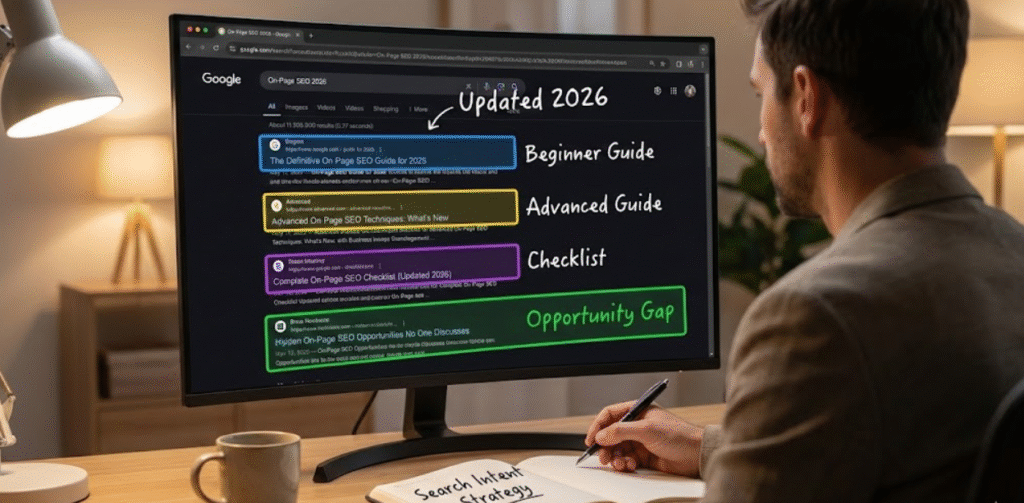
Search it on Google and study the results carefully.
Your goal is not to read for information — your goal is to analyze ranking patterns.
Step 2: Analyze the Top 5 Ranking Pages
Observe and identify patterns such as:
- Are they written for beginners, intermediate, or advanced users?
- Are they complete guides, checklists, or opinion-based articles?
- Are they short and quick reads or long in-depth resources?
- Do they focus more on theory or practical implementation?
- Are they updated for 2026 specifically, or are they generic?
This analysis reveals what Google currently believes users want.
Situation-Based Optimization: How to Create Strategic Advantage
Once you understand the ranking pattern, your next step is to position your content strategically.
Here’s how:
Situation A: When Most Ranking Articles Are Beginner-Level
This creates a major opportunity.
Most websites play safe and repeat basic information. This leaves a gap for deeper, experience-based content.
Strategic Action:
Add advanced and experience-driven elements such as:
- Practical frameworks based on real implementation
- Case-based explanations showing what works and why
- Common mistakes and hidden optimization gaps
- Strategic timing recommendations
Why This Works:
Google prefers content that adds new value, not repeated information.
When your page provides deeper insights, Google starts recognizing it as a unique authority source, which improves ranking potential.
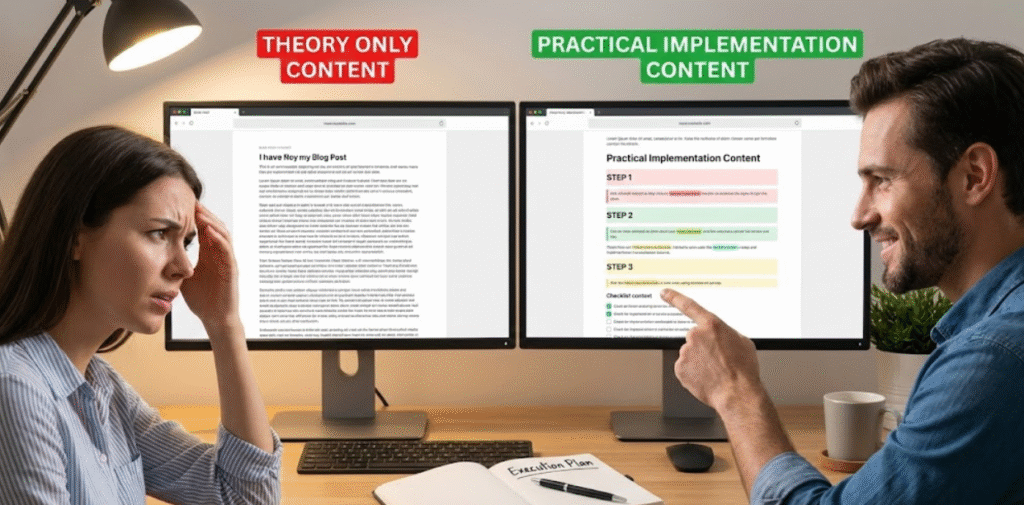
Situation B: When Most Ranking Articles Are Long — But Not Practical
Many guides are long but lack real execution clarity. They explain concepts but don’t show readers exactly what to do.
This creates another ranking opportunity.
Strategic Action:
Add clear implementation sections such as:
Action Blocks
Tell readers exactly what step to take next.
Step-by-Step Execution Instructions
Break complex processes into simple, doable steps.
Real-World Application Examples
Show how the strategy works in practical situations.
Optimization Checkpoints
Help readers measure whether they implemented correctly.
Example of a High-Value Implementation Block:
Read Also:- Top SEO Strategies That Will Work in 2026 – Advanced Guide
Instead of writing:
“Optimize your headings properly.”
Write:
Action Step:
Review your H2 and H3 headings and ensure each one answers a specific sub-question related to the main keyword.
Example:
Instead of: “Benefits of SEO”
Use: “How On-Page SEO Improves Rankings in 2026”
This improves relevance and clarity.
Why Intent Layer Engineering Gives You Faster Ranking Advantage
When your content matches intent precisely and fills gaps left by competitors, three important things happen:
- Google understands your content faster
- Users stay longer on your page
- Your page builds trust and ranking stability
This creates a strong foundation for higher rankings.
Human Touch Tip: Why Clarity Wins Over Just Information
One of the biggest misconceptions in SEO is believing that users only want information.
In reality, users don’t just want knowledge — they want clarity, direction, and confidence to take action.
When someone lands on your page, they are subconsciously asking one question:
“Will this article actually help me solve my problem?”
If your content makes the user feel guided — not confused — powerful behavioral signals start improving automatically.
These include:
- Longer time spent on your page
- Lower bounce rate
- Higher engagement
- More scrolling and interaction
All of these signals help Google understand that your content is genuinely useful.
Practical Human-Touch Optimization Tip
While editing your content, ask yourself:
- Does this section give clear direction, or just theory?
- Can a beginner take action immediately after reading this?
- Have I explained why and when this matters?
Even small additions like examples, reassurance, or implementation notes can dramatically improve perceived value.
Because when users feel:
“This article is actually helping me.”
Ranking momentum starts building naturally.
Section 2: First Impression SEO (First 30 Seconds Optimization)
Why the First 30 Seconds Decide Your Ranking Future
This is one of the most underestimated On-Page SEO factors in 2026.
Your ranking is heavily influenced by what happens in the first 30 seconds after a user lands on your page.
Search engines observe user behavior signals such as:
- Does the user stay and continue reading?
- Does the user leave immediately?
- Does the user scroll further?
- Does the user interact with the page?
If users leave quickly, your rankings often drop — even if your content is technically well optimized.
This makes your opening section extremely critical.
Advanced Opening Structure Formula: Reality → Problem → Hope → Promise
This proven structure immediately connects with readers psychologically and increases retention.
Here’s how it works:
1. Reality
Start with the current situation your reader is facing.
Example:
Most websites follow basic On-Page SEO practices, yet their content never reaches the first page.
2. Problem
Highlight the hidden reason behind the struggle.
Example:
The issue is not lack of effort — it’s lack of strategic and intent-focused optimization.
3. Hope
Show that improvement is possible.
Example:

The good news is that small structural and strategic changes can dramatically improve ranking performance.
4. Promise
Tell them exactly what they’ll gain.
Example:
In this guide, you’ll learn modern On-Page SEO strategies designed specifically for today’s search environment.
Timing-Based Optimization: What to Check Before Publishing
Before you publish any article, review your first 100 words carefully.
Ensure these three elements are present:
1. Natural Keyword Placement
Your main keyword should appear naturally — without forcing it.
This helps search engines quickly understand your topic.
2. Clear Benefit
Tell the reader what they will gain.
Example:
“This guide will help you improve rankings faster using practical optimization techniques.”
3. Immediate Clarity
Avoid generic openings like:
“SEO is important for websites.”
Instead, be specific and outcome-focused.
Clarity reduces bounce rate and increases engagement.
Section 3: Entity Expansion Optimization (Hidden Relevance Booster)
Why Entity Optimization Is a Game-Changer in 2026
Modern SEO is no longer based on keywords alone.
Search engines now evaluate topic completeness and contextual depth.
They try to understand:
- How deeply you covered the topic
- Whether your content connects related concepts
- Whether your page feels complete and authoritative
This is called Entity Expansion Optimization.
Practical Example: Entity Expansion for On-Page SEO Topic
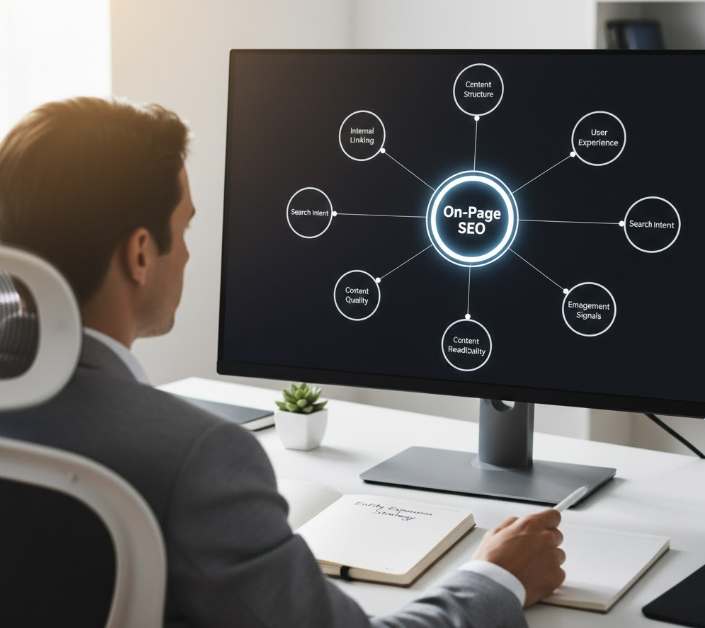
If your main topic is:
On-Page SEO
You should naturally include related supporting entities such as:
Read Also:- SEO in 2026: A Practical Framework to Build Traffic, Trust & Topical Authority
- Content structure
- Internal linking
- User experience
- Search intent
- Content quality
- Content readability
- Engagement signals
These additions strengthen topical relevance.
This helps search engines classify your content as comprehensive, not partial.
Situation-Based Action: What to Do If Your Article Doesn’t Rank After 3–4 Weeks
This is a very common situation — and often fixable.
Instead of rewriting the entire article, improve completeness.
Add Missing High-Value Sections Such As:
FAQ Section
Answer real user questions clearly.
This improves long-tail keyword coverage.
Example:
How long does On-Page SEO take to show results?
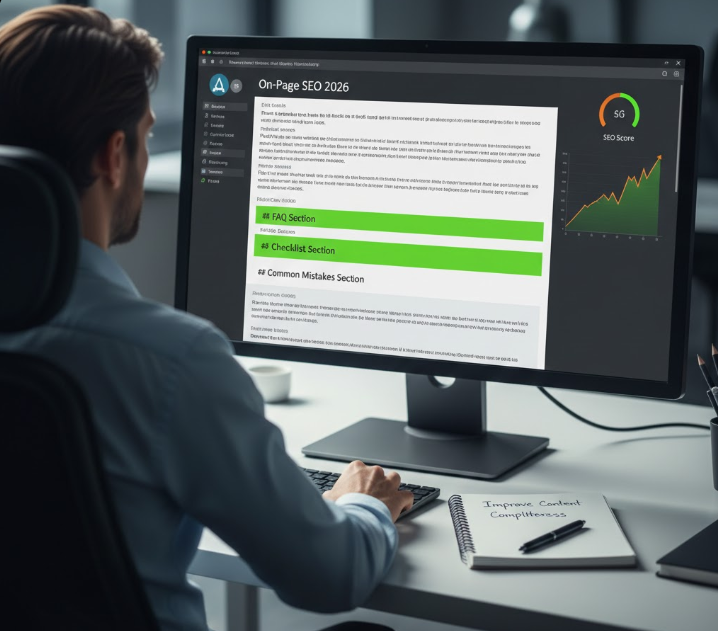
Practical Checklist Section
Users love actionable checklists.
It improves engagement and usefulness.
Example:
On-Page SEO Quick Checklist:
- Optimize title clarity
- Improve heading structure
- Add internal links
- Improve introduction hook
Common Mistakes Section
This builds trust and authority.
Example:
Common Mistake:
Focusing only on keywords and ignoring user experience.
Why This Strategy Works So Effectively
When you expand your content strategically:
- Relevance increases
- Engagement improves
- Authority strengthens
- Ranking probability increases
Sometimes, adding just 2–3 missing sections can significantly improve rankings within weeks.
Section 4: Strategic Internal Linking Timing (Authority Flow Control)
Why Internal Linking Is More About Timing Than Just Placement
Internal linking has always been a core part of On-Page SEO. But in 2026, when you add the link matters as much as where you add it.
Most websites follow the basic method — they publish a new article and add links inside it pointing to older pages.
While this helps with structure, it does not maximize ranking speed.
Modern SEO uses internal linking to transfer authority intentionally, not randomly.
Think of internal links as pipelines through which ranking power flows across your website.
The key is controlling that flow strategically.
Advanced Strategy: Authority Push Method
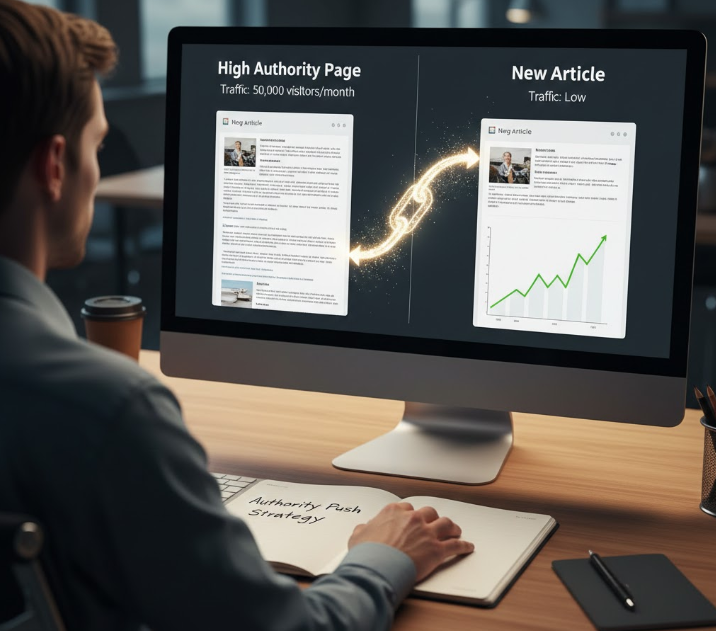
This is one of the most effective techniques to help new pages rank faster.
Basic Method (Common Approach)
New page → links to old pages
This helps users navigate, but it doesn’t strongly boost the new page.
Advanced Method (Authority Push Approach)
Read Also:- Best Free SEO Tools in the USA 2026: Keyword Research, Site Audit & Website Ranking
Old high-traffic page → links to new page
This sends a much stronger signal.
Because search engines already trust your high-performing pages.
When those trusted pages link to a new page, it signals importance and relevance.
Situation-Based Timing: When to Add Internal Links for Maximum Impact
Immediately after publishing your new article, take this action:
Go to your:
- Top traffic pages
- Top ranking pages
- Most trusted pages
And add a contextual link pointing to your new article.
Make sure the link is placed naturally inside relevant content — not forced.
Real Impact: What This Signals to Search Engines
This tells search engines three critical things:
- Your new page is important
- Your new page is contextually relevant
- Your new page deserves faster discovery
As a result:
- Indexing speed improves
- Ranking speed increases
- Initial visibility improves
This is especially powerful for new websites trying to build authority faster.
Section 5: Content Depth Engineering (Ranking Stability Factor)
Why Content Depth Is the Foundation of Long-Term Rankings
One of the biggest mistakes creators make is confusing content length with content depth.
Long content does not guarantee high rankings.
Complete content does.
Content depth means your page answers all important user questions related to the topic — clearly and practically.
When your content feels complete, users don’t need to return to search results.
This improves satisfaction signals and strengthens ranking stability.
Advanced Content Depth Structure Framework
To create truly deep and rank-stable content, include these six essential layers:
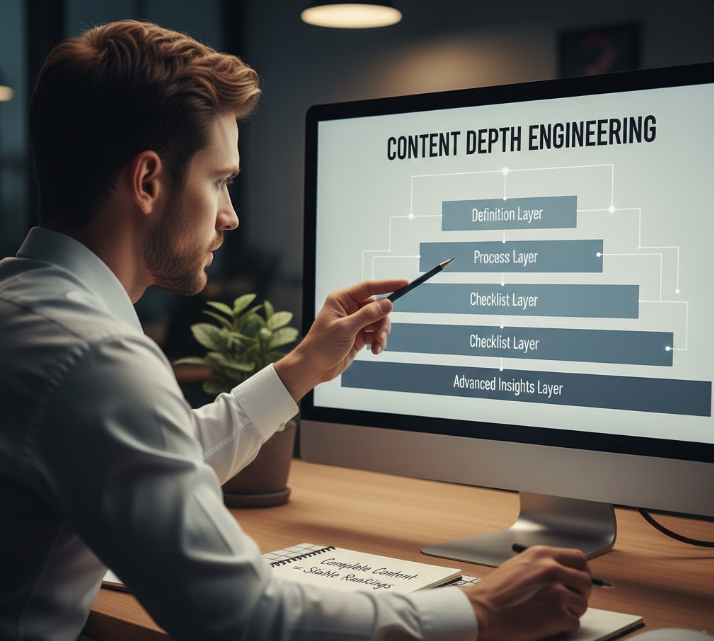
1. Clear Definition Layer
Explain the concept simply.
Help beginners understand quickly.
2. Process Layer
Explain how it works step-by-step.
This builds clarity.
3. Framework Layer
Provide structured models or systems.
Frameworks increase perceived authority.
4. Checklist Layer
Give actionable steps.
This improves usability.
5. Mistake Prevention Layer
Explain what to avoid.
This builds trust and experience value.
6. Advanced Insights Layer
Add expert-level tips based on real scenarios.
This differentiates your content.
Situation-Based Optimization: What to Do If Your Page Is Ranking But Stuck
This is a very common ranking plateau.
Your page may reach position 8–15 and stop improving.
This usually means your content is good — but not complete enough.
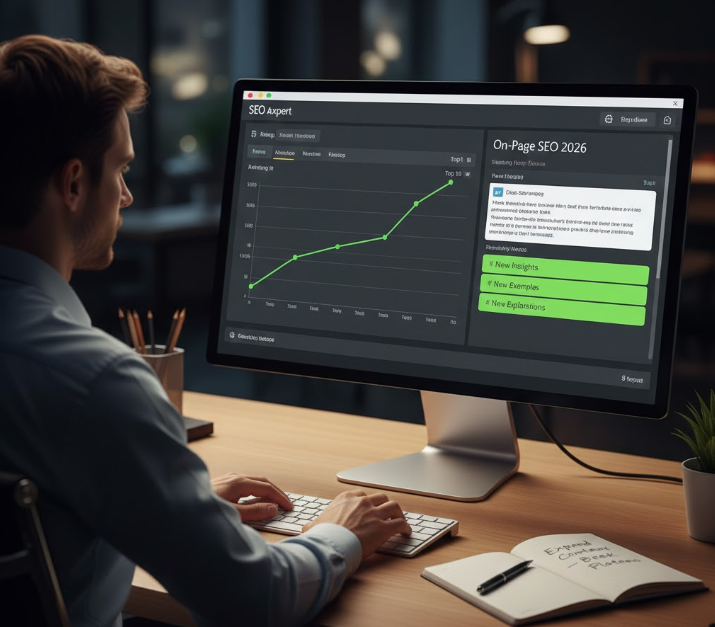
Instead of rewriting everything, expand strategically.
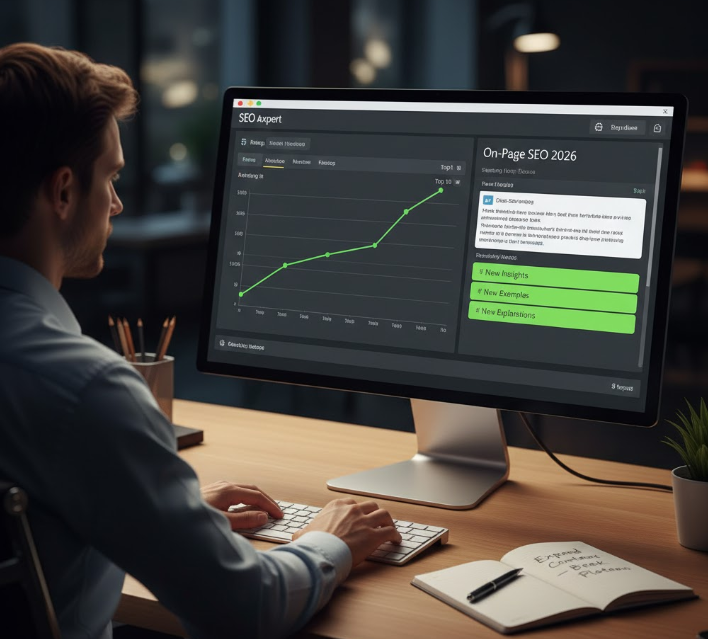
Add These Elements:
New insights:
Add updated information based on recent trends.
New examples:
Explain concepts using real-world scenarios.
Read Also:- Google Discover Update 2026: Everything You Need to Know
New explanations:
Clarify complex sections more deeply.
Why This Works
Content freshness and depth expansion signal continuous improvement.
Search engines often reward updated pages with ranking boosts.
This is one of the safest and most reliable ranking improvement methods.
Section 6: Semantic Layer Optimization (Keyword Cloud Creation)
Why Single Keyword SEO Is No Longer Effective
In modern SEO, ranking is not built around a single keyword.
It is built around semantic relevance.
Search engines analyze the overall keyword ecosystem of your page to understand topic expertise.
This is known as semantic layer optimization.
Instead of repeating one keyword, you build a natural keyword cloud.
This improves topic understanding.
Practical Implementation: How to Build a Semantic Keyword Network
Example:
Main keyword:
On-Page SEO 2026
Now naturally include related supporting keywords such as:
- SEO optimization
- Content ranking strategies
- Website optimization techniques
- Search visibility improvement
- Organic traffic growth
- Search performance improvement
- Content optimization framework
These should be placed naturally inside explanations — never forced.
Advanced Semantic Growth Strategy: Contextual Expansion Method
To strengthen semantic relevance further, include:
Related Concepts
Such as:
- User intent optimization
- Content structure optimization
- Engagement optimization
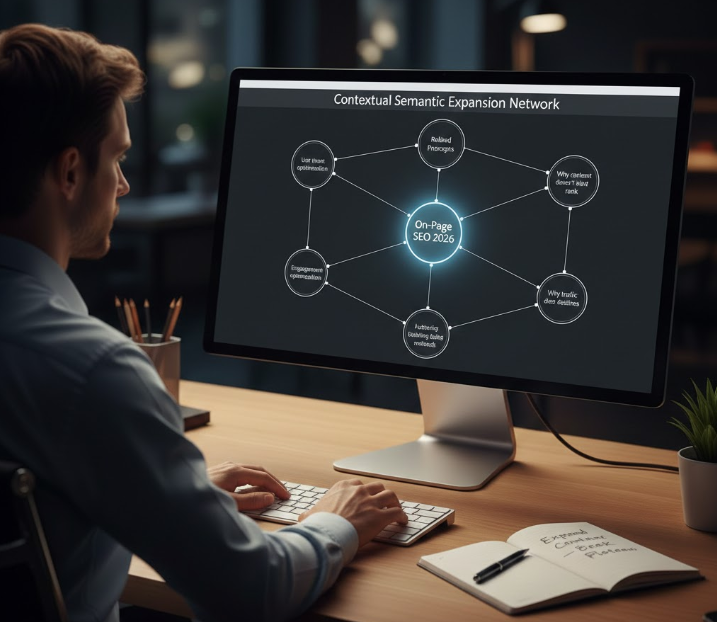
Related Problems
Such as:
- Why content doesn’t rank
- Why rankings drop
- Why traffic declines
Related Solutions
Such as:
- Content refresh strategy
- Internal linking strategy
- Authority building methods
Why Semantic Optimization Improves Real Ranking Growth
When your page contains a strong semantic network:
- Search engines understand your topic expertise better
- Your content becomes eligible for more keyword variations
- Your ranking stability improves
- Your traffic potential increases
Instead of ranking for one keyword, your page can rank for dozens or even hundreds of related searches.
This is how real organic growth happens.
Section 7: Engagement Signal Optimization (Behavior-Based Ranking Layer)
Why User Behavior Has Become a Silent Ranking Driver
In 2026, rankings are no longer influenced only by keywords and backlinks. Search engines now evaluate how users behave after landing on your page.
They observe engagement signals such as:
- How long users stay on your page
- Whether they scroll or leave immediately
- Whether they interact with your content
- Whether they return to search results
These signals help Google estimate whether your content genuinely satisfied the user.
If users engage deeply, your ranking stability improves. If they leave quickly, rankings often stagnate or decline.
This is why engagement optimization is now a core On-Page SEO responsibility.
Advanced Practical Techniques to Improve Engagement
Engagement doesn’t improve randomly. It improves when your content makes users feel guided and understood.
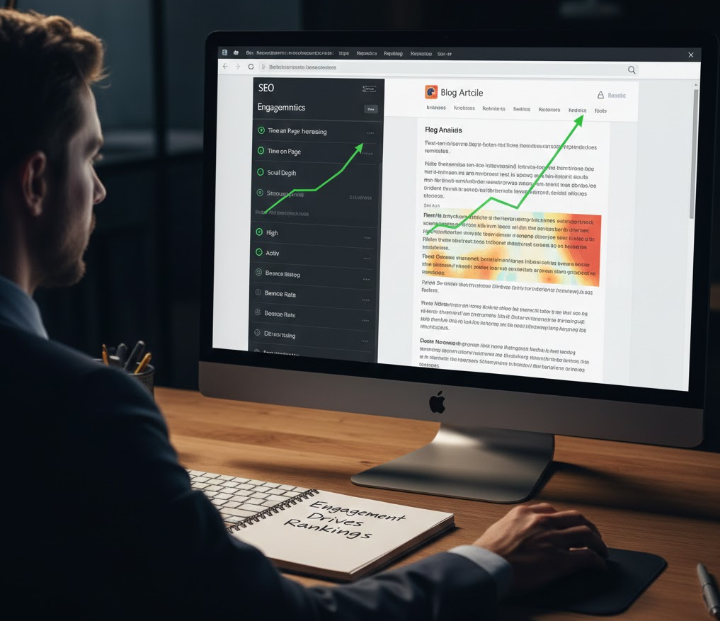
Here are proven structural additions that increase engagement significantly:
1. Add Step-by-Step Actionable Sections
Users stay longer when they know exactly what to do next.
Example:
Action Step:
Review your existing article and identify one missing section that competitors have not covered. Add that section with practical explanation.
This creates forward momentum.
2. Include Real-World Examples
Examples reduce confusion and increase clarity.
Instead of explaining theory alone, show application.
Example:
Explain how updating one section improved ranking instead of just saying “update content regularly.
gORead Also:- Best SEO Tools for US Agencies 2026: A Deep, Real-World Guide Built for Results
This builds credibility.
3. Use Clear, Human-Focused Explanations
Avoid robotic or overly technical language.
Write as if you are guiding one person.
Because psychologically, users engage more when they feel personally addressed.
Human Psychology Insight: The “Personal Relevance Effect”
The most powerful engagement trigger is emotional relevance.
Your reader should feel:
“This content was written specifically for my situation.”
You can achieve this by:

- Addressing common struggles
- Acknowledging real problems
- Providing practical reassurance
This builds trust and increases engagement duration — which strengthens ranking signals.
Section 8: Information Gain Strategy (The Most Powerful Ranking Differentiator)
Why Unique Value Is Now a Core Ranking Requirement
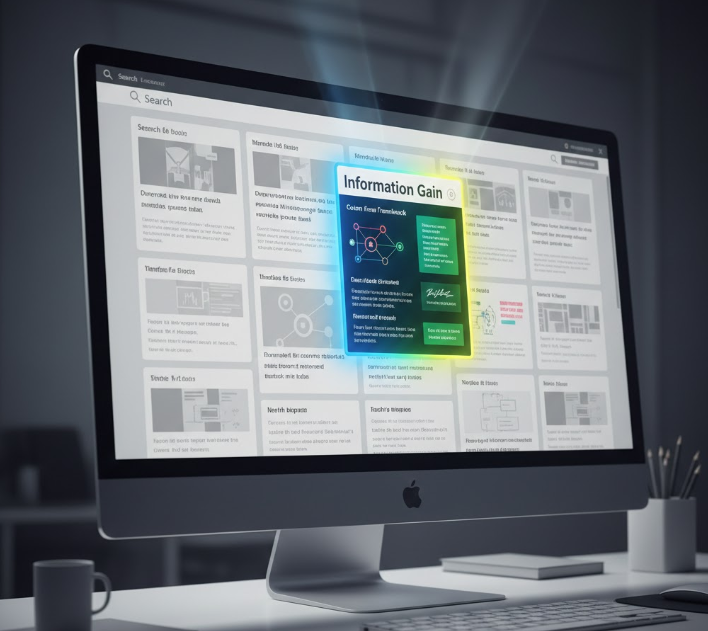
One of the biggest shifts in modern SEO is the focus on information gain.
Search engines no longer reward pages that simply repeat existing information.
They prioritize pages that add:
- New insights
- New perspectives
- New explanations
- New solutions
In simple terms:
If your content says the same thing as everyone else, ranking becomes difficult.
But when your content adds new value, ranking becomes much easier.
How to Implement Information Gain in Your Content
Here are three powerful ways to create ranking-level differentiation:
1. Add Personal Observations
Share practical insights based on real implementation.
Example:
Explain what happened when you updated internal links and how it affected indexing speed.
This builds authenticity.
2. Create Unique Frameworks
Frameworks help readers understand complex topics more easily.
Example:
Instead of generic advice, create a named system such as:
Authority Push Internal Linking Method
This increases perceived expertise.
3. Provide Practical Explanation — Not Just Instructions
Most articles tell users what to do.
Few explain when and why it works.
This is your opportunity.
Example: Basic Advice vs Advanced Information Gain
Basic version:
Use internal linking to improve SEO.
Advanced version:
Internal linking works best when added from already trusted, high-traffic pages. This helps search engines discover and prioritize your new content faster, especially during the early indexing phase.
This level of explanation creates real value.
Section 9: Content Freshness Timing Strategy (Update With Purpose, Not Panic)
Why Content Freshness Still Matters — But Timing Is Critical
Content freshness remains an important ranking factor.
However, unnecessary updates can sometimes disrupt ranking stability.
Modern SEO requires strategic freshness — not frequent, random edits.
Search engines reward meaningful improvements, not cosmetic changes.
Situation-Based Freshness Optimization Framework
Here is the correct timing strategy:
Situation 1: Ranking Has Dropped
This usually means your content needs improvement.
Strategic Action:
Add meaningful new value such as:
- New sections
- Updated strategies
- New examples
- Improved explanations
This signals relevance recovery.
Situation 2: Traffic Is Stable
Your content is already performing well.
Avoid aggressive changes.
Strategic Action:
Make small, safe updates such as:
- Improving clarity
- Updating minor details
- Adding one new insight
This maintains freshness without disrupting stability.
Why This Strategy Protects Your Rankings
Strategic updates help maintain trust signals while avoiding algorithmic re-evaluation risks.
This ensures consistent long-term growth.
Section 10: User Experience Optimization (Trust-Building Layer)
Why User Experience Directly Influences SEO Trust
Search engines evaluate not only what your content says — but also how easy it is to consume.
Poor user experience reduces trust.
Strong user experience strengthens authority.
Your page should feel effortless to read.
Advanced User Experience Optimization Checklist
Ensure the following elements are properly optimized:
Clean and Distraction-Free Layout
Avoid clutter.
Use proper spacing.
This improves reading comfort.
Easy-to-Read Structure
Use:
- Clear headings
- Short paragraphs
- Logical flow
This improves comprehension.
Logical Content Progression
Each section should naturally lead to the next.
Avoid random topic jumps.
Structured flow increases engagement.
Clarity-Focused Formatting
Use:
- Highlighted action steps
- Clear explanations
- Consistent formatting
This improves usability.
Why User Experience Builds Ranking Trust
When users can read and understand your content easily:
- Engagement improves
- Satisfaction increases
- Trust signals strengthen
This contributes directly to ranking stability.
Section 11: Title and Heading Engineering (CTR and Relevance Control Layer)
Why Your Title Decides Whether You Rank — and Whether You Get Clicked
Your title is not just a label. It is your first ranking signal and your first conversion opportunity.
In 2026, a well-engineered title performs three critical functions simultaneously:
- It helps search engines understand your topic instantly
- It attracts users’ attention in crowded search results
- It sets a clear expectation of value
If your title is vague, confusing, or generic, even a well-ranked page may receive fewer clicks — which can weaken long-term ranking performance.
Advanced Title Engineering Formula: Clarity + Benefit + Specificity + Time Signal
Your current title is an excellent example:
On-Page SEO 2026: Latest Strategies to Rank Higher Fast
Here’s why this works so well:
- Clarity: Clearly states the topic (On-Page SEO)
- Benefit: Promises a result (Rank Higher Fast)
- Specificity: Mentions strategies, not general talk
- Time relevance: Includes the year (2026), which signals freshness
This combination increases both relevance and click-through rate.
Heading Engineering: How to Keep Users and Search Engines Aligned
Your headings should not just divide content — they should guide understanding.
Each heading must answer a specific sub-question related to the main topic.
Weak heading example:
Benefits of SEO
Strong heading example:
How On-Page SEO Improves Rankings Faster in 2026
This improves clarity, relevance, and engagement.
Section 12: Featured Snippet Optimization (Fast Visibility Strategy)
Why Featured Snippets Are a Shortcut to Authority
Featured snippets appear at the top of search results and provide instant visibility.
Winning a snippet can dramatically increase your:
- Organic traffic
- Brand authority
- Click-through rate
Even if your page is not in position #1.
The Most Effective Method: Add Clear Definition Sections
Search engines prefer short, clear, direct answers for snippets.
Here is a perfectly optimized definition example:
On-Page SEO is the process of optimizing individual webpages to improve search rankings, enhance user experience, and increase visibility in search engines through content, structure, and relevance optimization.
This format increases your chances of snippet selection.
Additional Snippet Optimization Tips
You can also create snippet opportunities by adding:
- Step-by-step lists
- Numbered processes
- Short answer paragraphs
These structured formats are easier for search engines to extract.
Section 13: Content Update Lifecycle Strategy (Long-Term Ranking Maintenance)
Why Every Content Piece Has a Ranking Lifecycle
Content does not rank permanently without maintenance.
Every page goes through phases:
- Discovery
- Growth
- Stability
- Decline (if ignored)
Strategic updates help extend the growth and stability phases.
The Proven 90-Day Content Optimization Timeline
Follow this structured timing plan:
30 Days After Publishing: Performance Evaluation Phase
Check:
- Ranking position
- Indexing status
- Traffic trends
Goal: Identify early signals.
60 Days After Publishing: Improvement Phase
If performance is average, improve quality.
Add:
- Missing explanations
- New examples
- Clarity improvements
Goal: Strengthen relevance.
90 Days After Publishing: Expansion Phase
Now expand authority.
Add:
- New sections
- Advanced insights
- Additional semantic coverage
Goal: Increase topical depth and ranking strength. This lifecycle approach helps maintain long-term growth.
Section 14: Psychological Trust Optimization (Rare but Extremely Powerful)
Why Trust Is the Hidden Foundation of SEO Success
Users trust content that feels:
- Practical
- Honest
- Clear
- Experience-based
Trust improves engagement — and engagement improves rankings.
This creates a powerful cycle.
The Most Effective Trust-Building Technique: Explain Why — Not Just What
Most content gives instructions.
High-ranking content gives reasoning.
Basic advice:
Add internal links.
Trust-building version:
Internal links help search engines discover relationships between your pages and prioritize important content faster, especially when links come from already trusted pages.
This builds confidence.
Add Human Touch Elements Throughout Your Content
You can increase trust by including:
- Real-world context
- Practical reasoning
- Clear explanations
- Honest insights
This makes your content feel authentic.
Final Action Blueprint: Immediate Implementation Checklist
If you want faster and more stable ranking improvements, implement these steps immediately:
1. Intent Alignment
Ensure your content matches real user intent precisely.
2. Content Depth Improvement
Cover all important questions related to your topic.
3. Strategic Internal Linking
Add links from your trusted, high-traffic pages.
4. Semantic Coverage Expansion
Include related concepts and supporting topics naturally.
5. User Experience Optimization
Improve readability, clarity, and structure.
Conclusion
Here is the truth most people overlook:
On-Page SEO success in 2026 will not belong to those who simply optimize content.
It will belong to those who create understanding.
Because modern search engines are designed to reward content that genuinely helps users.
Not content that simply tries to rank.
If your content is:
- Genuinely helpful
- Clearly structured
- Deeply informative
- Strategically optimized
Your rankings will not just improve — they will stabilize and grow.
Because when you focus on helping users first, search performance becomes a natural result.