Google Ads in 2026:- Google Ads in 2026 is not failing—but it feels like it is for many advertisers. A few years ago, you could launch a campaign with basic keyword research, average ad copy, and a simple landing page, and still see leads or sales coming in. That era is over.
Today, business owners often say things like: “Leads are expensive,” “Traffic quality is poor,” or “Google Ads doesn’t work anymore.” These frustrations are real, but the conclusion is usually wrong.
The truth is simple: Google Ads hasn’t stopped working; old strategies have.
Google Ads has evolved into a highly intelligent, AI-driven ecosystem. It now rewards advertisers who understand user intent, data quality, and long-term signals—not those who rely on shortcuts or outdated tricks. In 2026, success is less about manual control and more about strategic guidance.
This article breaks down Google Ads in 2026 in a practical, real-world way. You’ll understand what has changed, why advertisers are struggling, and how smart businesses are still generating profitable results.
Emerging Trends in Google Ads in 2026
1. Artificial Intelligence Is the Core of Google Ads
In 2026, artificial intelligence is no longer an optional feature inside Google Ads—it is Google Ads.
Most major decisions are now handled by AI systems trained on massive data sets. Bidding, targeting, placements, audience expansion, and even creative combinations are largely automated. Campaign formats like Performance Max, Smart Bidding, and Demand Gen are built around this AI-first approach.
Key shifts advertisers must understand:
- Bids are optimized based on predicted conversion value, not just clicks
- Headlines, descriptions, and asset combinations are dynamically generated and tested
- Ads automatically appear across Search, Display, YouTube, Discover, and Gmail
Many advertisers struggle because they try to control Google Ads the way they did in 2020—manually adjusting bids, over-segmenting campaigns, or restricting placements too aggressively.
In contrast, advertisers who perform well in 2026 do one thing better than others: they train the AI properly. They provide clean conversion data, clear goals, strong creatives, and high-quality landing pages. Instead of fighting automation, they guide it.
Think of Google Ads AI like a high-speed car. If you don’t know where you want to go, speed only makes things worse.
2. Shift from Keyword Targeting to Intent Targeting
Keywords still matter—but they are no longer the center of the strategy.
In 2026, Google focuses heavily on user intent, not just the words typed into the search bar. Two users can search the same keyword and still see very different ads based on intent signals.
Google now evaluates multiple layers of context, including:
- Search history and behavior patterns
- Past interactions with similar businesses
- Device type, location, and time of day
- Content quality and relevance of landing pages
For example, someone searching “best CRM software” might be researching options, while another person searching the same term could be ready to purchase today. Google Ads tries to identify this difference—and serves ads accordingly.
This shift creates a big challenge for advertisers who rely only on keyword lists. Even with “perfect” keywords, campaigns fail if the ad message and landing page do not clearly match the user’s intent.
In 2026, successful advertisers ask better questions:
- What problem is the user trying to solve right now?
- Are they researching, comparing, or ready to buy?
- Does my landing page answer their exact concern within seconds?
When intent alignment is weak, traffic quality drops—even if impressions and clicks look healthy.
3. Privacy-First Advertising Is No Longer Optional
Privacy changes are not a future concern—they are the present reality of Google Ads in 2026.
With stricter regulations, browser restrictions, and increased user awareness, traditional tracking methods no longer work the way they used to. Third-party cookies are heavily limited, and users actively control consent.
Major changes advertisers must adapt to include:
- Reduced reliance on third-party data
- Consent-based tracking as a default requirement
- Modeled conversions instead of exact user tracking
- Increased importance of first-party data
Many businesses still depend entirely on Google’s default tracking setup. As a result, they see incomplete data, inconsistent reports, and confusion about what is actually working.
Smart advertisers take a different approach. They invest in:
- First-party data collection (forms, CRM, email lists)
- Proper consent management systems
- Server-side tracking where possible
- Clear conversion definitions tied to real business outcomes
In 2026, the advertisers who win are not the ones with the most data—but the ones with the cleanest and most reliable data.
4. Video and Visual Ads Dominate User Attention
User attention in 2026 is shorter, more distracted, and constantly pulled in multiple directions. As a result, video advertising has become one of the strongest drivers of performance inside Google Ads.
Today, people are far more likely to watch a short video than read long text—especially on mobile devices. Google has adapted to this behavior by pushing video-first placements across YouTube, Discover, and the Display Network.
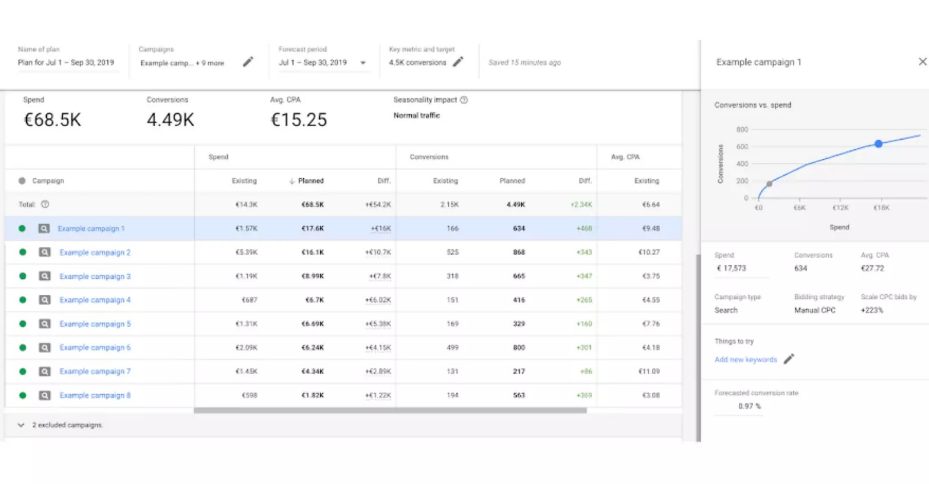
Key video trends shaping Google Ads in 2026 include:
- Rapid growth of YouTube Shorts ads
- Short, fast-paced videos that deliver the message within the first 3–5 seconds
- Less emphasis on cinematic production and more focus on clarity and relevance
- Strong performance of problem–solution and pain-point-based storytelling
Interestingly, high-budget production is no longer a requirement. Many high-performing ads are simple screen recordings, talking-head videos, or slide-style visuals that clearly explain a problem and offer a solution.
Businesses that avoid video advertising often struggle to scale. Even brands that never used video before now need to adapt—not to look fancy, but to stay visible.
Read Also:- How to Fix a Disabled or Restricted Facebook Account: Complete Recovery Guide
5. Local and Personalized Advertising Is Growing Rapidly
Google Ads in 2026 is deeply personalized. Ads are no longer shown simply because someone searched a keyword—they are shown because Google believes this specific user is likely to respond.
Personalization is based on multiple real-time signals, including:
- User’s physical location
- Time of search and daily behavior patterns
- Device type (mobile, desktop, tablet)
- Past interactions with ads, websites, or similar businesses
For local businesses, this creates a powerful advantage. A nearby user searching at the right moment can be shown highly relevant ads with location extensions, call buttons, and local offers.
For non-local or national businesses, personalization requires more careful planning. Poor structure can lead to irrelevant impressions, wasted spend, and confused messaging.
In 2026, advertisers must design campaigns that speak to specific user contexts, not generic audiences.
Key Challenges Advertisers Face in 2026
1. Rising Advertising Costs
One of the biggest concerns among advertisers in 2026 is the continuous rise in cost per click and cost per conversion.
Competition has increased across almost every industry. More businesses are advertising online, while user attention remains limited. On top of that, AI-driven bidding systems aggressively compete for high-intent users.
Common reasons behind rising costs include:
- Increased number of advertisers entering digital platforms
- Limited high-quality traffic for competitive keywords
- Automated bidding systems prioritizing speed over efficiency
Many businesses respond by simply increasing budgets without improving strategy. This often results in higher spending with little or no improvement in actual business outcomes.
2. Reduced Sense of Control
A frequent frustration in 2026 is the feeling that advertisers no longer control their own campaigns.
Automation now handles many decisions behind the scenes, but transparency has not kept pace. Advertisers often feel disconnected from what is actually happening inside their accounts.
This frustration grows because:
- Search term visibility is limited
- Manual placement control is restricted
- Performance explanations lack clarity
The core issue is not automation itself. The real problem is poor campaign structure and unclear boundaries. Without defined goals, exclusions, and signals, automation behaves unpredictably.
3. Poor Lead Quality
Another major challenge in 2026 is declining lead quality. Many advertisers report receiving leads that are not serious, not qualified, or not ready to buy.

This usually happens due to:
- Overly broad targeting combined with vague messaging
- Ads that promise more than the landing page delivers
- Weak landing pages that fail to pre-qualify users
High lead volume may look good in reports, but it does not translate into revenue. In 2026, quality matters far more than quantity, especially for service-based and high-ticket businesses.
4. Tracking and Attribution Confusion
Tracking performance in 2026 is more complex than ever. Advertisers frequently see mismatched numbers between Google Ads, Analytics platforms, and CRM systems.
Common challenges include:
- Delayed or modeled conversion reporting
- Partial data due to consent restrictions
- Difficulty understanding multi-touch attribution paths
When advertisers do not fully understand how data is generated, trust breaks down. Decisions become emotional rather than data-driven, and campaigns suffer as a result
5. Declining Trust Between Clients and Agencies
In 2026, trust between clients and digital marketing agencies is weaker than it has ever been. Today’s clients are more informed, more cautious, and far less willing to accept claims without proof. This shift has not happened overnight. It is the result of repeated disappointments caused by unrealistic promises and poorly planned advertising strategies.
Many businesses have previously invested in Google Ads expecting guaranteed leads or immediate sales, only to experience financial losses instead. When results fail to match the promises made during onboarding, clients naturally begin to question not just the platform, but the agency itself.
Another major reason for declining trust is the unpredictable nature of digital advertising. Google Ads performance is not consistent every month. Market demand fluctuates, competition changes, and user behavior evolves. However, when agencies fail to communicate this reality clearly, clients interpret normal performance variations as mismanagement or dishonesty.
Additionally, results in Google Ads are rarely instant. Campaigns require a learning phase, data collection, testing, and optimization. When agencies sell speed instead of strategy, expectations become misaligned from the start.
Read Also:- Facebook Ads Agency in Delhi | Drive Conversions with JKS Digital’s Ad Experts
In 2026, clients are no longer looking for guarantees. They want transparency, honest communication, and realistic planning. Agencies that openly explain risks, limitations, and timelines are the ones that succeed in rebuilding long-term trust.
Smart Solutions for Google Ads Success in 2026
1. Define Clear Goals Before Running Ads
Google Ads AI performs best when it receives clear direction. Without well-defined goals, automation can optimize for actions that look good in reports but deliver little real business value.
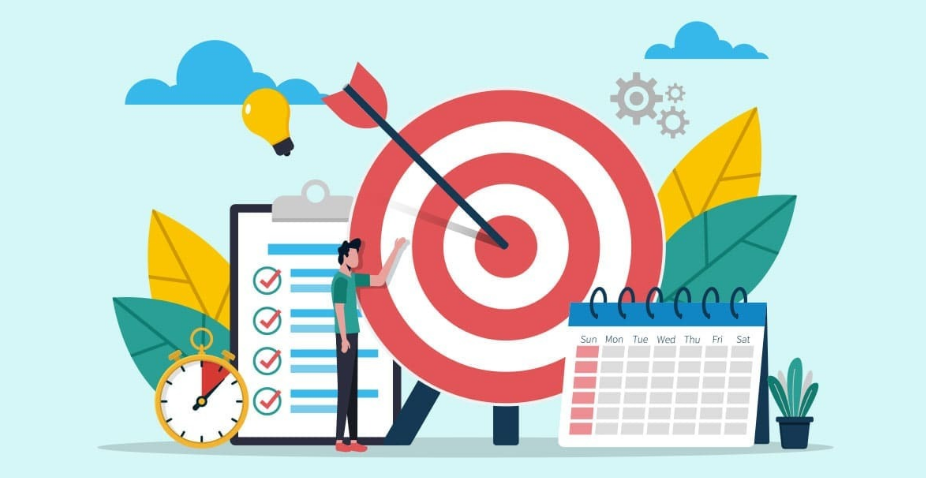
Advertisers must clearly define what a conversion means for their business, which user actions truly matter, and how much they are willing to pay for each result. When goals are vague, AI optimization becomes ineffective and misleading.
Clear objectives are the foundation of every successful Google Ads campaign in 2026.
2. Use AI Strategically, Not Blindly
Automation has advanced significantly, but AI is not a substitute for human judgment. Advertisers who rely entirely on automated systems without oversight often struggle with rising costs and declining lead quality.
Effective use of AI involves guiding it with strong audience signals, setting clear budget controls, reviewing performance data regularly, and adjusting messaging based on real outcomes rather than assumptions.
In 2026, automation delivers results only when it is supported by thoughtful strategy and continuous human input.
3. Build and Leverage First-Party Data
With the decline of third-party tracking, first-party data has become one of the most valuable assets for advertisers. Businesses that fail to collect and organize their own customer data are placing themselves at a long-term disadvantage.
Emails, phone numbers, previous inquiries, and customer behavior data provide highly reliable targeting signals. Integrating CRM systems with Google Ads and creating audience segments based on real user interactions improves accuracy and reduces wasted spend.
First-party data allows advertisers to maintain control, relevance, and performance in a privacy-focused digital environment.
4. Use Funnel-Based Advertising Instead of Direct Selling
In 2026, direct selling to cold audiences rarely works. Users are more cautious and take longer to make decisions, especially for high-value or service-based offerings.
A funnel-based approach aligns better with modern user behavior. Awareness campaigns educate users about the problem, consideration campaigns build credibility and trust, and conversion campaigns target users who are ready to act.
This structure respects the decision-making process and produces more consistent, scalable results over time.
5. Continuously Improve Ad Creatives
Ad creatives are no longer just visual elements; they are the core of communication. In 2026, ads succeed when they speak honestly about real problems and set accurate expectations.
Simple language, clear messaging, and realistic promises outperform exaggerated claims. Relying on the same creatives for extended periods leads to ad fatigue and declining performance.
Regular testing, refinement, and adaptation are essential for staying competitive.
6. Optimize Landing Pages for User Experience
Even the best-performing ads will fail if the landing page experience is poor. Users in 2026 expect speed, clarity, and simplicity.
High-performing landing pages load quickly, communicate value clearly, include social proof such as testimonials or reviews, and offer mobile-friendly navigation with easy-to-complete forms.
Improving the user experience often increases conversion rates without increasing advertising spend.
Practical Example: A Realistic Scenario
A service-based business was running Google Ads but struggling with high costs and low-quality leads. Instead of increasing the budget, the strategy was restructured.
The changes focused on clearer ad messaging, educational content rather than aggressive selling, simplified landing page communication, and more effective use of remarketing audiences.
The outcome was fewer leads, but significantly higher quality, better conversion rates, and more predictable performance. This reflects how Google Ads delivers real value in 2026.
The Future of Google Ads Beyond 2026
Looking ahead, Google Ads will continue moving toward deeper automation and AI-driven decision-making. Voice search, visual search, and predictive targeting are expected to grow rapidly.
Manual control will decrease, making strategic planning and adaptability more important than ever.
Conclusion
Google Ads in 2026 is complex, but it remains a powerful growth channel for businesses that understand how it works. Success favors advertisers who respect data privacy, focus on user intent, and invest in long-term strategy rather than shortcuts.
Businesses that rely on outdated tactics, unrealistic expectations, or quick wins will continue to struggle.
Google Ads has not failed. The rules have changed.
Success belongs to those who evolve with them.