Google Discover Update 2026:- Google Discover has become one of the most important traffic sources for content creators, bloggers, news publishers, and digital marketers. Unlike traditional Google Search, where users actively type queries, Google Discover shows content automatically based on user interests, browsing habits, location, and online behavior.
In February 2026, Google introduced a major update to its Discover system. This update significantly changed how content is evaluated, selected, and ranked in users’ feeds. The main focus of this update is improving content quality, strengthening trust, and enhancing user experience.
For websites that depend on Discover traffic, understanding this update is essential. A lack of awareness can result in sudden traffic drops, while proper optimization can lead to long-term growth.
This article explains in detail everything you need to know about the Google Discover February 2026 update, its impact, and how to adapt successfully.
Understanding Google Discover
Google Discover is a personalized content recommendation system available in the Google app and on mobile devices. It displays articles, videos, and news without users performing any search.
Instead of keywords, Discover uses machine learning and user behavior signals to decide what content appears in the feed.

Key Characteristics of Google Discover
Google Discover works based on:
- User browsing history
- App activity
- Location data
- Content engagement
- Topic interests
If a user frequently reads about business, health, or technology, Discover will prioritize similar content.
Because Discover targets interested users, traffic from this platform is often highly engaged and valuable.
Background of the February 2026 Update
Before 2026, Google Discover faced criticism for promoting low-quality, misleading, and sensational content. Many websites were exploiting loopholes by using exaggerated headlines and shallow articles.
This reduced user trust and satisfaction.
To solve these issues, Google redesigned parts of its Discover ranking system in February 2026.
Objectives of the Update
The main goals were:
- Improve reliability of content
- Reduce manipulation
- Promote genuine expertise
- Support local journalism
- Increase user satisfaction
This update aligns with Google’s long-term mission of organizing reliable information and delivering meaningful content to users.
Major Algorithmic Changes in February 2026
The February 2026 update introduced multiple improvements in how Discover evaluates content.
1. Enhanced Content Quality Assessment
Google now analyzes content more deeply than before.
It evaluates:
- Depth of explanation
- Logical structure
- Use of examples
- Research accuracy
- Completeness of information
Short, repetitive, and poorly researched articles are less likely to appear in Discover feeds.

Google favors content that demonstrates clear effort, expertise, and originality.
2. Stronger Action Against Clickbait
Clickbait remains one of the biggest problems in digital publishing. The new update reduces the visibility of content that uses misleading or exaggerated headlines.
Google compares:
- Title vs actual content
- User satisfaction metrics
- Bounce rates
- Engagement patterns
If users consistently feel disappointed after clicking an article, its reach is reduced.
This encourages ethical and transparent publishing practices.
Read Also:- AI Digital Marketing in 2026: Real Workflow, Tools, Strategy & Earning Guide
3. Increased Importance of Local and Regional Relevance
One of the most significant changes is the emphasis on regional relevance.
Google now gives priority to:
- Local news
- Community-focused blogs
- Regional language content
- Area-specific updates
For publishers in India and other developing markets, this provides new opportunities to grow organically.
Websites that understand local issues and audience needs have a competitive advantage.
4. Strengthening of E-E-A-T Framework
The February 2026 update reinforces Google’s E-E-A-T principles:
- Experience
- Expertise
- Authoritativeness
- Trustworthiness
Google now analyzes:
- Author background
- Publishing history
- Website transparency
- External reputation
- Accuracy of claims
Sites that demonstrate professional knowledge and credibility perform better in Discover.
5. Advanced User Engagement Analysis
Google has improved its ability to measure how users interact with content.
Important signals include:
- Time spent on page
- Scroll behavior
- Return visits
- Content sharing
- Saving activity
Positive engagement indicates satisfaction and increases visibility. Negative engagement leads to reduced reach.
Impact on Different Types of Websites
The February 2026 update has affected websites differently based on content quality and publishing standards.
High-Quality Websites
Websites with strong editorial standards experienced:
- Higher Discover impressions
- Stable traffic growth
- Better user retention
- Improved brand credibility
These websites typically focus on research, originality, and user needs.
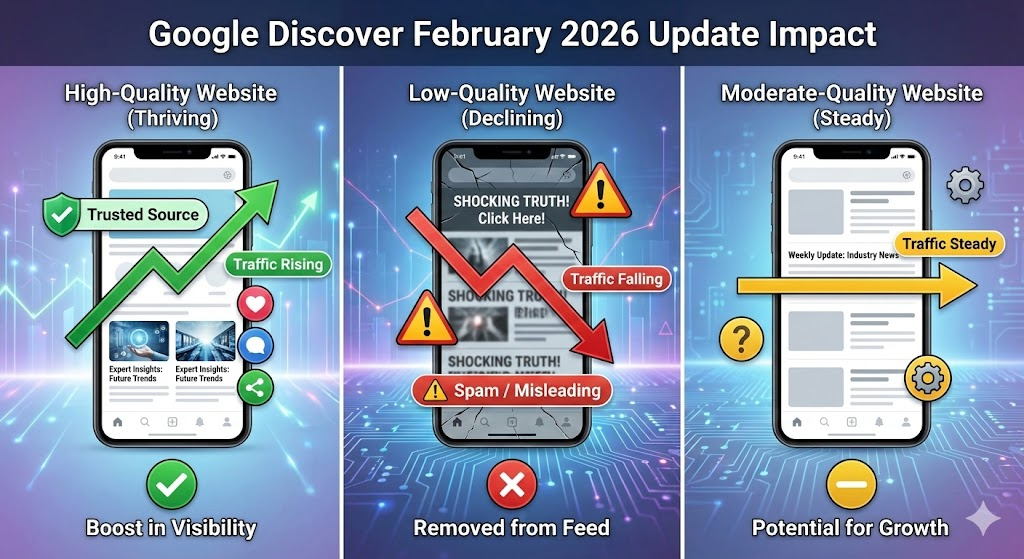
Low-Quality Websites
Websites relying on shortcuts faced major losses.
Common issues include:
- Plagiarism
- AI-generated content without editing
- Poor formatting
- Lack of sources
- Excessive advertising
Such websites saw major drops in Discover visibility.
Moderate-Quality Websites
Some websites saw minimal changes.
These websites usually have acceptable content but lack strong authority or consistency.
With proper improvements, they can still grow.
Winners and Losers After the Update
Websites That Benefit
- Professional publishers
- Educational platforms
- Industry experts
- Research-based blogs
- Trusted news outlets
Websites That Struggle
- Content farms
- Spam networks
- Fake news portals
- Auto-publishing sites
- Low-effort blogs
This update rewards long-term commitment over quick gains.
Read Also:- Top 10 AI Tools to Make Money Online in 2026 (Beginner to Pro Guide)
Optimization Strategies for Google Discover in 2026
To succeed after this update, publishers must follow structured and ethical optimization practices.
1. Focus on User Intent
Every article should answer real questions.
Before writing, ask:
- What problem does this solve?
- Who will benefit from this?
- Is this information accurate?
User-focused content performs better than keyword-focused content.
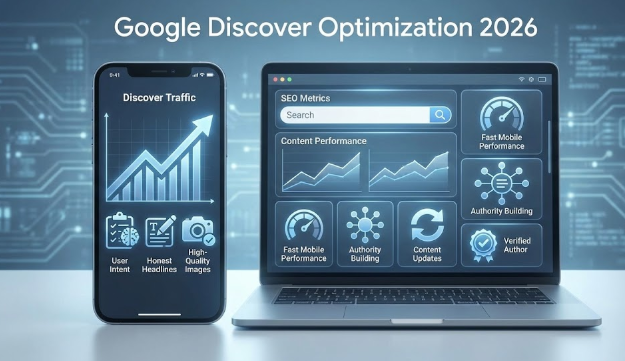
2. Write Informative and Honest Headlines
Headlines should:
- Clearly reflect the content
- Avoid exaggeration
- Create genuine curiosity
- Include primary keywords naturally
Balanced headlines improve trust and engagement.
3. Use High-Resolution and Relevant Images
Google Discover strongly prefers visual-rich content.
Best practices include:
- Minimum width of 1200 pixels
- Clear subject focus
- Proper compression
- Descriptive alt text
Avoid stock images that feel generic.
4. Improve Mobile Performance
Since Discover is primarily mobile-based, performance matters greatly.
Ensure:
- Fast loading speed
- Minimal pop-ups
- Readable font size
- Clean layout
Page experience directly influences rankings.
5. Build Topic Authority
Publishing consistently in one niche builds credibility.
Example:
Instead of writing about random topics, focus on:
- Digital marketing
- Technology
- Health
- Education
- Finance
Over time, Google recognizes your site as an authority.
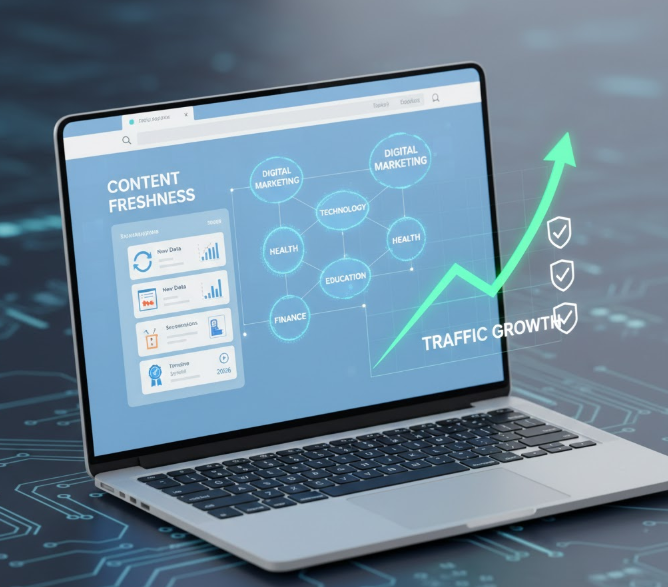
6. Maintain Content Freshness
Update older articles regularly.
Refresh:
- Data
- Trends
- Screenshots
- Examples
Fresh content remains relevant and competitive.
7. Establish Author Credibility
Author transparency improves trust.
Include:
- Detailed bio
- Experience summary
- Social media links
- Professional background
Anonymous content is less trusted in 2026.
Common Mistakes That Harm Discover Performance
Many publishers lose traffic due to avoidable errors.
Major mistakes include:
- Publishing without verification
- Using misleading thumbnails
- Over-optimization
- Ignoring readability
- Excessive advertisements
- Copying competitors
Avoiding these mistakes improves long-term stability.
Read Also:- Best SEO Tools for US Agencies 2026: A Deep, Real-World Guide Built for Results
Frequently Asked Questions
Does this update affect Google Search?
It mainly targets Discover, but improving quality may also benefit Search rankings indirectly.
How long does recovery take?
Recovery usually takes two to six months, depending on improvements and consistency.
Is regional content more important now?
Yes. Local relevance is a major ranking factor in 2026.
Can new websites succeed in Discover?
Yes, if they publish original, useful, and trustworthy content consistently.
Is AI content completely banned?
No, but unedited AI content performs poorly. Human editing and fact-checking are essential.
Future of Google Discover After 2026
Google is moving towards a more responsible content ecosystem.
Future updates are likely to focus on:
- Fact verification
- Author authentication
- Content transparency
- Misinformation control
- Personalization accuracy
Publishers who adapt early will benefit most.
Conclusion
The Google Discover Update February 2026 marks a major shift toward quality-driven, trust-based content distribution.
The era of shortcuts, manipulation, and mass-produced articles is ending.
To succeed in Discover, publishers must prioritize:
- Accuracy
- Originality
- User experience
- Professional integrity
- Long-term value
Websites that respect their audience and invest in meaningful content will continue to grow.
In 2026 and beyond, sustainable success in Google Discover depends on one principle:
Providing real value to real people.