How to Earn Money from Facebook Without Monetization:- When people think about making money from Facebook, they often think about Facebook Monetization, video ads, or having thousands of followers. But what if your Facebook Page is not eligible for monetization? What if you are just starting and have a small audience?
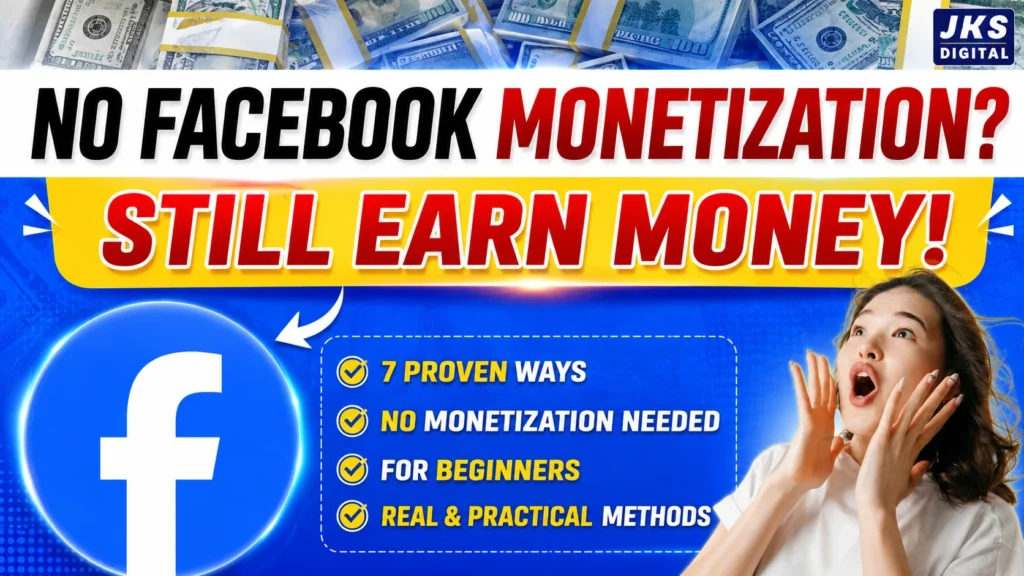
The good news is that Facebook Monetization is not the only way to create an income opportunity through Facebook.
Facebook can also be used to reach potential customers, showcase your skills, build trust, and promote something genuinely valuable. Many freelancers, business owners, and creators do not depend on Facebook to pay them directly. Instead, they use the platform to connect with people who may eventually become customers or clients.
This guide explains practical and legitimate ways to earn money using Facebook without depending on its monetization programs.
Can You Really Earn Money from Facebook Without Monetization?
Yes, but it is important to understand how it works.
With Facebook Monetization, the platform may pay eligible creators through its available monetization programs. Earning without monetization works differently. In this case, Facebook acts as a platform that helps you reach people, while your income comes from a product, service, skill, referral, or business opportunity outside the monetization program.
For example, a graphic designer can share their work on Facebook and attract clients. A business owner can use Facebook to bring customers to their products or services. Someone who creates helpful content may recommend relevant products through an affiliate program and earn a commission when eligible purchases are made.
In simple terms, Facebook can help you find opportunities, even when Facebook itself is not paying you for your content.
You also do not necessarily need millions of followers. A smaller audience that is genuinely interested in what you offer can sometimes be more valuable than a large audience with no interest in your niche.
What Is the Difference Between Facebook Monetization and Earning Without Monetization?
These two concepts are often confused, but they are quite different.
Facebook Monetization
Facebook Monetization generally refers to programs through which eligible creators can earn directly through the platform. Eligibility requirements, available features, and policies may vary depending on the program and location.
Earning Without Facebook Monetization
In this approach, Facebook does not directly pay you for views or content. Instead, you use Facebook to create opportunities such as:
- Finding freelance clients
- Selling products or services
- Promoting relevant affiliate products
- Generating leads for businesses
- Building an audience for a digital product
- Connecting with potential customers
One advantage of this approach is that your income does not depend entirely on qualifying for a particular monetization feature. Your earning potential is more closely connected to the value you provide, the audience you build, and the products or services you offer.
Who Can Earn Money from Facebook Without Monetization?
You do not have to be an influencer or a famous content creator to use Facebook as part of your earning strategy. Different people can use the platform in different ways.
Students and Beginners
Students can learn a useful skill and use Facebook to showcase their work. Skills such as graphic design, video editing, content writing, and social media management can be promoted through a professional profile or Page. In the beginning, building a portfolio and demonstrating your abilities is often more important than trying to earn immediately.
Freelancers
Freelancers can use Facebook to participate in relevant communities, share their expertise, and connect with people who may need their services. Simply sending spam messages to strangers is unlikely to build long-term trust. Showing your knowledge through useful content can create better opportunities.
Small Business Owners
Business owners can use Facebook to introduce their products or services to potential customers, answer common questions, and build awareness. For many small businesses, a Facebook presence can become one of several channels used to communicate with customers.
Content Creators
Creators can build an audience around a particular topic and explore suitable opportunities such as services, products, or collaborations. The key is to build trust instead of treating every follower as someone who must immediately make a purchase.
Digital Marketers and Service Providers
Digital marketers and other service providers can use Facebook to share educational content, showcase their work, and generate business inquiries. When you can clearly demonstrate how your skills solve a real problem, Facebook can help you become visible to potential clients.
1. Earn Money Through Facebook Affiliate Marketing
Affiliate marketing is one of the ways people use Facebook to generate income, but success usually requires more than posting affiliate links repeatedly.
In affiliate marketing, you promote a company’s product or service using an approved affiliate program. If someone makes an eligible purchase through your referral and the program’s conditions are met, you may earn a commission.
How Can Facebook Be Used for Affiliate Marketing?
Start by choosing a niche that you understand and that has an audience with genuine interest. For example:
- Technology and software
- Education and online learning
- Beauty and skincare
- Business tools
- Home and lifestyle
- Digital products
Instead of constantly posting links, focus on creating content that is useful to the people you want to reach. You might explain how a product works, compare suitable options, or help people solve a problem before making a recommendation.
For example, someone who creates content about productivity tools could explain the features of different tools and recommend one when it is genuinely suitable for a particular need.
Trust Matters More Than Links
People are less likely to trust recommendations from someone who promotes everything for a commission. A more sustainable approach looks like this:
Useful Content → Trust → Relevant Recommendation → Potential Income
Only recommend products you can discuss honestly. Avoid misleading claims, fake reviews, or promises about guaranteed results. It is also important to follow the terms of the affiliate program and the applicable Facebook policies.
2. Sell Your Skills and Freelance Services Through Facebook
If you have a useful skill, you do not need Facebook Monetization to start looking for earning opportunities. In many cases, your skills and portfolio matter more than your follower count.
Read Also:- 7 AI Tools That Can Help You Earn Money Online in 2027 – No Investment Required
Some services you may offer include:
- Graphic design
- Video editing
- Social media management
- Content writing
- Website development
- Search engine optimization (SEO)
- Digital marketing support
How Facebook Can Help You Find Clients
You can use Facebook to share examples of your work, publish helpful content, and participate professionally in communities related to your industry.
For instance, instead of posting only, “I am a video editor. Hire me,” you could share a useful post about common mistakes that reduce the quality of short videos. This gives potential clients a chance to understand your knowledge before they contact you.
When people repeatedly see useful and relevant work from you, they may begin to see you as someone who understands the subject. That credibility can be more valuable than simply asking for work.
A Practical Tip for Beginners
If you do not have paying clients yet, create a few sample projects that demonstrate what you can do. A small portfolio can help potential clients see your abilities instead of relying only on your promises.
Followers may give you visibility, but your skills and results are what can turn that visibility into an opportunity.
3. Get Customers for Your Own Business Through Facebook
If you already run a business, Facebook can be used as a customer acquisition channel rather than simply an entertainment platform.
Whether you sell a product, provide a local service, offer coaching, or run an online business, Facebook can help you communicate with people who may be interested in what you offer.
However, posting “Buy Now” every day is unlikely to build a strong relationship with an audience. People often want to understand how a product or service can solve their problem before they decide to contact or buy from a business.
A balanced Facebook content strategy can include:
- Educational posts that answer common questions
- Helpful tips related to your industry
- Genuine examples of your work
- Behind-the-scenes content
- Customer experiences or testimonials, where appropriate
- Clear information about your products or services
This approach allows you to build trust before asking people to take the next step.
A Small Facebook Audience Can Still Create Earning Opportunities
One of the biggest misconceptions about making money through Facebook is that you need to go viral first.
Imagine that you offer a specific service and only a few hundred relevant people see your content. If some of those people genuinely need your service and one of them becomes a paying client, that can still create a meaningful earning opportunity.
For this reason, views and follower numbers should not be the only measure of success. Reaching the right people can be more valuable than reaching a large number of people who are not interested in what you offer.
The foundation of earning money from Facebook without monetization is simple: use the platform to provide value, build trust, and connect that value with a legitimate product, service, or opportunity.
4. Sell Digital Products Through Facebook
Selling digital products is another way to earn money through Facebook without relying on Facebook’s built-in monetization programs. Unlike physical products, digital products can often be created once and delivered repeatedly, depending on the type of product and your business model.
Examples of digital products include:
- E-books and guides
- Design templates
- Social media templates
- Printable resources
- Online courses
- Educational notes
- Checklists and planners
- Digital toolkits
The most important thing is not simply creating a digital product—it is creating something that solves a specific problem.
Read Also:- How to Earn Money on Toptal in 2026 | Complete Beginner’s Guide
For example, a generic “Digital Marketing Guide” may be difficult to sell because there are already thousands of free resources available online. However, a practical resource designed for a specific audience, such as a checklist that helps small businesses prepare their first social media campaign, may provide clearer value.
How to Use Facebook to Promote Digital Products
Facebook can help you introduce your digital product to the right audience through useful content. You can share tips related to the problem your product solves and explain how the complete resource can help people who want additional guidance.
For example:
Useful free content → Build trust → Introduce the product → Guide interested people to purchase
Avoid making every post a sales post. If people feel that every interaction is only about selling, they may lose interest. A combination of helpful information and relevant promotion can create a more sustainable approach.
You should also be clear about what buyers will receive, how the product will be delivered, and whether there are any limitations. Transparency helps prevent misunderstandings and builds trust.
5. Use Facebook Groups to Build an Audience and Create Opportunities
Facebook Groups can be useful for people who want to connect around a specific topic, interest, profession, or problem. A well-managed group can help you build relationships with people who are genuinely interested in a particular niche.
For example, a person working in digital marketing could create or participate in communities related to:
- Small business growth
- Freelancing
- Local business marketing
- Website development
- Social media marketing
The goal should not be to join a group and immediately start posting promotional links. That approach can look like spam and may violate group rules.
Instead, focus on becoming genuinely helpful. Answer questions, share useful insights, and participate in relevant discussions. Over time, people may become familiar with your knowledge and expertise.
Read Also:- How to Make Money with Graphic Designing in 2027: 10 Proven Ways to Earn Online
How Can a Facebook Group Create Income Opportunities?
Once you have built trust with the right audience, opportunities may come from:
- Selling relevant products or services
- Finding freelance clients
- Promoting educational resources
- Offering consultations
- Building partnerships with other businesses
However, a group should provide value even to members who never become customers. A community built only for constant promotion is less likely to maintain long-term engagement.
Building Your Own Group vs Joining Existing Groups
Both approaches can work, but they serve different purposes.
Joining Existing Groups
This can be helpful when you are just starting because an active audience already exists. Look for communities where your skills or knowledge are genuinely relevant.
Before posting anything promotional, understand the group’s rules. Some groups allow service promotion on specific days, while others do not allow it at all.
Creating Your Own Group
Creating a group gives you more control over the community, but it also requires consistent effort. You need a clear reason for people to join and stay.
A group such as “Digital Marketing Tips” is very broad. A more specific community focused on a particular audience and problem may give people a clearer reason to participate.
For example, a community focused on helping local businesses understand online marketing has a more defined purpose than a general marketing group.
Note:- Want to stay updated with the latest Digital Marketing tips, Social Media updates, and online earning ideas? Join the JKS Digital Facebook Group and WhatsApp Channel to stay connected with our latest helpful updates and guides.
6. Help Local Businesses and Earn Money Through Your Services
Many local businesses understand that they need an online presence, but they may not have the time or knowledge to manage it effectively. This creates opportunities for people who have useful digital skills.
You can use Facebook to connect with local businesses and offer services such as:
- Social media content creation
- Facebook Page management
- Graphic design
- Video editing
- Advertising support
- Website services
- Local SEO support
Start With the Problem, Not the Sales Pitch
Instead of sending a message that says, “I provide digital marketing services. Are you interested?”, take time to understand the business first.
Look at questions such as:
- Is their Facebook Page active?
- Is their business information complete?
- Are they sharing useful content?
- Do their posts clearly explain what they offer?
- Are customers engaging with their content?
If you notice a genuine area for improvement, you can approach the business professionally with a specific and helpful suggestion.
For example, rather than making a broad promise to “grow their business,” you could explain a specific service you offer and how it may help improve a particular aspect of their online presence.
Avoid promising guaranteed sales or unrealistic results. Digital marketing results can depend on many factors, including the product, audience, competition, budget, and overall business strategy.
Build Proof Before Expecting Clients to Trust You
Businesses often want to know whether you can actually deliver what you promise. If you are new, consider building a portfolio with sample work or projects that demonstrate your skills.
For example, a social media manager can create sample content for a fictional business or redesign a few posts to demonstrate their creative approach. Be transparent about sample projects and do not present unpaid or fictional work as results from a real client.
A strong portfolio, honest communication, and a clear understanding of the client’s needs can help you build trust over time.
Read Also:- How to Earn Money from WhatsApp in 2026: 15 Proven Ways to Make Money Online
7. Generate Leads for Businesses
Lead generation is another business-focused way to use Facebook for earning opportunities.
A lead is generally a person who has shown interest in a product or service and may become a potential customer. For example, someone who fills out an inquiry form for a course or contacts a business to ask about its services could be considered a potential lead.
Businesses often need more people to discover their products or services. If you have the skills to help a business attract relevant inquiries, lead generation can become a service you offer.
How Facebook Can Support Lead Generation
Depending on the business and its marketing strategy, Facebook can be used to:
- Share educational or promotional content
- Build awareness around a service
- Direct interested people to a website or landing page
- Encourage inquiries through messaging
- Support advertising campaigns when appropriate
The quality of a lead is often more important than simply generating a large number of inquiries. A business selling a specific service may benefit more from ten genuinely interested people than hundreds of people who have no intention of becoming customers.
Important Skills for Lead Generation
Successful lead generation usually requires more than publishing a post. Useful skills can include:
- Understanding the target audience
- Writing clear marketing messages
- Creating effective content or creatives
- Designing a simple customer journey
- Tracking inquiries and results
- Communicating with businesses professionally
If you want to offer lead generation as a service, be honest about what you can control. You may be able to help a business generate inquiries, but you cannot guarantee that every inquiry will become a sale.
How Much Money Can You Earn From Facebook Without Monetization?
There is no single answer to this question because earning depends on what you are offering and how effectively you use Facebook.
A freelancer who finds one client through Facebook may earn more than a creator with thousands of followers but no clear way to convert their audience into income. Similarly, someone selling a useful digital product may earn differently depending on the price, demand, audience trust, and marketing strategy.
Your earning potential can depend on factors such as:
- The skill or product you offer
- The demand in your niche
- The quality and relevance of your audience
- Your pricing strategy
- Your ability to build trust
- Your consistency
- Your ability to convert interest into action
Be careful with articles or social media posts that promise a fixed amount of money within a specific number of days. There is no guaranteed income from Facebook, and genuine earning usually takes time, learning, and consistent effort.
A more realistic goal for beginners is to focus first on learning a valuable skill, understanding an audience, and creating a useful offer. Income opportunities can become more sustainable when they are built on genuine value rather than shortcuts.
Read Also:- YouTube vs Facebook vs Instagram in 2026: Which Platform Has Highest Earning Potential?
How to Start Earning From Facebook as a Complete Beginner
If you are new to Facebook marketing or online earning, trying every method at once can be confusing. It is usually better to start with one clear direction.
Step 1: Choose One Earning Method
Decide how you want to create income opportunities. You might choose affiliate marketing, freelancing, digital products, or helping businesses with a specific service.
Do not choose a method simply because someone online claims they made a large amount of money from it. Consider your existing skills, interests, available time, and willingness to learn.
Step 2: Choose a Specific Audience or Niche
Knowing who you want to help can make content creation much easier.
For example, “I want to help everyone” is too broad. A clearer approach could be helping:
- Small business owners with social media content
- Students with graphic design resources
- Local businesses with online marketing
- Beginners who want to learn a specific skill
The more clearly you understand your audience’s problems, the easier it becomes to create useful content and offers.
Step 3: Create a Professional Facebook Presence
Depending on your goal, this could include your personal professional profile, a Facebook Page, or a Group.
Make sure people can quickly understand:
- Who you are
- What you do
- Who you help
- How they can contact you
You do not need an overly complicated profile. Clear information and a professional presentation are more important than using too many promotional words.
Step 4: Create Content That Is Actually Useful
A good question to ask before publishing is:
“Will someone learn something, solve a problem, or find this useful?”
Useful content can include tutorials, practical tips, answers to common questions, examples, and honest lessons from your experience.
You do not need to post all day. Consistently publishing useful content is generally more valuable than posting a large amount of low-quality content.
Step 5: Build Trust Before Expecting Sales
People are more likely to work with or buy from someone they trust.
Trust can be built by:
- Providing accurate information
- Being honest about your experience
- Avoiding exaggerated promises
- Responding professionally to questions
- Showing genuine examples of your work
- Being consistent over time
Trust is not built through one viral post. It often develops gradually through repeated positive interactions.
Step 6: Give People a Clear Next Step
If someone finds your content useful, they should understand what they can do next.
Depending on your business model, this could be:
- Contacting you for a service
- Visiting your website
- Viewing your portfolio
- Learning more about a product
- Joining an email list or community
Avoid confusing people with too many different calls to action. A simple and relevant next step is often easier to understand.
Step 7: Track What Is Working and Improve
Do not assume that every post or strategy will work immediately. Pay attention to the type of content that receives meaningful engagement, questions, inquiries, or visits.
Focus on quality signals rather than only likes. If a post brings relevant inquiries or helps you understand what your audience needs, it may be more valuable than a post with many likes but no meaningful outcome.
Over time, use what you learn to improve your content, offer, and overall strategy.
Common Mistakes to Avoid When Trying to Make Money From Facebook
Understanding what not to do can save beginners a lot of time.
Chasing Followers Instead of the Right Audience
A large follower count may look impressive, but followers who are not interested in your niche are unlikely to become customers or clients.
Focus on attracting people who are genuinely interested in the topic, product, or service you offer.
Posting Only Promotional Content
If every post asks people to buy something, your audience may stop paying attention. Balance promotional content with educational, helpful, or engaging content.
Making Unrealistic Income Claims
Avoid statements such as “Earn ₹1 lakh every month with no skills” unless you can genuinely prove the claim and explain all the conditions involved. Misleading claims can damage trust and may also create compliance issues.
Spamming Facebook Groups and Comments
Posting the same promotional message everywhere is not an effective long-term strategy. It can harm your reputation and may result in your content being removed from communities.
Participate where you can genuinely contribute.
Ignoring Facebook Rules and Policies
Facebook’s policies and features can affect how you use the platform. Always review the relevant rules before running promotions, advertising, or using commercial features. Following platform rules is important for protecting your account and building a sustainable presence.
Giving Up Too Quickly
Building an audience, learning a skill, or finding clients can take time. If you keep changing your niche and strategy every week, it becomes difficult to understand what is actually working.
Give a well-planned approach enough time to learn from the results, then make improvements based on what you observe.
Facebook Monetization vs. Earning Without Monetization
| Facebook Monetization | Earning Without Monetization |
|---|---|
| Income may come directly through Facebook’s available monetization programs | Income usually comes from customers, clients, products, services, or other external opportunities |
| Eligibility requirements may apply | You can start building opportunities without qualifying for a monetization program |
| Platform rules and available features can affect access | Your strategy can use multiple income sources |
| Often connected to content performance and program requirements | Can depend on skills, offers, audience trust, and business strategy |
| Facebook pays eligible creators directly through applicable programs | Facebook helps you reach people who may create business opportunities |
Neither option is automatically better for everyone. Some creators may eventually use both approaches. The important point is that a lack of monetization access does not mean Facebook cannot be useful for earning opportunities.
Frequently Asked Questions
Can I earn money from Facebook without monetization?
Yes. You can use Facebook to promote your skills, services, products, affiliate recommendations, or business. In this approach, Facebook helps you reach potential customers or clients instead of paying you directly through a monetization program.
How many followers do I need to earn money from Facebook?
There is no fixed number of followers required to earn money through methods such as freelancing, selling products, or finding clients. A smaller and relevant audience can sometimes be more valuable than a large audience that has no interest in what you offer.
Can beginners earn money from Facebook?
Beginners can use Facebook to build skills, showcase their work, learn about an audience, and create earning opportunities. However, income is not guaranteed and usually requires time, effort, and a useful product or skill.
Can I earn money from a Facebook Page without making videos?
Yes. Depending on your strategy, you can use written posts, images, educational content, communities, and professional networking to promote a service, product, or other legitimate opportunity. Video content is not the only way to use Facebook for business.
Is affiliate marketing allowed on Facebook?
Affiliate marketing may be possible on Facebook, but you should follow Facebook’s applicable policies and the rules of the affiliate program you are using. Always use transparent and responsible promotional practices.
What is the easiest way to start earning from Facebook?
The best starting point depends on your skills and goals. If you already have a marketable skill, offering freelance services may be a practical option. If you have a useful product or expertise, selling a product or educational resource may be more suitable. Beginners should focus on learning one method rather than trying everything at once.
Do I need to spend money on Facebook Ads to earn money?
Not necessarily. Organic content and community participation can help you build visibility over time. Paid advertising can be useful for some businesses, but it requires a budget, strategy, and understanding of the target audience. Spending money on ads does not guarantee a profit.
Is Facebook still useful for making money?
Facebook can still be useful as a platform for building communities, connecting with audiences, and promoting businesses or services. The results you get depend on your niche, strategy, audience, and the value you provide.
Final Thoughts
Facebook Monetization can be an exciting option for creators, but it should not be seen as the only path to earning money through the platform. A Facebook Page, profile, or community can also become a place where people discover your skills, learn from your content, and connect with your business.
The most sustainable approach is not to chase quick money or viral posts. Instead, focus on understanding a specific audience and giving them something genuinely useful—whether that is a helpful service, a valuable product, practical knowledge, or a relevant recommendation.
You do not need to wait for a monetization approval to start building opportunities. Start with what you know, develop skills where needed, and use Facebook as a tool to connect your work with the people who may genuinely benefit from it.
In the long run, an audience may be valuable—but the trust you build with that audience is what can turn attention into a real opportunity.