Best SEO Tools for US Agencies 2026:- The US SEO market in 2026 is not forgiving.
Competition is brutal. Client expectations are high.
And the cost of choosing the wrong SEO tool is no longer just inefficiency — it’s lost revenue, churned clients, and damaged agency credibility.
US agencies today operate in a very different environment compared to global or emerging markets:
- Higher CPCs
- Hyper-competitive SERPs
- Strong local intent (city, state, service-based searches)
- Clients who demand measurable ROI, not vanity metrics
This is why SEO tools are no longer “support software.”
They are core infrastructure for US agencies.
This guide is not a random list of tools.
It is a decision framework — written specifically for:
- US-based SEO agencies
- Digital marketing agencies serving US clients
- Consultants managing local, multi-state, and enterprise SEO campaigns
Every tool mentioned here is evaluated from a US-agency lens, not a generic blogger’s perspective.
How We Evaluated These SEO Tools (Transparency Matters)
Before listing any SEO tools, one thing must be made absolutely clear:
Not all SEO tools perform equally in the US market.
Many tools look powerful on the surface, but when used inside a real US-based agency workflow—handling competitive niches, local intent, and ROI-focused clients—they often fall short.
This guide does not rank tools based on popularity, affiliate hype, or feature count.
Each tool included here was evaluated from a real US agency perspective, where accuracy, scalability, and profitability matter more than flashy dashboards.
Below is the exact evaluation framework we used.
1. US SERP Accuracy (Non-Negotiable)
The US search market is one of the most competitive and data-sensitive environments in the world.
A tool that performs well globally can still fail badly in US SERPs.
We evaluated each tool on:
Keyword data reliability for US searches
- Does the tool provide accurate US-only keyword volumes?
- Is the data consistent across high-competition niches like legal, SaaS, healthcare, and finance?
- Are seasonal and trend-based US searches reflected properly?
Local & city-level accuracy
- Can the tool track rankings at city, ZIP code, or state level?
- Does it reflect real local intent (e.g., “SEO agency in Austin” vs national results)?
- Is the local data usable for Google Business Profile optimization?
Competitive density handling
- Can the tool accurately measure difficulty in highly saturated US niches?
- Does it identify realistic ranking opportunities, or just theoretical ones?
Tools that failed to deliver reliable US SERP data were excluded, regardless of their global popularity.

2. Agency Workflow Fit (Real-World Usability)
A tool can be powerful, but if it disrupts agency workflows, it becomes a liability.
We tested each tool against real agency needs:
Multi-client management
- Can multiple clients be managed without messy setups?
- Is account separation clean and scalable?
- Does the tool support agency-style project organization?
Reporting & exports
- Are reports client-ready or do they require heavy manual cleanup?
- Can reports be customized for US clients who care about ROI and conversions?
- Is white-labeling available or feasible?
Team collaboration
- Can multiple team members work simultaneously?
- Are permissions and access controls practical for agencies?
- Does the tool reduce internal friction or create more?
Tools that work for solo bloggers but break under agency-scale usage did not make this list.
3. ROI for US Agencies (Cost vs Real Value)
US agencies operate with higher costs—and higher client expectations.
Every tool must justify its price in actual business impact, not just features.
We evaluated:
Pricing in USD (realistic perspective)
- Is the pricing reasonable for US agency margins?
- Does the cost scale fairly as clients increase?
- Are essential features locked behind expensive upgrades?
Scalability for 5, 20, or 100+ clients
- Can the tool grow with the agency?
- Does pricing explode as client count increases?
- Is it sustainable long-term or just viable at small scale?
Real value vs cost
- Does the tool save time, increase rankings, or improve conversions?
- Can the tool’s cost be recovered with just 1–2 clients?
- Is the tool replaceable or truly essential?
Any tool that looked impressive but failed ROI logic for US agencies was removed.
4. Local SEO Strength (Critical for the US Market)
Local SEO is not optional in the United States—it is foundational.
Read Also:- How Small Businesses in the USA Can Do Digital Marketing on a Budget
We evaluated tools on their ability to support:
Google Business Profile optimization
- GBP audits and tracking
- Local visibility monitoring
- Review signals and local pack insights
Citations, reviews, and local rankings
- Support for US citation ecosystems
- Review monitoring across US platforms
- Accurate local rank tracking by city and ZIP code
Tools that ignored or weakly supported US local SEO realities were disqualified.
5. 2026 Readiness (Future-Proofing Matters)
SEO tools that are not adapting to AI, automation, and integration will not survive the next few years.
We assessed:
AI features (practical, not gimmicky)
- Does AI improve decision-making or just generate noise?
- Is AI actually useful for SEO strategy, content, or analysis?
Automation
- Can repetitive tasks be automated?
- Does the tool reduce manual work for agencies?
- Is automation reliable or risky?
Integration with modern stacks
- Compatibility with analytics, reporting, and CRM tools
- Ability to fit into modern agency tech ecosystems
Tools stuck in “2019-style SEO” thinking were excluded.
Only tools that proved real agency-level usefulness in the US market—across accuracy, workflow, ROI, local SEO, and future readiness—earned a place in this guide.
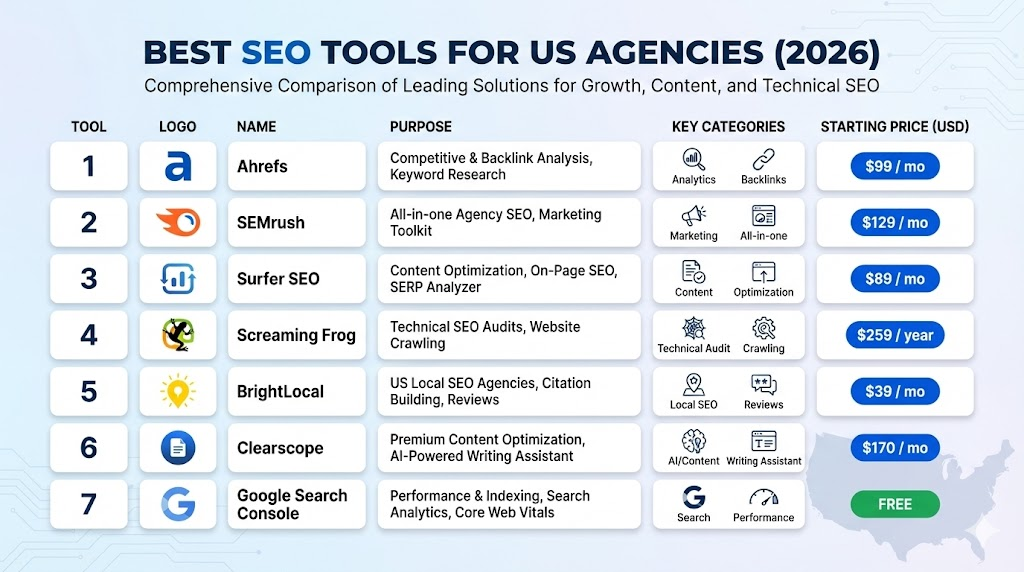
Quick Comparison: Best SEO Tools for US Agencies (2026)
| Tool | Best For | Starting Price (USD) |
|---|---|---|
| Ahrefs | Competitive & backlink analysis | $99 |
| SEMrush | All-in-one agency SEO | $129 |
| Surfer SEO | Content optimization | $89 |
| Screaming Frog | Technical SEO audits | $259/year |
| BrightLocal | US local SEO agencies | $39 |
| Clearscope | Premium content optimization | $170 |
| Google Search Console | Performance & indexing | Free |
1. Ahrefs — The Competitive Intelligence Backbone for US Agencies
Who Should Use Ahrefs
US agencies working with:
- Competitive niches (legal, SaaS, finance, healthcare)
- National & multi-state campaigns
- Link-building-driven SEO strategies
Why Ahrefs Works Exceptionally Well in the US Market
US SERPs are link-heavy.
Authority still matters — especially in competitive industries.
Ahrefs provides:
- One of the largest US backlink databases
- Reliable US keyword difficulty scoring
- Accurate competitor gap analysis
Key Features That Matter in 2026
- Site Explorer (deep competitor insights)
- Keyword Explorer with US-specific data
- Content Gap analysis
- Link intersect (critical for US link building)
- AI-powered keyword clustering
Pricing Reality (USD)
Starts at $99/month — not cheap, but justified for:
- Agencies charging $1,500+ per client
- Link-building-focused strategies
Final Verdict for US Agencies
Ahrefs is not optional if your agency plays in competitive US niches.
It’s a strategic weapon, not just a tool.
2. SEMrush — The Most Complete All-in-One SEO Platform for US Agencies
Who Should Use SEMrush
- Full-service digital marketing agencies
- Agencies managing SEO + PPC + content
- Agencies that need client-friendly reporting
Why US Agencies Love SEMrush
SEMrush understands US marketing behavior better than most tools.
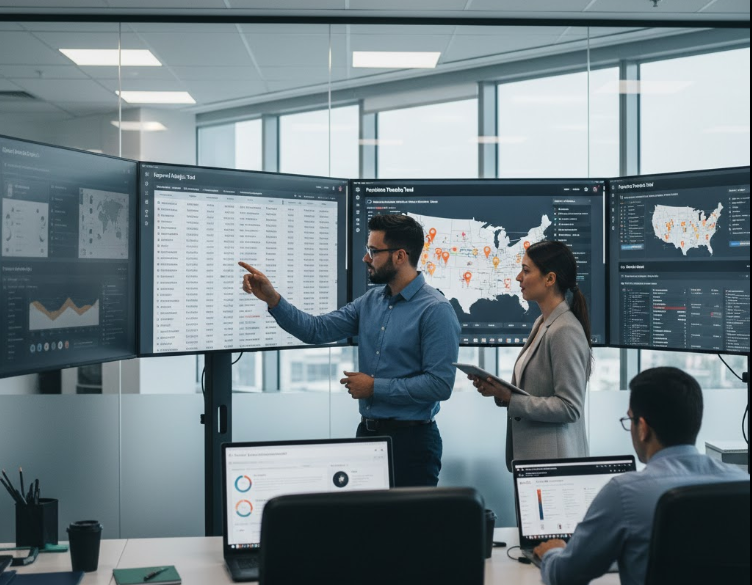
It excels at:
- Keyword intent mapping
- Local & national SEO tracking
- Competitor visibility across US SERPs
Read Also:- Hostinger vs Bluehost (2026–2027): Which Web Hosting is the Best Choice for You?
2026-Ready Features
- Keyword Magic Tool (excellent for US intent research)
- Position Tracking by US city/state
- On-page SEO checker
- AI content recommendations
- PPC & SEO integration (huge for US agencies)
Pricing (USD)
Starts at $129/month.
For US agencies:
- ROI becomes positive at 2–3 clients
- Reporting alone can save hours every month
Final Verdict
If you want one tool to manage most SEO tasks, SEMrush is the safest bet for US agencies in 2026.
3. Surfer SEO — Content That Actually Ranks in Competitive US SERPs
Who Should Use Surfer SEO
- Content-driven US agencies
- SEO agencies offering blog & landing page optimization
- Agencies targeting featured snippets
Why Surfer Works in the US Market
US SERPs are content-quality obsessed.
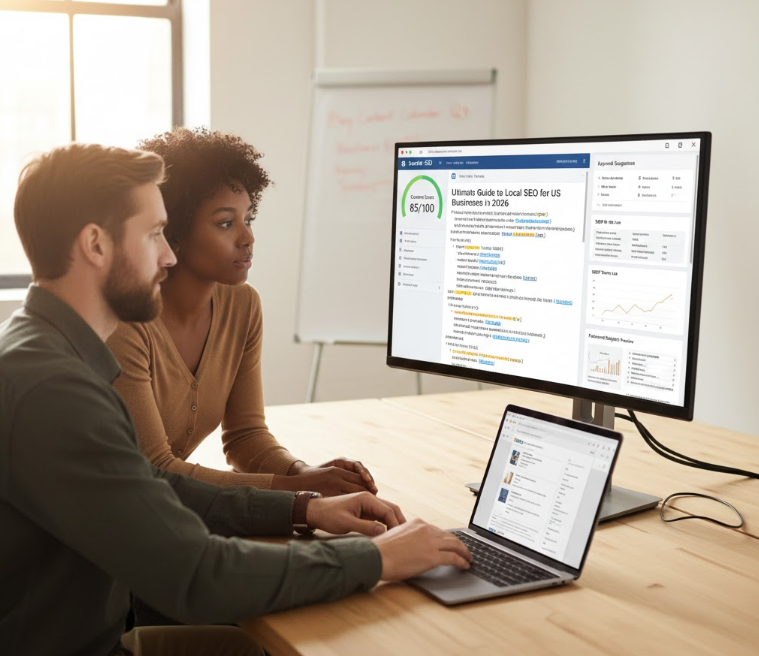
Surfer:
- Analyzes top US-ranking pages
- Converts SERP patterns into actionable optimization rules
- Helps writers meet US search intent expectations
Key Strengths
- NLP-based content scoring
- Real-time optimization
- SERP-based keyword suggestions
- Google Docs & CMS integration
Pricing
Starts at $89/month.
Final Verdict
Surfer is not a writing tool.
It’s a ranking alignment engine for US content.
4. Screaming Frog — Technical SEO Foundation for Serious US Agencies
Who Should Use Screaming Frog
- Agencies handling large US websites
- E-commerce SEO
- Technical audits & migrations
Why It’s Still Relevant in 2026

Technical SEO still breaks or makes rankings.
Screaming Frog:
- Crawls sites like Googlebot
- Identifies issues before they become ranking killers
- Gives full control over data
Read Also:- Top 10 AI Tools to Make Money Online in 2026 (Beginner to Pro Guide)
Key Use Cases
- Crawl budget optimization
- Core Web Vitals prep
- Indexation audits
- Large-scale site analysis
Pricing
$259/year — one of the best ROI tools ever.
Final Verdict
Every serious US agency must own Screaming Frog. Period.
5. BrightLocal — The Secret Weapon for US Local SEO Agencies
Who Should Use BrightLocal
- Local SEO agencies
- Agencies serving US service businesses
- Multi-location & franchise SEO specialists
Why BrightLocal Dominates US Local SEO
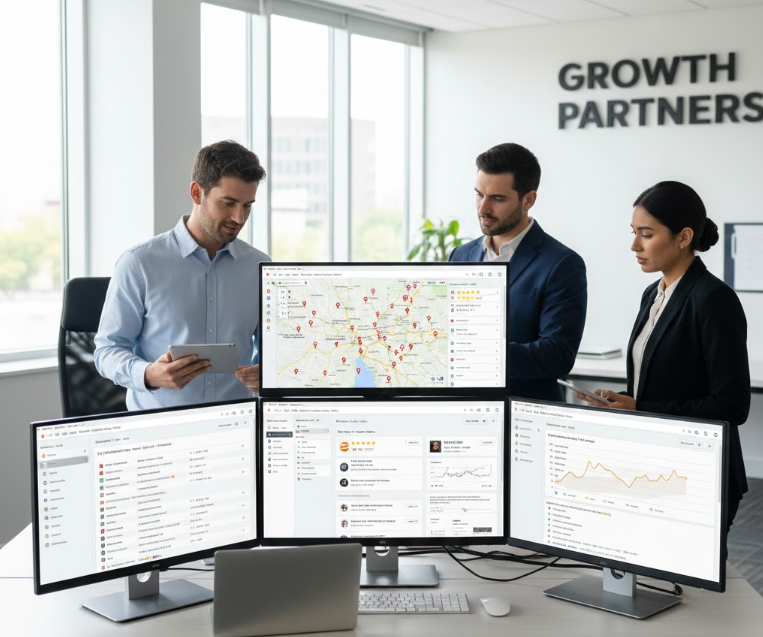
US local SEO is different:
- Reviews matter more
- Citations matter more
- GBP optimization is critical
BrightLocal handles:
- Citation building (US directories)
- Local rank tracking (by city/ZIP)
- Review monitoring
- GBP audits
Pricing
Starts at $39/month — extremely affordable.
Final Verdict
If your agency does local SEO in the US, BrightLocal is non-negotiable.
6. Clearscope — Premium Content Optimization for Authority-Driven US Niches
Who Should Use Clearscope
- Agencies in legal, finance, SaaS, healthcare
- Brands focused on topical authority
- High-budget US content campaigns
Why Clearscope Works

Clearscope focuses on:
- Semantic depth
- Topic coverage
- Authority signals
Google rewards this heavily in US SERPs.
Pricing
Starts at $170/month — expensive, but elite.
Final Verdict
Clearscope is for agencies that want dominance, not just rankings.
7. Google Search Console — Free but Critical for US SEO Success
Why It Matters
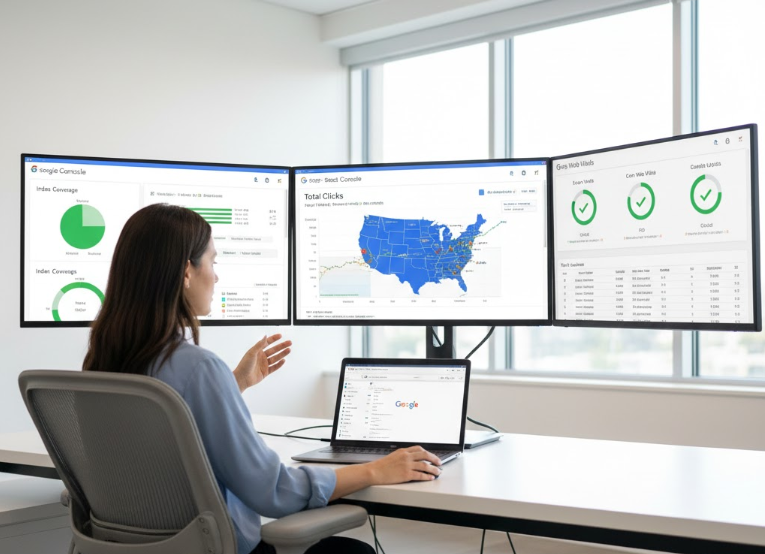
GSC is:
- Google’s own data
- Essential for indexing & performance tracking
- Critical for diagnosing US-specific issues
Key Uses
- Page performance by US queries
- Indexing & coverage issues
- Image & video search data
- Core Web Vitals monitoring
Final Verdict
Ignoring GSC is professional negligence.
Decision Guide: Which SEO Tool Should Your US Agency Choose?
Choosing the right SEO tools depends less on “best software” and more on agency size, client load, and service focus.
Below is a practical breakdown to help US agencies choose tools that match their current stage—without overpaying or overcomplicating workflows.
Read Also:- AI Digital Marketing in 2026: Real Workflow, Tools, Strategy & Earning Guide
Small US Agency (1–5 Clients)
Recommended Tools:
- SEMrush
- BrightLocal
- Google Search Console
Why this setup works:
At this stage, agencies need maximum coverage with minimum complexity. SEMrush handles keyword research, tracking, and basic audits, while BrightLocal supports US local SEO and Google Business Profile management. Google Search Console provides direct performance data from Google at no cost.
This combination keeps costs controlled while covering SEO, local visibility, and reporting essentials.
Growing Agency (5–20 Clients)
Recommended Tools:
- SEMrush
- Ahrefs
- Surfer SEO
- Screaming Frog
Why this setup works:
As client volume grows, agencies need deeper competitive insights, stronger content optimization, and technical control. Ahrefs strengthens backlink and competitor analysis, Surfer SEO improves content performance in competitive US SERPs, and Screaming Frog ensures technical SEO issues don’t scale with growth.
This stack balances strategy, execution, and scalability.
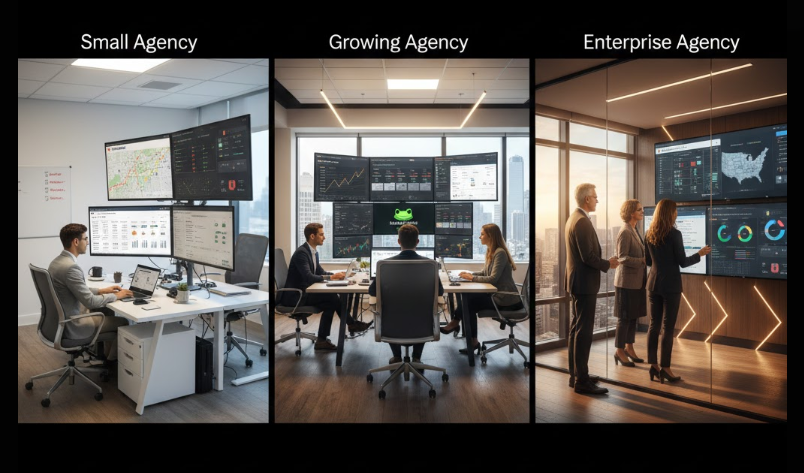
Enterprise / High-Ticket Agency
Recommended Tools:
- Ahrefs
- SEMrush
- Clearscope
- Screaming Frog
- Custom dashboards
Why this setup works:
High-ticket and enterprise clients demand precision, authority, and reporting depth. Clearscope supports topical authority and premium content strategies, while custom dashboards allow agencies to combine data across tools into client-ready insights.
This setup is designed for high-stakes SEO campaigns, multi-location brands, and enterprise-level reporting.
Key Takeaway
The best SEO tool stack is not the most expensive one—it’s the one that fits your agency’s size, client expectations, and growth stage.
As US agencies scale, tools should evolve from coverage → depth → authority.
Common Mistakes US Agencies Make with SEO Tools
- Buying too many tools without a workflow
- Using global data instead of US-specific data
- Ignoring local SEO tools
- Focusing on vanity metrics
Tools should serve strategy, not replace it.
Final Conclusion
SEO tools don’t guarantee rankings.
Good decisions do.
The best US agencies in 2026:
- Choose tools based on client type
- Align tools with workflow
- Measure ROI, not tool count
If your agency uses the right combination of tools —
you don’t just rank websites,
you build long-term authority and client trust.