ChatGPT Advertising Expansion 2026:- For more than two decades, online advertising has revolved around a familiar model. A user searches for information, visits a website, scrolls through social media, or watches a video, and advertisements appear alongside the content. Platforms such as Google, Facebook, Instagram, YouTube, and LinkedIn have dominated this ecosystem by connecting businesses with potential customers through targeted advertising.
However, a new shift is beginning to take shape.
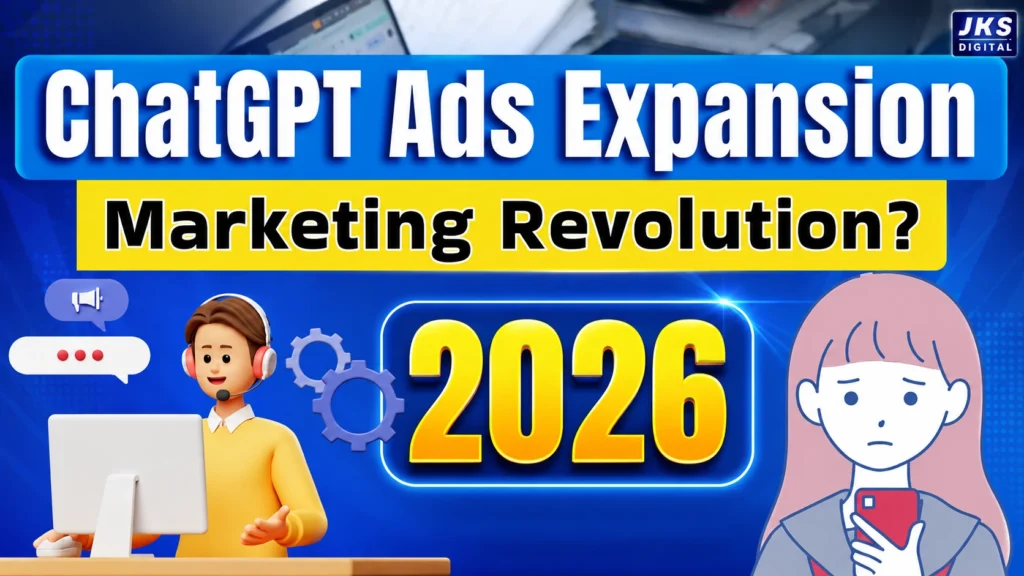
As artificial intelligence becomes a central part of how people search for information, compare products, learn new skills, and make purchasing decisions, AI-powered assistants are emerging as a completely new digital environment. One of the most significant developments in this space is OpenAI’s decision to expand ChatGPT advertising into additional markets while testing multi-advertiser placements.
While this may appear to be just another advertising update, the implications are far greater. It represents the possibility of a new advertising channel where brands interact with consumers inside conversations rather than traditional webpages.
For businesses, marketers, and advertisers, the question is no longer whether AI will influence digital marketing. The question is how quickly it will reshape it.
Understanding OpenAI’s Advertising Expansion
OpenAI’s latest advertising initiative involves expanding ad availability into new markets and experimenting with multi-advertiser placements.
Traditionally, digital advertisements appear on search engine results pages, websites, mobile applications, and social media feeds. ChatGPT introduces a fundamentally different environment because users interact through conversations.
Instead of typing keywords into a search engine and browsing ten different websites, users increasingly ask AI assistants direct questions such as:
- Which laptop is best for video editing?
- How can I improve my website’s SEO?
- What are the best CRM tools for small businesses?
- Which digital marketing course should I take?
These conversations often indicate strong purchase intent. Users are not casually scrolling; they are actively seeking solutions.
This creates a highly valuable opportunity for advertisers.
Multi-advertiser placements suggest that multiple brands may be presented within relevant sponsored areas rather than relying on a single advertiser. This approach could create a more competitive and informative advertising environment for users.
Why This Matters More Than Most People Realize
Many people view AI tools as productivity assistants. However, from a marketing perspective, AI assistants are becoming the next generation of information discovery platforms.
Think about how search behavior has evolved.
The Traditional Journey
A business owner searching for accounting software might:
- Open Google.
- Search for “best accounting software.”
- Visit multiple websites.
- Read reviews.
- Compare products.
- Make a decision.
This process could take hours.
The AI-Powered Journey
The same user may now ask:
“What is the best accounting software for a growing e-commerce business with fewer than 20 employees?”
Within seconds, an AI assistant can provide recommendations, comparisons, and implementation guidance.
The interaction becomes faster, more personalized, and more conversational.
As users spend more time inside AI environments, advertisers naturally want to be present where decision-making occurs.
The Birth of Conversational Advertising
One of the most interesting outcomes of ChatGPT advertising is the rise of conversational advertising.
Read Also:-Google 2026 Core Update Completed: What Changed in Search Rankings?
Traditional advertising interrupts users.
A person watches a video and sees an ad.
A person reads a blog and encounters a banner.
A person scrolls through social media and sees a sponsored post.
Conversational advertising is different.
It appears within the context of a user’s specific question or need.
For example:
Imagine a user asks:
“What tools should I use to start an email marketing campaign?”
Instead of showing a random advertisement, relevant marketing platforms could appear in a sponsored section associated with that conversation.
The advertisement becomes part of the information-seeking experience rather than a disruption.
This subtle difference could significantly increase relevance and engagement.
What This Means for Businesses
Businesses constantly search for ways to reach consumers at the right moment.
The most valuable marketing opportunities occur when a customer is actively looking for a solution.
AI conversations often reveal exactly that.
Higher Intent Audiences
A visitor reading a blog article may simply be exploring.
A social media user may be browsing for entertainment.
But someone asking ChatGPT:
“Which project management software is best for a remote team?”
is already moving closer to a buying decision.
This creates access to highly qualified audiences.
Better Contextual Relevance
Traditional advertising often relies on demographics and browsing behavior.
AI conversations provide context.
A user’s question reveals intent, goals, challenges, and priorities.
This context could allow businesses to connect with prospects more effectively than traditional targeting methods.
Opportunities for Smaller Brands
Historically, large companies dominated advertising because they had larger budgets.
Conversational advertising could create opportunities for niche businesses and specialized service providers that solve very specific problems.
In some situations, relevance may become more important than brand size.
Read Also:- Google’s New Spam Policy: Back Button Hijacking Will Now Be Penalized
What Digital Marketers Need to Learn Next
The expansion of AI advertising does not mean traditional digital marketing will disappear.
However, marketers will need new skills.
1. Understanding User Intent
Keyword targeting alone may not be enough.
Marketers must understand the actual problems users are trying to solve.
Instead of targeting:
“SEO tools”
Marketers will need to think about questions like:
- How can I increase organic traffic?
- Why is my website losing rankings?
- How do I improve local SEO?
The focus shifts from keywords to conversations.
2. Building Authority
AI systems increasingly prioritize trustworthy information.
Businesses that consistently publish expert content may gain an advantage.
Authority, expertise, and credibility become critical assets.
3. Creating Helpful Content
Future marketing success may depend less on producing large amounts of content and more on producing genuinely useful content.
Brands that educate users effectively are likely to perform better in AI-driven environments.
4. Integrating AI Into Marketing Workflows
Marketing teams will increasingly use AI for:
- Content creation
- Market research
- Audience analysis
- Customer support
- Campaign optimization
The marketers who understand AI will likely outperform those who ignore it.
Could ChatGPT Challenge Google Advertising?
This is perhaps the most discussed question in the industry.
The answer is nuanced.
Google remains one of the most powerful advertising platforms in the world. Billions of searches occur every day, and advertisers continue to generate enormous returns from search campaigns.
However, AI assistants introduce a new competitive dynamic.
The challenge is not that ChatGPT will replace Google overnight.
The challenge is that user behavior is changing.
If people begin asking AI assistants for recommendations instead of searching manually, some advertising budgets may gradually shift toward AI platforms.
The transition will likely be gradual rather than immediate.
But history shows that whenever user attention moves, advertising dollars eventually follow.
Challenges and Concerns
Despite the opportunities, AI advertising also raises important questions.
User Trust
Users rely on AI assistants for guidance.
Maintaining transparency about sponsored content is essential.
People should clearly understand when information is promotional.
Privacy
AI platforms must balance personalization with privacy.
Users expect relevant experiences, but they also expect responsible handling of their data.
Content Quality
Poorly targeted or intrusive advertising could damage the user experience.
The success of conversational advertising will depend on maintaining relevance and usefulness.
Regulatory Oversight
As AI becomes more influential, regulators around the world are likely to increase scrutiny regarding advertising practices, transparency, and consumer protection.
How Businesses Should Prepare Today
Whether ChatGPT advertising becomes a dominant channel or simply an important addition to existing marketing strategies, businesses should begin preparing now.
Invest in Content Quality
Helpful content remains one of the strongest competitive advantages.
Focus on answering real customer questions.
Strengthen SEO Foundations
Search engine optimization is still important because many AI systems learn from high-quality web content.
Strong SEO and strong AI visibility often work together.
Build Brand Authority
Publish expert insights, case studies, original research, and educational resources.
Authority is becoming increasingly valuable in AI-driven ecosystems.
Monitor Emerging AI Platforms
Businesses that stay informed about AI advertising developments will be better positioned to capitalize on new opportunities.
Focus on Customer Experience
The brands that solve problems effectively will continue to succeed regardless of how technology evolves.
Conclusion
OpenAI’s expansion of ChatGPT advertising represents more than a simple business update. It signals a broader transformation in how consumers discover information, evaluate solutions, and interact with brands online.
For years, digital advertising has been built around websites, search engines, and social media platforms. AI assistants introduce a new model where conversations become the center of the customer journey.
While it is still early, one thing is becoming increasingly clear: the future of online advertising may not be defined by clicks alone. It may be defined by conversations.
Businesses and marketers who understand this shift today will be better prepared for the next era of digital marketing tomorrow.