Email Marketing in 2027:- Imagine someone visits your website, explores your services, and leaves without making a purchase. A few days later, they receive an email that answers a question they had, explains how your service works, and gives them a useful next step.
That is where email marketing can make a real difference.
Instead of chasing potential customers with repeated advertisements, businesses can use email to stay connected with people who have already shown interest. The challenge is making every message worth reading.
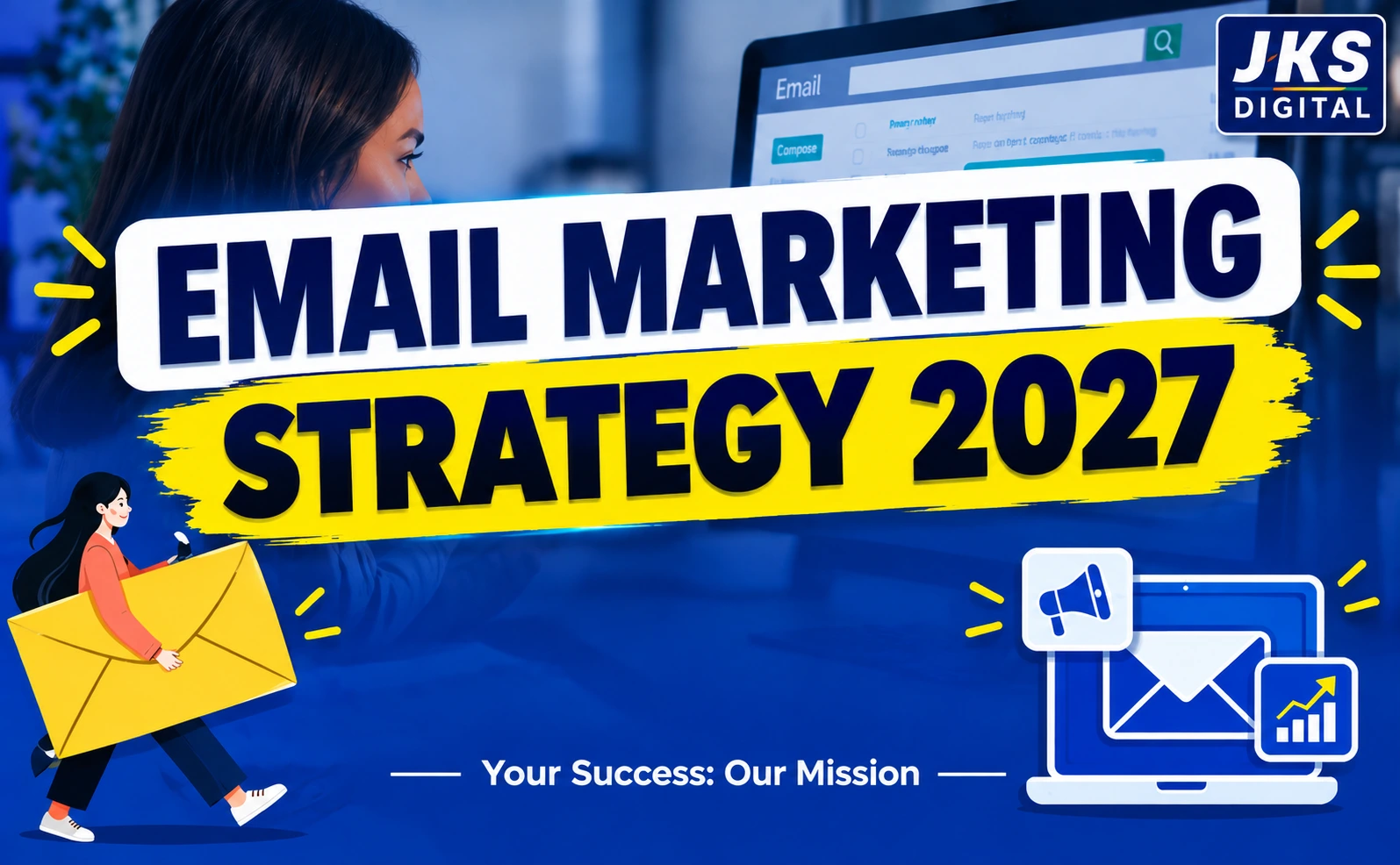
In 2027, an effective email marketing strategy needs more than attractive templates and catchy subject lines. Businesses must understand their audience, communicate with purpose, and create a smooth journey from the first subscription to the final purchase.
Whether you run an online store, a service-based business, or a digital marketing agency, these practical email marketing ideas can help you build stronger customer relationships and create more opportunities for sales.
1. Understand Why People Joined Your Email List
Before planning your next campaign, ask yourself one simple question: What made someone subscribe in the first place?
A person who signed up for a free SEO checklist may not be interested in a product announcement. Similarly, someone who purchased from your store may need product guidance rather than another introductory offer.
Your emails should reflect that original interest.
Start by identifying the reason behind each subscription. You can collect this information through signup forms, customer preferences, or the resource someone requested.
For example, a digital marketing agency could separate subscribers into these groups:
- People looking for SEO advice
- Business owners interested in paid advertising
- Beginners learning digital marketing
- Companies exploring website development
- Existing clients looking for ongoing support
This makes it easier to send information that matches what people actually want.
The takeaway: A subscriber is not just an email address. Their reason for joining can tell you what kind of communication they are likely to value.
2. Make Every Email Solve a Small Problem
People are more likely to pay attention when your message helps them do something useful.
Instead of starting every email with a sales announcement, think about a small problem your audience may be facing.
For example, an email marketing company could send a short guide explaining why promotional emails are landing in spam. A clothing store could share advice on choosing the right size. A software business could demonstrate a feature that saves customers time.
These emails create value before asking for a purchase.
Try using a simple content structure:
The problem: Explain a situation your reader may recognize.
The useful insight: Share a practical tip, explanation, or solution.
The next step: Invite the reader to explore a relevant resource, product, or service.
Not every email needs to close a sale immediately. Sometimes, helping someone make a better decision is what brings them closer to becoming a customer.
3. Use AI to Find Better Ideas, Not Just More Words
AI tools can help marketers research topics, organize campaign ideas, draft copy, and explore different ways to explain an offer.
But there is a difference between using AI to improve an email and sending an email that sounds like it could belong to any business.
Use AI to speed up the work while keeping your brand’s personality intact.
Here are a few practical applications:
- Turn frequently asked customer questions into email topics.
- Create several subject-line options for testing.
- Rewrite technical explanations in simpler language.
- Develop different campaign angles for different audiences.
- Summarize feedback from customer surveys.
- Review a draft for unclear or repetitive sentences.
Before sending, check whether the email contains accurate information, a clear benefit, and a natural tone.
For instance, if you are promoting a website development service, avoid vague promises about transforming someone’s business. Explain what the customer will receive, what problem it addresses, and how they can get started.
Read Also:- Unlocking Social Media Marketing in 2025: Strategies, Trends, and Tips for Maximum Impact
AI should make your communication more useful—not make your brand sound less human.
4. Create a Welcome Experience That Builds Trust
Your first email sets expectations for the relationship.
If someone subscribes to your newsletter and immediately receives a hard sales pitch, they may wonder whether signing up was worthwhile.
A welcome sequence gives you an opportunity to introduce your business gradually.
A simple welcome sequence
Email 1 — Deliver the promised resource
Send the guide, checklist, offer, or information that encouraged the person to subscribe.
Email 2 — Introduce your approach
Explain what your business does and how you help customers. Keep the focus on the audience rather than writing a long company history.
Email 3 — Share something useful
Provide a tutorial, practical tip, customer question, or helpful resource related to the subscriber’s interest.
Email 4 — Present a relevant next step
Invite the subscriber to book a consultation, explore a product, attend a webinar, or view your services.
You can automate these messages so that new subscribers receive them without your team manually sending every email.
The timing should suit your audience and the purpose of the subscription. A welcome sequence for a free event may need a different schedule from one for an online store.
5. Write Subject Lines That Sound Relevant
A subject line should give readers a genuine reason to open your email.
You do not need to create mystery in every campaign. Sometimes, a direct and specific message is more useful than a clever phrase.
Compare these examples:
| Generic subject line | More specific alternative |
|---|---|
| Special Offer Inside | Save on Your Next Website Project |
| Important Marketing Update | Three Changes to Review in Your Ad Campaign |
| Don’t Miss This | Registration Closes Tomorrow |
| Our Latest News | A New Guide to Local SEO |
The second column tells readers more about what they can expect.
When writing subject lines, consider the reader’s current situation. What are they trying to achieve? What question might they have? What information would make opening the email worthwhile?
Keep the promise realistic. If the subject line offers a practical guide, the email should actually contain one.
You can test different subject lines with similar audience groups to learn which approach generates more meaningful engagement.
6. Recover Interested Customers Without Being Pushy
Sometimes people show interest in a product or service but do not complete the next step.
They may have been interrupted, needed more information, or decided to compare other options.
A follow-up email can help, provided it gives the recipient a useful reason to return.
For an online store
Remind the customer about the product they viewed or added to their cart. Include relevant product details and a clear route back to the checkout.
For a service business
If a visitor requested information about your services but did not book a consultation, send a helpful explanation of the process or answer a common question.
For a course provider
Someone who viewed a course page may want to understand the curriculum, schedule, learning format, or fees before registering.
A good follow-up should address a possible barrier rather than simply repeat, “Buy now.”
Use a reasonable frequency, respect marketing preferences, and avoid making assumptions about why someone did not purchase.
7. Make Your Emails Easy to Read on a Phone
An email may contain excellent information, but a cluttered layout can make that information difficult to use.
Read Also:- Digital Marketing Trends 2027: 35 Trends Shaping the Future of Marketing
Think about the experience of someone reading your message on a small screen. They should be able to understand the main point without zooming in or scrolling through a wall of text.
A practical email layout includes:
- One clear headline
- A short opening paragraph
- Small sections with descriptive headings
- Images that support the message
- A prominent primary button
- Enough space between elements
- A readable font size
Avoid placing essential information inside an image. Some email clients may not display images automatically, and important details should remain accessible as text.
Before launching a campaign, send a test email to check the layout, links, button functionality, and mobile appearance.
A clean design helps readers focus on the message instead of struggling with the format.
8. Protect Your Sender Reputation
Your email campaign can be well-written and beautifully designed, but that does not guarantee successful delivery.
Email providers evaluate technical and behavioral signals when deciding how to handle incoming messages. Poor list quality, authentication problems, and repeated spam complaints can create delivery challenges.
Build good sending habits from the beginning.
Authenticate your sending domain. Configure the appropriate email authentication records, including SPF and DKIM, and implement DMARC as part of a suitable domain policy.
Use a permission-based list. Contact people who have agreed to receive your marketing messages. Avoid purchased or scraped email databases.
Remove invalid addresses. Monitor hard bounces and stop repeatedly sending to addresses that cannot receive your emails.
Watch complaint levels. A growing number of spam complaints can indicate that your content, frequency, or signup process needs attention.
Keep your identity consistent. Use a recognizable sender name and a reply address that your business monitors.
Respect unsubscribe requests. Make it easy for recipients to stop receiving marketing emails and process their requests promptly.
For businesses sending large volumes of email, Google’s sender guidelines are particularly important. Review the requirements that apply to your sending volume and recipient type before launching major campaigns.
A healthy sending reputation is built through consistent, responsible practices—not a last-minute technical fix.
9. Give Subscribers Control Over What They Receive
Not every subscriber wants the same information at the same frequency.
Some people may prefer weekly educational content. Others may only want product updates or occasional offers.
Where practical, give subscribers options.
You could let them choose:
- Topics they want to hear about
- How often they receive updates
- Product categories of interest
- Educational content versus promotional messages
A preference center can help you maintain a more relevant mailing list without forcing people to unsubscribe completely.
You should also explain what someone is signing up for when they submit their email address.
Collect only the information you genuinely need, handle customer data responsibly, and follow applicable privacy and marketing requirements.
Trust is easier to maintain when subscribers understand how their information will be used.
10. Build Campaigns Around One Clear Action
An email becomes confusing when it tries to promote five different things at once.
Before writing, decide what you want the recipient to do.
If the goal is to generate consultation bookings, make that the central action. If you want people to download a guide, give the guide the main attention.
A useful email might contain several supporting links, but it should have one obvious priority.
Here are some examples of clear calls to action:
- View the Course Curriculum
- Book Your Free Consultation
- Explore Website Packages
- Download the Checklist
- Complete Your Registration
Place the main CTA where readers can find it easily. If the email is long, you can repeat the same action near the end.
Make sure the destination page matches the promise made in the email. A button that says “Download the Guide” should take the reader directly to the guide or its clear download process.
11. Measure the Results That Matter to Your Business
Email performance should not be judged by a single number.
A campaign may generate plenty of opens but very few purchases. Another may receive fewer clicks but attract customers who spend more.
Your reporting should connect email activity with the goal of the campaign.
Important email marketing metrics
Click-through rate: Helps you understand whether recipients are clicking links in your email.
Conversion rate: Shows how many recipients complete the intended action, such as purchasing a product or booking a consultation.
Revenue per campaign: Helps you understand the sales associated with a campaign.
Bounce rate: Reveals delivery problems involving addresses that could not receive your email.
Unsubscribe rate: Helps you identify whether people are choosing to leave your mailing list.
Spam complaint rate: Signals whether recipients are reporting your messages as unwanted.
Open rates can provide some context, but privacy features and email-client behavior can make them less reliable as a standalone measure of interest.
Use tracking links and appropriate analytics to connect campaign clicks with actions on your website. Compare similar campaigns and look for patterns rather than treating one result as a universal rule.
12. Improve Your Strategy Through Small Experiments
You do not need to rebuild your entire email marketing system every month.
Often, a small, well-planned experiment can reveal something useful about your audience.
For example, you could compare:
- A short email with a detailed email
- A product-focused message with an educational message
- Two different CTA phrases
- A customer testimonial with a feature explanation
- A weekly newsletter with a less frequent schedule
Change one major element at a time whenever possible. Keep the audience and campaign objective reasonably comparable.
After the test, look beyond the initial click. Did people complete the action? Did the campaign generate qualified enquiries? Did unsubscribes increase?
The purpose of testing is not simply to find a winning subject line. It is to understand what helps your audience take the next meaningful step.
A Practical Email Marketing Plan for a Small Business
If you are managing marketing with a small team, start with a manageable system instead of trying to automate everything immediately.
Week 1: Prepare your foundation
Review your signup forms, subscriber permissions, email authentication, and existing mailing list.
Week 2: Create useful content
Choose three or four topics that answer real customer questions. Write them in your brand’s natural voice.
Week 3: Set up essential automation
Build a welcome email and one follow-up sequence that matches your business model.
Week 4: Launch and review
Send a campaign to the relevant audience segment. Track clicks, enquiries, conversions, unsubscribes, and delivery issues.
At the end of the month, use what you learned to plan the next campaign.
You can expand the system as your list and business grow.
Conclusion: Make Every Email Worth Opening
Email marketing works best when businesses stop treating every subscriber as an immediate sales opportunity.
Some people need information before making a decision. Others need reassurance, a useful reminder, or a clearer explanation of what your business offers.
Your job is to understand those differences and communicate accordingly.
In 2027, AI tools and automation can help businesses work more efficiently, but the foundation remains the same: relevant information, honest communication, reliable delivery, and respect for the recipient.
Start with a clean mailing list. Send content that solves real problems. Make the next step easy to understand. Measure what happens after the click.
When your emails consistently help people make informed decisions, you give them a genuine reason to stay connected with your business—and a clearer path toward becoming paying customers.