Google News Approval 2026:- If you are planning to get your news website approved in Google News in 2026, you need to understand one important reality clearly: Google News is no longer a “submission-based approval system.” It is now a “trust-based evaluation system.

This means you cannot simply apply and get accepted. Instead, Google continuously evaluates your website like a real newsroom. It checks your content quality, your authors, your consistency, your technical setup, and most importantly—your credibility.
Most websites fail because they focus only on publishing articles, but ignore the trust signals Google actually cares about.
In this guide, everything is explained in a detailed, practical, and easy-to-understand way so you can properly prepare your website for Google News approval in 2026.
What is Google News Approval?
Google News approval means your website is accepted into Google’s official news ecosystem.
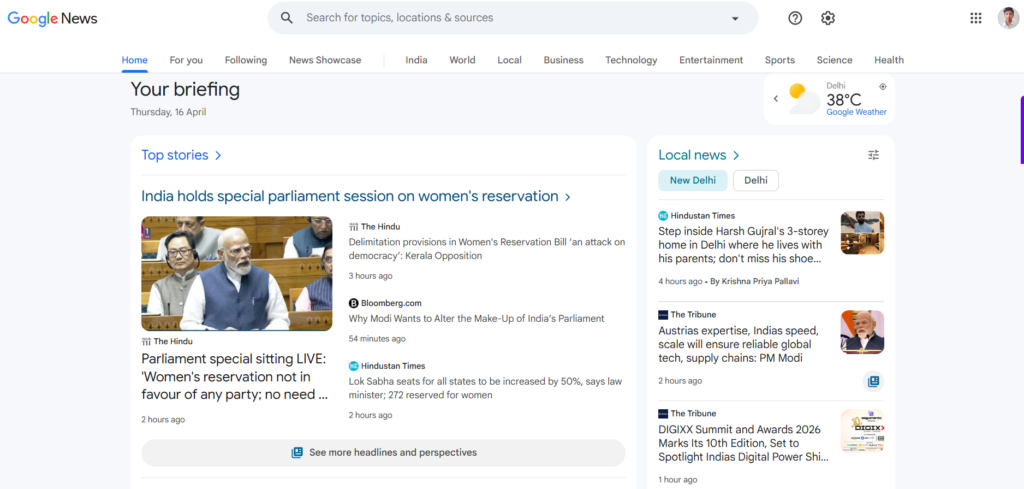
Once approved, your articles can appear in:
- Google News Feed
- Top Stories section
- Google Discover
- Breaking news surfaces
But the real purpose of Google News is not traffic.
It is to provide users with reliable, verified, and high-quality news content.
So when Google approves a website, it is basically saying:
“This publisher is trustworthy enough to show news to millions of users.”
That is why approval is strict and selective.
How Google News Works in 2026 (Reality Explained)
In 2026, Google uses a combination of AI systems, content evaluation models, and trust signals to decide which websites should be included.
The most important framework is E-E-A-T:
- Experience (real reporting experience)
- Expertise (knowledge of subject)
- Authoritativeness (reputation of website/author)
- Trustworthiness (accuracy and reliability)
Google does not just scan your articles. It evaluates:
- Your entire website history
- Your publishing pattern
- Your author identity
- Your content originality
- Your credibility as a publisher
Important reality:
Even if your content is good, but your website lacks trust signals, approval can still be rejected.
Step 1: High-Quality Original Content Strategy (Most Important Factor)
Content is the foundation of Google News approval.
But “good content” in 2026 means much more than just writing articles.

Your content must be:
- Fully original (no copy-paste or spinning)
- Written in a natural human tone
- Fact-based and informative
- Free from keyword stuffing
- Structured and easy to read
What Google really wants:
Google does NOT want just news rewriting.
It wants journalistic value.
So instead of only reporting news, you should add depth:
Explain things like:
- Why this news happened
- What is the background of this event
- Who is affected by it
- What could happen next
- What is the public impact
Read Also:- Customer Value Journey (5A Framework): Complete Guide for Modern Digital Marketing
Example improvement:
Weak:
“A new policy was announced by the government.”
Better:
“The government has announced a new policy, which is expected to impact small businesses significantly. Experts believe this move may change the current market structure over the next few months.”
This type of writing shows understanding, not just rewriting.
Step 2: Professional Website Structure (Trust Building Layer)
Google News strongly checks how professional your website looks.
If your website looks incomplete, spammy, or untrustworthy, approval becomes difficult.
Must-have pages:
1. About Us Page
This page should clearly explain:
- Who runs the website
- What is your mission
- What type of news you publish

2. Contact Us Page
Must include:
- Working email
- Phone number (optional but strong signal)
- Location or business identity
3. Privacy Policy
Shows compliance and professionalism.
4. Terms & Conditions
Explains website usage rules.
5. Editorial Policy (Very Important in 2026)
This tells Google:
- How you verify news
- How you publish content
- What standards you follow
6. Author Pages
Each author must have:
- Real name
- Bio
- Experience or niche
- Published articles
Without author transparency, Google sees your website as low trust.
Step 3: Consistent Publishing Schedule (Hidden but Powerful Ranking Factor – Deep Explanation)
Consistency is one of the most underrated but extremely powerful factors in Google News approval. Many creators focus only on content quality, but ignore the publishing behavior—which Google treats as a strong trust signal.
In 2026, Google does not just evaluate what you publish, it also evaluates how regularly and predictably you publish it. A website that behaves like a real newsroom always follows a rhythm, while low-quality sites publish randomly or in bursts.
How consistency works in depth:
When you publish content daily in a stable pattern, Google starts recognizing your website as an active news source. This means your site is continuously producing fresh information, which matches the core purpose of Google News.
A strong publishing system usually follows a fixed flow, such as 2 to 6 quality articles per day. The number itself is not the key factor—the important part is stability and discipline. A site that publishes 3 articles daily consistently is far more trusted than a site that publishes 10 articles one day and then disappears for a week.
Another important aspect is niche consistency. If your website suddenly switches topics—like from technology to politics to entertainment without structure—Google may struggle to define your authority. A focused niche helps Google clearly understand your expertise area.
Why consistency matters (deep reasoning):
Consistency builds three major trust signals:
- Activity Signal: Your website is alive and updated regularly
- Reliability Signal: Users can expect fresh news anytime
- Professional Signal: It behaves like a real editorial team, not a casual blog
When these signals are strong, Google increases trust automatically.
On the other hand, random posting creates uncertainty. If Google sees irregular publishing patterns, it assumes the website is not professionally managed or may not be reliable for long-term news distribution.
In simple terms, consistency tells Google:
“This is not just a website—it is an active newsroom.
Read Also:- Digital Marketing Agency in Andhra Pradesh – JKS Digital
Step 4: Technical SEO and Website Optimization (Deep Explanation)
Even if your content is high quality and your publishing is consistent, technical issues can silently block your Google News approval. In 2026, Google expects news websites to be technically clean, fast, and structured in a way that machines can easily understand.
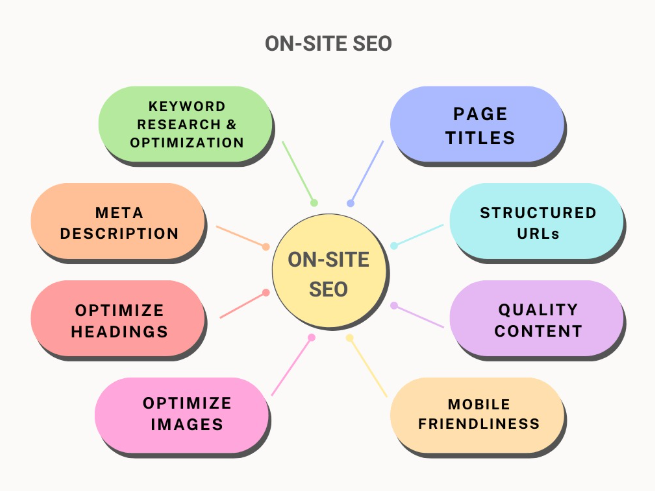
Technical SEO is not just about ranking—it is about accessibility, readability, and system clarity for Google’s crawlers.
What a technically strong website means in depth:
First, your website must be fully mobile responsive. Since most news traffic comes from mobile devices, Google prioritizes websites that provide smooth mobile experience. If your layout breaks on mobile or loads poorly, it directly reduces trust signals.
Second, page speed is critical. A slow website creates poor user experience, and Google interprets this as low-quality infrastructure. Optimized images, clean coding, and fast hosting are essential to maintain performance standards.
Third, HTTPS security is mandatory. A secure website (SSL-enabled) signals that user data is protected and the platform is professionally maintained. Without HTTPS, approval chances become very low.
Fourth, your XML sitemap acts like a roadmap for Google. It tells Google exactly what pages exist on your website and how often they are updated. A properly submitted sitemap ensures faster and cleaner indexing of your news content.
Fifth, robots.txt configuration must be correct. If it is misconfigured, Google may accidentally block important pages from being crawled, which can directly impact your visibility in Google News.
Sixth, broken links or errors should not exist. A website with multiple errors looks outdated and poorly managed, which reduces trustworthiness in Google’s evaluation system.
URL structure importance:
Clean and meaningful URLs help Google understand your content instantly. Instead of random or unclear links, structured URLs show clear topic hierarchy and improve indexing clarity.
For example:
- /india-breaking-news-2026
- /technology-ai-update-today
- /political-news-analysis-india
These URLs clearly describe the content, making it easier for Google to categorize your articles properly.
Final understanding:
Technical SEO is not just a background requirement—it is the foundation layer of trust and accessibility. Even the best content will fail in Google News approval if the website structure is weak, slow, or poorly optimized.
In simple terms:
Good content gets attention, but good technical SEO makes approval possible.
Step 5: Google Publisher Center Setup (Critical Step – Deep Explanation)
Google Publisher Center is the official control panel where you connect your website with Google News. Think of it like a “verification gateway” that tells Google: this website is ready to be treated as a news publisher.
Even if your content is high quality, a wrong or incomplete setup here can block your approval completely. That’s why this step is not just technical—it is a core eligibility filter.
How the setup actually works in depth:
First, you add your website as a publication inside Publisher Center. During this process, Google checks basic ownership signals and branding consistency. Your website name, logo, and identity must look professional and consistent across all platforms. A weak or inconsistent brand presentation can reduce trust instantly.
Next, you connect your RSS feed or website sections. This is where many websites make mistakes. Google uses these feeds to understand how your content is structured and updated. If your RSS is broken, incomplete, or not properly categorized, Google cannot correctly read your content flow.
After that, you create sections like “Latest News,” “Technology,” or “Local Updates.” This is important because Google wants to understand your editorial structure. A well-organized section setup signals that your website is run like a real newsroom, not a random blog.
Finally, you verify ownership. This step confirms that you are the actual owner of the domain. Without proper verification, your application does not even move forward in the approval pipeline.
Key reality:
Most rejections happen here not because content is bad, but because:
- RSS is not properly configured
- Sections are poorly structured
- Branding is inconsistent
- Ownership is not clearly verified
In short, Publisher Center is not just a form—it is a trust validation layer that decides whether Google can even “understand” your website as a news source.
Step 6: Building E-E-A-T (Most Powerful Ranking Factor – Deep Explanation)
E-E-A-T (Experience, Expertise, Authoritativeness, Trustworthiness) is the core foundation of Google News approval in 2026. It is not a single ranking factor—it is a combined trust system that evaluates your entire content ecosystem.
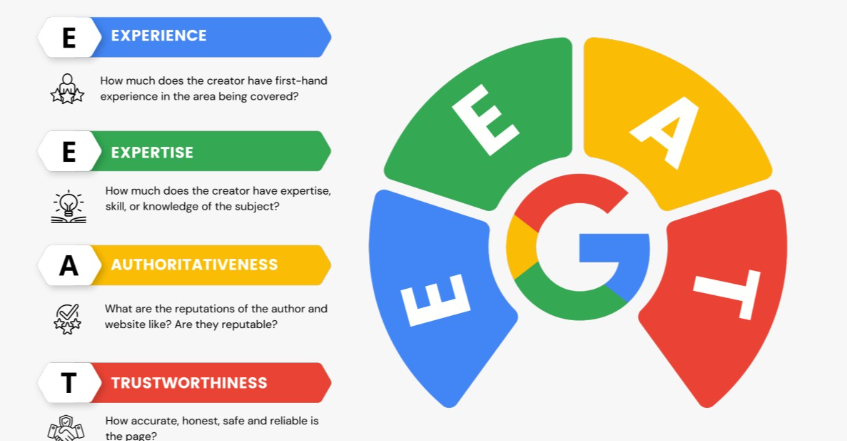
Google uses E-E-A-T to answer one question:
“Can this source be trusted as a real newsroom?”
If the answer is yes, approval becomes much easier. If the answer is no, even perfect SEO cannot save your website.
How to build strong E-E-A-T in depth:
The first and most important element is real authorship. Google wants to know who is writing the news. Anonymous or fake author names reduce trust immediately. Each article should clearly show a real author identity linked to a dedicated author page. That author page should include a bio, writing focus, and possibly experience or background in the niche.
The second element is editorial transparency. This means your website should clearly explain how news is created, verified, and published. Google prefers websites that show accountability in their process. When readers (and Google) understand how your newsroom works, trust increases automatically.
The third element is source reliability. Your content should be based on verified information, not assumptions or rumors. When you mention facts, linking or referencing credible sources strengthens your authority. Even simple attribution like “according to official reports” improves trust signals significantly.
Strong trust signal in action:
When your article includes clear sourcing and context, Google interprets it as responsible journalism. For example, instead of making a standalone claim, you explain where the information comes from and why it matters. This shows that your website is not just publishing content, but actually practicing verified reporting standards.
Key reality:
E-E-A-T is not something you “add once.” It is built gradually through:
- Consistent original content
- Transparent authorship
- Reliable reporting behavior
- Long-term publishing quality
In simple terms, E-E-A-T is your website’s digital reputation score, and Google News approval depends heavily on it.
Step 7: Writing Style Improvement (Human Touch Requirement)
Google now detects robotic and AI-like writing easily.
So your writing must feel natural and human.
Good writing structure:
- Simple language
- Short paragraphs
- Clear headings
- Smooth flow
- No keyword stuffing
Comparison:
Weak:
“This article explains Google News approval system in detail.”
Better:
“If you want your news website to appear in Google News, you need to understand how the approval system actually works in 2026.”
This feels more natural and reader-friendly.
Common Mistakes That Cause Rejection
Most websites fail because of avoidable mistakes:
- Copy-pasted or spun content
- Clickbait headlines without real value
- No author identity
- Irregular publishing
- Low-quality AI bulk content
- No trust-building pages
Even one or two of these issues can delay approval significantly.
Real Working Strategy for Fast Approval (2026 Model)
If you want practical success, follow this system:
- Publish 20–50 high-quality articles first
- Each article should be 700–1200 words
- Focus on one niche only (no mixing topics)
- Cover trending + local news regularly
- Maintain daily publishing consistency
- Properly configure Publisher Center
This creates a strong “publisher identity” in Google’s system.
Final Conclusion
Google News approval in 2026 is not a trick-based system. It is a trust-based digital journalism ecosystem.
If your website looks professional, your content is original, your authors are real, and your publishing is consistent, then approval is not difficult.
But if you try shortcuts, copied content, or low-quality bulk publishing, rejection is almost guaranteed. High-Quality Content + Consistency + Technical Setup + Trust (E-E-A-T) = Google News Approval Success