In today’s digital-first world, knowledge alone is not enough. You may have an excellent online course, years of experience, and a genuine desire to help people—but without the right marketing strategy, your course may never reach the students who truly need it. This is where an Online Course Selling Program combined with Digital Marketing becomes a complete game changer.
Selling online courses is no longer about simply uploading videos and waiting for students to enroll. The market has evolved. Today, course selling is about visibility, trust, storytelling, relationship-building, and value-driven communication. It is about guiding a learner from confusion to clarity and from curiosity to confidence. Digital marketing makes this entire journey possible in a structured and scalable way.
Why Most Online Courses Fail to Sell
Many course creators believe that creating high-quality content is enough. Unfortunately, this is one of the biggest myths in the online education industry. The real challenge is not course creation—it is course discovery and positioning.
Every day, thousands of online courses are launched across platforms. If your audience cannot find you on Google, social media, YouTube, or email, your course gets lost in the noise. Poor branding, unclear messaging, lack of trust signals, weak follow-up systems, and zero marketing strategy are the main reasons why even powerful courses struggle to sell.
An Online Course Selling Program focuses exactly on these gaps. It helps creators move from hope-based selling to strategy-based selling, turning knowledge into a profitable and sustainable digital asset.
What Is an Online Course Selling Program?
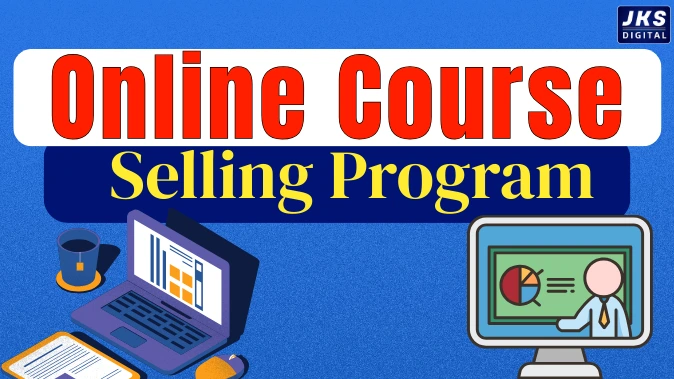
An Online Course Selling Program is a step-by-step framework that teaches you how to use digital marketing to sell your courses consistently and ethically. It goes beyond theory and focuses on real-world execution—how to attract the right audience, build authority, create demand, and convert leads into paying students.

This program does not just teach tools like ads or social media. It teaches:
- How people think before buying
- Why learners hesitate
- How trust is built online
- How emotions influence decisions
- How to communicate value, not just features
When digital marketing skills are combined with psychology and storytelling, your course business transforms into a complete ecosystem.
Role of Digital Marketing in Course Selling
Digital marketing is the backbone of successful online course sales. It helps you connect with learners at every stage of their decision-making journey.
Search engine optimization allows your course to appear when people are actively searching for solutions. Social media marketing helps you build awareness and emotional connection. Content marketing positions you as a credible authority. Email marketing nurtures relationships over time. Paid advertising accelerates growth by putting your message in front of the right audience at the right moment.
When all these strategies work together, course selling becomes predictable, scalable, and stress-free, instead of random and exhausting
Understanding the Learner’s Mindset
One of the most powerful elements of an Online Course Selling Program is understanding the learner’s mindset. Most students are not looking for information—they are looking for transformation.

They want answers to questions like:
- Will this course solve my problem?
- Can I trust this instructor?
- Will I be able to implement what I learn?
- Is this worth my money and time?
Digital marketing teaches you how to address these doubts before they are even spoken. When learners feel understood, resistance disappears.
Building the Right Audience Before Selling
One of the most important lessons in course selling is understanding that selling starts before the launch. You do not sell to everyone—you sell to the right people.
A strong Online Course Selling Program teaches you how to identify your ideal learner, understand their struggles, goals, and fears, and communicate in a way that feels personal. When your messaging resonates emotionally, students feel connected even before they buy.
Building an audience through educational content, free resources, webinars, workshops, and lead magnets ensures that when you finally present your paid course, people are already warmed up, engaged, and ready.
Creating a High-Converting Course Funnel
Read Also:- Email Marketing in 2026: A Must-Have Growth Tool for Businesses
Successful course sellers do not depend on luck or single sales pages. They use a well-designed course funnel that guides learners step by step.
A typical funnel begins with awareness content such as blogs, short videos, reels, or YouTube content. This leads to a free value offer like a checklist, ebook, webinar, or mini class. Email nurturing then builds trust, shares insights, answers objections, and highlights success stories. Finally, a clear and compelling sales page converts the learner into a student.

Digital marketing allows this entire funnel to be automated, saving time while increasing conversions.
Content That Educates, Inspires, and Converts
Content is the bridge between you and your audience. But not all content sells. An Online Course Selling Program teaches you how to create content that:
- Educates without overwhelming
- Inspires without exaggeration
- Builds trust without pressure
Blogs, videos, emails, and social posts become tools to guide learners instead of just promotional messages. Over time, your content itself becomes your strongest sales asset.
Trust and Authority: The Human Side of Selling
People do not buy courses only for certificates or lessons. They buy belief. They buy confidence. They buy a guide who understands their journey.
That is why the human side of selling is so important. Sharing your story, your failures, your lessons, and your growth makes you relatable. Showing real student experiences builds social proof. Digital marketing gives you the platform to express authenticity through videos, emails, testimonials, and community interaction.
When trust is built, selling becomes natural and respectful.
Pricing, Value, and Perception
Another major challenge course creators face is pricing. Many underprice out of fear, while others overprice without communicating value.
An Online Course Selling Program helps you understand value-based pricing—how to price based on transformation, outcomes, and long-term benefits rather than just content length. Digital marketing helps position your course as an investment, not an expense.
Read Also:- How to Fix a Disabled or Restricted Facebook Account: Complete Recovery Guide

Scaling Course Sales with Paid Ads and Automation
Once your organic foundation is strong, digital marketing enables you to scale. Paid ads help you reach wider audiences quickly, while automation tools manage follow-ups, reminders, onboarding, and support.
A structured Online Course Selling Program teaches you how to use ads smartly, test creatives, track performance, and optimize campaigns without burning money. This turns course selling from a side income into a serious digital business.
Who Should Join an Online Course Selling Program?
This program is ideal for educators, coaches, trainers, consultants, professionals, and content creators who want to monetize their knowledge online. Whether you are launching your first course or struggling with low enrollments, learning digital marketing gives you clarity, confidence, and control.
It is especially powerful for those who want freedom—freedom of time, location, income, and impact.
Final Thoughts
Creating an online course is only the beginning. Selling it successfully requires strategy, systems, consistency, and skill—and digital marketing brings all these elements together.
An Online Course Selling Program empowers you to turn your expertise into income while genuinely helping others grow. When you learn digital marketing the right way, selling stops feeling uncomfortable. It becomes a process of guiding the right people toward the right solution at the right time.
If you truly believe your knowledge can change lives, then learning how to sell your course effectively is not optional—it is essential.