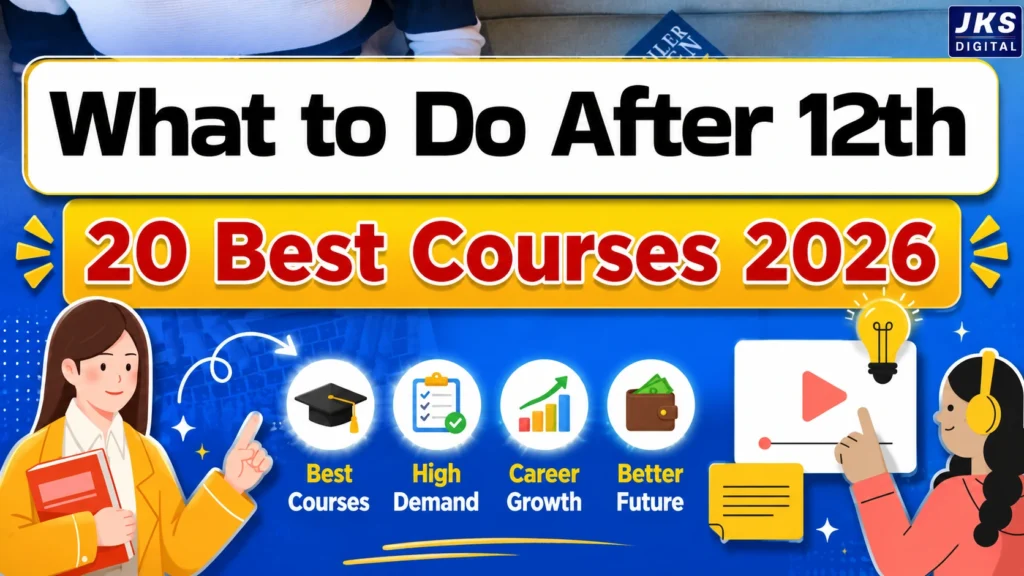
What to Do After 12th in 2027:- Choosing what to do after Class 12 is one of the most important decisions in a student’s life. With so many career options available in 2027, it’s natural to feel confused about which path to choose. While some students prefer traditional degree programs like B.Tech, MBBS, B.Com, or BBA, others are exploring high-demand skill-based fields such as Artificial Intelligence (AI), Digital Marketing, Data Science, Cyber Security, and Web Development.
The right course isn’t the one that’s most popular—it’s the one that matches your interests, skills, and long-term career goals. A well-informed decision today can open the door to better opportunities in the future.
In this complete guide, you’ll explore the best courses after 12th, promising career options, future job opportunities, and practical tips to help you choose the right path with confidence.
Before Choosing Any Course, Ask Yourself These 7 Questions
Before you fill out college admission forms or purchase an online course, take a few minutes to answer these important questions. Honest answers can save you years of regret and help you choose a career that genuinely fits your personality.
1. What Subjects or Activities Do I Enjoy the Most?
Your interests should always be the starting point.
For example:
- If you enjoy technology and solving problems, you may enjoy programming or Cyber Security.
- If you’re creative, Graphic Design, Video Editing, or UI/UX Design could be better choices.
- If you enjoy communication and marketing, Digital Marketing or Content Writing might suit you.
Choosing a field that matches your natural interests makes learning easier and increases your chances of long-term success.
2. What Is My Long-Term Career Goal?
Think beyond getting your first job.
Ask yourself:
- Do I want to work in a multinational company?
- Do I want to become a freelancer?
- Do I want to start my own business?
- Do I want to prepare for government jobs?
- Do I want to work remotely for international clients?
Your answer will help narrow down the right courses.
3. Do I Prefer Practical Skills or Academic Learning?
Some students enjoy classroom-based education and university degrees.
Others learn faster through practical projects, internships, and real-world assignments.
If you enjoy learning by doing, skill-based courses with live projects may be a better choice than theory-heavy programs.
4. What Is My Budget?
Career planning should also consider financial reality.
Some professional degree programs require significant investment, while many industry-recognized online courses are available at affordable prices.
Instead of looking only at the course fee, think about the value you’ll receive, the skills you’ll learn, and the career opportunities the course can create.
5. Which Industries Will Continue Growing in the Future?
A smart career decision isn’t based only on today’s demand.
Look for industries expected to grow over the next 5 to 10 years.
Some of the fastest-growing fields include:
- Artificial Intelligence (AI)
- Digital Marketing
- Data Analytics
- Cyber Security
- Cloud Computing
- Software Development
- E-commerce
These industries continue to create new career opportunities as businesses become more digital.
6. What Kind of Work Environment Will Make Me Happy?
Every career has a different lifestyle.
Think about questions like:
- Do I enjoy working with computers?
- Would I prefer meeting people every day?
- Do I like creative work?
- Can I work independently?
- Would I like remote work from home?
Understanding your preferred work environment can help you avoid choosing a career that doesn’t fit your personality.
7. Am I Ready to Keep Learning After Choosing a Career?
One of the biggest myths is that learning ends after college.
In reality, successful professionals continue learning throughout their careers.
Technology, business, and workplace requirements keep changing. Students who regularly upgrade their skills often find better job opportunities and stay competitive in the job market.
Instead of asking, “Which course will guarantee success?” ask yourself, “Which field am I willing to keep learning in for the next several years?”
That mindset can make a much bigger difference than choosing a popular course.
Career Paths After 12th: Which Direction Is Right for You?
Many students believe they have only one or two career options after Class 12. In reality, there are several paths you can choose depending on your goals. Understanding these options will help you make a more confident decision.
1. Traditional Degree Programs
If you want to build a career through higher education, traditional degree courses remain a strong choice.
Popular examples include:
- Engineering
- Medical
- Commerce
- Arts
- Computer Applications
- Business Administration
- Law
- Hotel Management
- Design
- Agriculture
These programs are suitable for students who want structured education and professional qualifications.
2. Skill-Based Professional Courses
Skill-based learning has become one of the fastest ways to prepare for today’s job market.
These courses focus on practical knowledge, industry tools, internships, and real-world projects.
Some of the most popular options include Digital Marketing, AI, Data Science, Web Development, Cyber Security, Graphic Design, and Video Editing.
Many students combine these skills with their college education to improve employability.
3. Government Exam Preparation
Students interested in public sector careers can prepare for competitive examinations after completing their 12th or graduation, depending on the eligibility criteria.
This path requires dedication, consistency, and long-term preparation but offers stable career opportunities.
4. Business, Freelancing and Entrepreneurship
Not every student wants a traditional job.
Some prefer building their own business, becoming freelancers, creating content, or launching an online store.
With the growth of digital platforms, students can start learning valuable business skills much earlier than before.
This path requires patience, continuous learning, and practical experience, but it also offers flexibility and significant growth potential.
In the next section of this guide, we’ll explore the Top 20 Best Courses After 12th in 2027, starting with the five most in-demand career options that are creating excellent opportunities across multiple industries.
Top 20 Best Courses After 12th in 2027
Choosing the right course is not about following the latest trend—it’s about finding a career path that matches your interests, strengths, and long-term goals. The courses below have been selected because they continue to create opportunities across different industries. Each course offers a unique career path, and the right choice depends on what you enjoy learning and the kind of future you want to build.
1. Digital Marketing
What is Digital Marketing?
Digital Marketing is the process of promoting products, services, or brands through online platforms such as search engines, social media, websites, email, and online advertising. As businesses continue to move online, the need for skilled digital marketers continues to grow.
Unlike many traditional careers, Digital Marketing allows you to work with startups, established companies, agencies, or even build your own freelance business.
Skills You’ll Learn
- Search Engine Optimization (SEO)
- Google Ads (PPC)
- Social Media Marketing
- Content Marketing
- Email Marketing
- Google Analytics
- AI Marketing Tools
- Lead Generation
- Marketing Automation
- Website Optimization
Course Duration
Most beginner-friendly Digital Marketing courses take 3 to 6 months, while advanced certification programs may last longer depending on the curriculum.
Career Opportunities
- Digital Marketing Executive
- SEO Specialist
- PPC Expert
- Social Media Manager
- Content Marketer
- Performance Marketing Executive
- Digital Marketing Manager
- Freelancer
- Marketing Consultant
Average Starting Salary
Freshers generally earn between ₹3 LPA and ₹6 LPA, while experienced professionals and freelancers can earn significantly more depending on their expertise and projects.
Who Should Choose This Course?
This course is suitable for students who enjoy creativity, communication, business, content creation, and technology. It is also a great option for those who want to earn through freelancing or start an online business.
Future Scope
As businesses invest more in online marketing, Digital Marketing continues to offer diverse career opportunities across industries. Professionals who keep learning new tools and marketing strategies are likely to remain in demand.
2. Artificial Intelligence (AI)
What is Artificial Intelligence?
Artificial Intelligence (AI) focuses on building systems that can perform tasks normally requiring human intelligence, such as understanding language, recognizing images, generating content, analyzing data, and automating repetitive work.
Today, AI is influencing industries like healthcare, education, finance, retail, manufacturing, and customer service.
Skills You’ll Learn
- AI Fundamentals
- Machine Learning Basics
- Generative AI
- Prompt Engineering
- AI Automation
- AI Productivity Tools
- Data Handling
- Python Basics (in many courses)
Course Duration
Basic AI programs generally take 4 to 8 months, depending on the level of specialization.
Career Opportunities
- AI Specialist
- AI Trainer
- Prompt Engineer
- AI Consultant
- AI Operations Executive
- Machine Learning Assistant
Average Starting Salary
Beginners may earn between ₹5 LPA and ₹10 LPA, while experienced professionals often command much higher salaries.
Read Also:- YouTube vs Facebook vs Instagram in 2026: Which Platform Has Highest Earning Potential?
Who Should Choose This Course?
Students interested in technology, innovation, automation, and problem-solving may find AI an exciting career option.
Future Scope
AI is becoming part of almost every industry. Rather than replacing every job, it is creating new roles that require people who understand how to use AI effectively and responsibly.
3. Data Science
What is Data Science?
Every day, businesses generate enormous amounts of information. Data Science helps organizations organize, analyze, and interpret this information to make smarter business decisions.
Instead of working with opinions, companies use data to understand customer behavior, improve products, reduce costs, and predict future trends.
Skills You’ll Learn
- Statistics
- Python
- SQL
- Data Visualization
- Machine Learning Basics
- Data Cleaning
- Predictive Analytics
- Business Intelligence
Course Duration
Most programs range from 6 to 12 months, depending on depth and specialization.
Career Opportunities
- Data Scientist
- Data Analyst
- Business Intelligence Analyst
- Machine Learning Associate
- Research Analyst
Average Starting Salary
Freshers typically earn between ₹6 LPA and ₹12 LPA, depending on skills and company requirements.
Who Should Choose This Course?
Students who enjoy mathematics, logical thinking, research, and analytical problem-solving often perform well in this field.
Future Scope
Organizations increasingly rely on data-driven decisions, making Data Science one of the fastest-growing career options across multiple sectors.
4. Data Analytics
What is Data Analytics?
Although often confused with Data Science, Data Analytics focuses more on examining existing data to identify trends, solve business problems, and support decision-making.
Businesses use data analysts to improve operations, understand customer preferences, and measure performance.
Skills You’ll Learn
- Advanced Excel
- SQL
- Power BI
- Tableau
- Data Visualization
- Dashboard Creation
- Business Reporting
- Data Interpretation
Course Duration
Most certification programs can be completed within 4 to 8 months.
Career Opportunities
- Data Analyst
- Business Analyst
- Reporting Analyst
- MIS Executive
- BI Analyst
Average Starting Salary
Fresh graduates usually start between ₹4 LPA and ₹8 LPA, with higher growth as they gain experience.
Who Should Choose This Course?
Students who enjoy working with numbers, reports, business insights, and problem-solving should consider Data Analytics.
Future Scope
Businesses of all sizes are using data to make better decisions, ensuring consistent demand for skilled analysts.
5. Web Development
What is Web Development?
Every business needs a website, whether it is a local shop, a multinational company, an educational institute, or an online store. Web Development involves designing, building, and maintaining websites and web applications.
Modern developers don’t just create attractive websites—they also focus on speed, security, responsiveness, and user experience.
Skills You’ll Learn
- HTML
- CSS
- JavaScript
- Responsive Design
- WordPress
- Git & GitHub
- Website Hosting
- Basic SEO Concepts
Course Duration
Most beginner courses take 4 to 8 months, while advanced Full Stack programs require additional time.
Career Opportunities
- Front-End Developer
- Website Developer
- WordPress Developer
- Junior Web Developer
- Web Designer
- Freelancer
Average Starting Salary
Entry-level professionals generally earn between ₹3.5 LPA and ₹7 LPA, with significant earning potential through freelancing.
Read Also:- How Digital Marketing Is Becoming the Smartest Skill for New Graduates
Who Should Choose This Course?
This course is ideal for students who enjoy building websites, solving technical problems, and creating digital products.
Future Scope
As businesses continue expanding their online presence, skilled web developers remain valuable across startups, agencies, IT companies, and freelance marketplaces.
6. Full Stack Development
What is Full Stack Development?
Full Stack Development is a complete web development skill set that combines both front-end (what users see) and back-end (how the website works behind the scenes). Instead of specializing in only one area, Full Stack Developers can build complete web applications from start to finish.
This versatility makes them valuable in startups, software companies, and product-based organizations.
Skills You’ll Learn
- HTML
- CSS
- JavaScript
- React
- Node.js
- Express.js
- Databases
- APIs
- Git
- Deployment
Course Duration
Most comprehensive Full Stack Development programs take 6 to 12 months.
Career Opportunities
- Full Stack Developer
- Software Engineer
- Application Developer
- Product Developer
- Technical Consultant
Average Starting Salary
Freshers often earn between ₹5 LPA and ₹10 LPA, with experienced developers earning considerably higher packages.
Who Should Choose This Course?
Students who enjoy coding, building complete applications, and solving technical challenges may find this career highly rewarding.
Future Scope
The demand for developers who can manage both front-end and back-end technologies continues to grow as businesses build more web-based products and digital services.
7. Cyber Security
What is Cyber Security?
As businesses, governments, and individuals increasingly depend on digital systems, protecting sensitive information has become more important than ever. Cyber Security focuses on defending computer systems, networks, and data against cyber threats and unauthorized access.
Professionals in this field work to identify vulnerabilities, strengthen security, and respond to potential attacks.
Skills You’ll Learn
- Network Security
- Ethical Hacking Fundamentals
- Risk Assessment
- Security Monitoring
- Incident Response
- Basic Cryptography
- Vulnerability Testing
Course Duration
Most beginner to intermediate programs range from 6 to 10 months.
Career Opportunities
- Cyber Security Analyst
- Security Operations Executive
- Information Security Analyst
- Network Security Engineer
- Security Consultant
Average Starting Salary
Fresh graduates generally earn between ₹5 LPA and ₹9 LPA, depending on certifications and practical skills.
Who Should Choose This Course?
Students interested in technology, digital safety, investigation, and problem-solving can build a successful career in Cyber Security.
Future Scope
With cyber threats becoming more sophisticated, organizations across every industry continue investing in skilled security professionals.
8. Graphic Design
What is Graphic Design?
Graphic Design combines creativity with visual communication. Designers create logos, advertisements, social media graphics, brochures, packaging, presentations, and digital branding materials that help businesses communicate effectively with their audience.
Strong design skills are valuable across marketing, advertising, publishing, education, and entertainment industries.
Read Also:_ Top Earnings Apps for Students 2026 – Real Truth & Honest Review
Skills You’ll Learn
- Adobe Photoshop
- Adobe Illustrator
- Canva
- Typography
- Branding
- Color Theory
- Layout Design
- Visual Communication
Course Duration
Most professional Graphic Design courses take 3 to 6 months.
Career Opportunities
- Graphic Designer
- Brand Designer
- Creative Designer
- Visual Designer
- Marketing Designer
- Freelance Designer
Average Starting Salary
Freshers generally earn between ₹3 LPA and ₹6 LPA, with additional income opportunities through freelance projects.
Who Should Choose This Course?
Students who enjoy drawing, creativity, branding, and visual storytelling may find Graphic Design an exciting career choice.
Future Scope
As businesses continue investing in digital branding and online marketing, talented designers remain an essential part of every marketing team.
9. UI/UX Design
What is UI/UX Design?
UI (User Interface) and UX (User Experience) Design focus on creating websites and mobile applications that are both attractive and easy to use. Rather than concentrating only on appearance, UI/UX Designers study how people interact with digital products and improve the overall experience.
Skills You’ll Learn
- Figma
- Wireframing
- Prototyping
- User Research
- User Journey Mapping
- Design Systems
- Usability Testing
Course Duration
Most certification programs can be completed within 4 to 7 months.
Career Opportunities
- UI Designer
- UX Designer
- Product Designer
- Interaction Designer
- UX Research Assistant
Average Starting Salary
Entry-level professionals commonly earn between ₹4 LPA and ₹8 LPA.
Who Should Choose This Course?
Students who enjoy creativity, technology, psychology, and designing user-friendly digital products should consider UI/UX Design.
Future Scope
With businesses focusing more on customer experience, skilled UI/UX professionals continue to play an important role in product development.
10. Video Editing & Motion Graphics
What is Video Editing?
Video content has become one of the most powerful ways to communicate online. Businesses, educators, creators, and brands all rely on engaging videos to reach their audience. Video Editors transform raw footage into professional, meaningful stories using editing software and creative techniques.
Skills You’ll Learn
- Adobe Premiere Pro
- After Effects
- DaVinci Resolve
- CapCut
- Motion Graphics
- Color Correction
- Audio Editing
- Storytelling Through Video
Course Duration
Most beginner to advanced courses take 3 to 6 months.
Career Opportunities
- Video Editor
- Motion Graphics Designer
- YouTube Editor
- Social Media Video Editor
- Production Assistant
- Freelance Video Creator
Average Starting Salary
Freshers typically earn between ₹3 LPA and ₹7 LPA, while experienced editors and freelancers often earn significantly more depending on their portfolio.
Who Should Choose This Course?
This course is ideal for students who enjoy creativity, filmmaking, storytelling, and working with digital media.
Future Scope
The growing popularity of short-form videos, online learning, digital advertising, and content creation continues to increase demand for skilled video editing professionals.
In the next part, we’ll explore the remaining 10 career options (Courses 11–20) along with traditional degree programs after 12th and the best career choices for Science, Commerce, and Arts students.
Top 20 Best Courses After 12th in 2027
By now, you’ve explored some of the most in-demand career options after 12th, including Digital Marketing, Artificial Intelligence, Web Development, Cyber Security, and UI/UX Design. However, these are only part of today’s career landscape.
Many students are now choosing careers that combine technical skills, creativity, business knowledge, and practical experience. In this section, we’ll cover the remaining high-potential courses and also explore traditional degree programs that continue to offer excellent career opportunities when chosen wisely.
11. Content Writing & Copywriting
What is Content Writing & Copywriting?
Every website, blog, social media platform, email campaign, and advertisement needs well-written content. Content Writing focuses on creating informative and engaging content, while Copywriting is designed to persuade readers to take action, such as making a purchase or signing up for a service.
As businesses continue to build their online presence, skilled writers remain an essential part of digital marketing and brand communication.
Skills You’ll Learn
- SEO Content Writing
- Blog Writing
- Website Content
- Copywriting
- Storytelling
- Email Writing
- Research Skills
- Editing & Proofreading
Course Duration
Most beginner-friendly courses can be completed within 2 to 4 months.
Career Opportunities
- Content Writer
- SEO Content Writer
- Copywriter
- Technical Writer
- Script Writer
- Content Strategist
- Freelance Writer
Average Starting Salary
Freshers generally earn between ₹2.5 LPA and ₹5 LPA, while experienced writers and freelancers can earn much more depending on their expertise and client base.
Who Should Choose This Course?
Students who enjoy reading, writing, researching, and expressing ideas creatively may find this career highly rewarding.
Future Scope
Businesses will always need quality content to educate customers, build trust, and improve their online visibility. Strong writing skills also complement careers in marketing, branding, and media.
12. Software Development
What is Software Development?
Software Development involves creating applications, systems, and software that people use every day on computers, smartphones, and other digital devices.
From banking apps and educational platforms to healthcare systems and entertainment services, software developers help build the technology that powers modern life.
Skills You’ll Learn
- Programming Fundamentals
- Object-Oriented Programming
- Software Design
- Database Management
- Version Control
- Testing & Debugging
- Software Deployment
Course Duration
Professional training programs generally take 6 to 12 months, depending on specialization.
Career Opportunities
- Software Developer
- Software Engineer
- Application Developer
- Backend Developer
- Junior Programmer
Average Starting Salary
Most fresh graduates begin with salaries ranging from ₹4.5 LPA to ₹9 LPA.
Who Should Choose This Course?
Students who enjoy coding, solving logical problems, and building software products should consider this field.
Future Scope
Software continues to drive innovation across industries, ensuring long-term demand for skilled developers.
13. Mobile App Development
What is Mobile App Development?
Smartphones have become an essential part of everyday life, increasing the demand for mobile applications across education, healthcare, finance, entertainment, and e-commerce.
Mobile App Development focuses on creating applications for Android and iOS devices.
Skills You’ll Learn
- Android Development
- Flutter
- React Native
- Mobile UI Design
- App Testing
- API Integration
- Firebase Basics
Course Duration
Most programs require 5 to 8 months.
Career Opportunities
- Android Developer
- Flutter Developer
- Mobile App Developer
- Cross-Platform Developer
- Freelance App Developer
Average Starting Salary
Entry-level professionals usually earn between ₹4 LPA and ₹8 LPA.
Who Should Choose This Course?
Students interested in mobile technology and software development can build an exciting career in this field.
Future Scope
As mobile usage continues to increase globally, businesses will continue investing in high-quality mobile applications.
14. Cloud Computing
What is Cloud Computing?
Cloud Computing allows businesses to store, manage, and access data through internet-based platforms instead of traditional physical servers.
Many of the digital services people use every day rely on cloud technology.
Skills You’ll Learn
- Cloud Fundamentals
- AWS Basics
- Microsoft Azure
- Google Cloud
- Cloud Security
- Virtualization
- Cloud Storage
Course Duration
Most beginner certification programs last 4 to 8 months.
Career Opportunities
- Cloud Support Associate
- Cloud Engineer
- Cloud Administrator
- Infrastructure Engineer
- Cloud Consultant
Average Starting Salary
Freshers generally earn between ₹5 LPA and ₹9 LPA.
Who Should Choose This Course?
Students interested in IT infrastructure, networking, and emerging technologies should explore Cloud Computing.
Future Scope
As organizations shift more operations to cloud platforms, professionals with cloud skills continue to be in high demand.
15. E-commerce & Dropshipping
What is E-commerce?
E-commerce involves selling products or services through online platforms. Businesses use websites and marketplaces to reach customers across different cities and countries.
Dropshipping is an online business model where products are sold without maintaining physical inventory, while traditional e-commerce involves managing products directly.
Skills You’ll Learn
- Online Store Management
- Product Research
- Digital Marketing
- Customer Service
- Order Management
- Shopify Basics
- Marketplace Selling
- Business Analytics
Course Duration
Most practical training programs can be completed within 2 to 5 months.
Career Opportunities
- E-commerce Executive
- Marketplace Manager
- Shopify Store Manager
- Online Business Owner
- E-commerce Consultant
Average Starting Salary
Professionals usually start between ₹3 LPA and ₹6 LPA, while entrepreneurs’ income depends on business performance.
Who Should Choose This Course?
Students interested in business, entrepreneurship, online selling, and digital marketing should consider this option.
Future Scope
The continuous growth of online shopping creates new opportunities for both professionals and business owners.
16. Business Analytics
What is Business Analytics?
Business Analytics combines data analysis with business strategy. Professionals analyze information to help organizations improve efficiency, reduce costs, and make informed decisions.
Skills You’ll Learn
- Excel
- SQL
- Power BI
- Business Reporting
- Dashboard Creation
- Decision-Making Techniques
Career Opportunities
- Business Analyst
- Operations Analyst
- Strategy Analyst
- Reporting Specialist
Average Starting Salary
Freshers usually earn between ₹5 LPA and ₹8 LPA.
Who Should Choose This Course?
Students who enjoy business strategy, analytical thinking, and working with data should explore this field.
17. Stock Market & Financial Markets
What is the Stock Market?
The stock market allows companies to raise capital while investors participate in business growth through investments. Learning about financial markets helps students understand investing, financial planning, risk management, and market analysis.
Skills You’ll Learn
- Stock Market Basics
- Technical Analysis
- Fundamental Analysis
- Risk Management
- Portfolio Management
- Financial Planning
Career Opportunities
- Investment Analyst
- Financial Advisor
- Equity Research Associate
- Financial Consultant
Average Starting Salary
Starting salaries generally range from ₹3.5 LPA to ₹7 LPA.
Who Should Choose This Course?
Students interested in finance, economics, investing, and financial planning may find this field suitable.
18. Ethical Hacking
What is Ethical Hacking?
Ethical Hackers legally test computer systems to identify security weaknesses before cybercriminals can exploit them.
Their work helps organizations improve digital security and protect sensitive information.
Skills You’ll Learn
- Penetration Testing
- Network Security
- Vulnerability Assessment
- Linux Basics
- Web Security
- Security Tools
Course Duration
Most practical programs take 6 to 10 months.
Career Opportunities
- Ethical Hacker
- Penetration Tester
- Security Consultant
- Vulnerability Analyst
Average Starting Salary
Fresh professionals generally earn between ₹5 LPA and ₹10 LPA.
Who Should Choose This Course?
Students passionate about cyber security, ethical technology, and digital investigations may enjoy this career.
19. AI Prompt Engineering & Automation
What is Prompt Engineering?
Prompt Engineering focuses on communicating effectively with Artificial Intelligence systems to generate accurate, useful, and high-quality results. Professionals also learn to automate repetitive tasks using AI tools.
This is one of the newest skill-based career options emerging alongside the rapid adoption of Generative AI.
Skills You’ll Learn
- Prompt Writing
- AI Workflow Design
- Automation Tools
- AI Content Generation
- Productivity Optimization
- AI Research
Career Opportunities
- Prompt Engineer
- AI Workflow Specialist
- AI Content Strategist
- AI Consultant
Average Starting Salary
Professionals typically begin between ₹5 LPA and ₹9 LPA, depending on their technical expertise.
Who Should Choose This Course?
Students who enjoy technology, AI tools, creativity, and problem-solving should explore this emerging field.
20. Project Management
What is Project Management?
Every successful project requires planning, coordination, communication, budgeting, and timely execution. Project Managers ensure that teams work together efficiently to achieve organizational goals.
Although experienced professionals usually become Project Managers later in their careers, students can begin learning project management fundamentals early.
Skills You’ll Learn
- Project Planning
- Team Coordination
- Communication
- Risk Management
- Time Management
- Leadership
- Agile Basics
Career Opportunities
- Project Coordinator
- Project Executive
- Operations Coordinator
- Project Management Associate
Average Starting Salary
Fresh professionals generally earn between ₹4 LPA and ₹7 LPA.
Who Should Choose This Course?
Students who enjoy organizing work, leading teams, and solving practical business challenges should consider learning project management skills.
Traditional Degree Courses After 12th
While skill-based courses are becoming increasingly popular, traditional degree programs continue to provide a strong academic foundation and remain valuable across many professions.
Some of the most popular degree options include:
| Degree Course | Duration | Career Opportunities |
|---|---|---|
| B.Tech | 4 Years | Engineer, Software Developer |
| MBBS | 5.5 Years | Doctor |
| BCA | 3 Years | Software Developer, IT Professional |
| BBA | 3 Years | Business Management, Marketing |
| B.Com | 3 Years | Accounting, Banking, Finance |
| B.Sc | 3 Years | Research, Science, Teaching |
| BA | 3 Years | Civil Services, Journalism, Education |
| B.Des | 4 Years | Product Designer, Graphic Designer |
| B.Pharm | 4 Years | Pharmacist, Healthcare Industry |
| Hotel Management | 3–4 Years | Hospitality & Tourism |
| Journalism & Mass Communication | 3 Years | Media, News, Content Industry |
| Agriculture | 4 Years | Agribusiness, Research, Government Sector |
Tip: A degree becomes even more valuable when combined with practical skills such as Digital Marketing, AI, Data Analytics, Communication Skills, or Programming.
Best Courses Based on Your Stream
For Science Students
Students from the Science stream often have the widest range of career options.
Recommended choices include:
- Artificial Intelligence
- Data Science
- Software Development
- Web Development
- Cyber Security
- Cloud Computing
- Engineering
- MBBS
- BCA
- B.Sc.
For Commerce Students
Commerce students can build careers in finance, business, technology, and digital industries.
Recommended options:
- Digital Marketing
- Business Analytics
- B.Com
- BBA
- Stock Market
- E-commerce
- Data Analytics
- Financial Planning
For Arts Students
Arts students possess strong communication, creativity, and analytical skills that are valuable across many modern industries.
Recommended courses:
- Content Writing
- Graphic Design
- UI/UX Design
- Digital Marketing
- Journalism
- BA
- Hotel Management
- Video Editing
- Public Relations
The final part of this guide will help you compare salary potential, discover the most valuable future-ready skills, avoid common career mistakes after 12th, choose the right learning platforms, and answer the most frequently asked questions students have before making their final career decision.
What to Do After 12th in 2027? Best Courses, Career Options & Complete Guide (Part 4)
You have now explored both modern skill-based courses and traditional degree programs. However, selecting a course is only one part of building a successful career. The next step is understanding which industries are growing, which skills employers value, how to avoid common mistakes, and how to continue learning even after choosing a career path.
This final section will help you make a smarter decision with confidence.
High Salary Courses After 12th
Salary is often one of the biggest factors students consider while choosing a course. Although income should never be the only deciding factor, it is helpful to understand which industries generally offer strong earning potential.
Remember that salary depends on several factors, including your skills, experience, certifications, location, and the company you work for.
| Course | Average Starting Salary | Long-Term Growth |
|---|---|---|
| Artificial Intelligence (AI) | ₹5–10 LPA | Excellent |
| Data Science | ₹6–12 LPA | Excellent |
| Cyber Security | ₹5–9 LPA | Excellent |
| Cloud Computing | ₹5–9 LPA | Excellent |
| Full Stack Development | ₹5–10 LPA | Excellent |
| Software Development | ₹4.5–9 LPA | Very High |
| Data Analytics | ₹4–8 LPA | Very High |
| Web Development | ₹3.5–7 LPA | High |
| Digital Marketing | ₹3–6 LPA | High |
| UI/UX Design | ₹4–8 LPA | High |
| Mobile App Development | ₹4–8 LPA | High |
| Business Analytics | ₹5–8 LPA | High |
| Ethical Hacking | ₹5–10 LPA | Excellent |
Important: A student with practical skills, internships, certifications, and a strong portfolio often has better career opportunities than someone who relies only on a degree. Continuous learning and hands-on experience can significantly improve long-term career growth.
Best Online Learning Platforms for Skill Development
One of the biggest advantages of today’s education system is that students can learn valuable skills from anywhere. However, choosing the right learning platform is just as important as choosing the right course.
Below are some well-known platforms that offer learning opportunities across different fields:
| Platform | Best For |
|---|---|
| Coursera | University-level courses and professional certificates |
| Udemy | Affordable beginner and advanced skill-based courses |
| LinkedIn Learning | Business, technology, and creative skills |
| Google Career Certificates | Digital Marketing, Data Analytics, IT Support |
| Microsoft Learn | Cloud Computing, Azure, AI, and Microsoft technologies |
| freeCodeCamp | Web Development and Programming |
| edX | Professional and university-backed courses |
When selecting any online course, don’t focus only on the certificate. Check whether the course includes practical projects, assignments, updated content, and opportunities to build a portfolio.
Future Skills That Will Matter Beyond 2027
Technology and workplaces continue to evolve every year. While technical knowledge is important, employers also value professionals who can adapt, communicate, and solve problems effectively.
Here are some future-ready skills worth developing alongside your main course:
Artificial Intelligence Literacy
Understanding how AI tools work and using them responsibly can improve productivity across many professions.
Communication Skills
The ability to explain ideas clearly, work in teams, and communicate professionally remains valuable in every industry.
Critical Thinking
Companies look for people who can analyze situations, evaluate options, and make informed decisions rather than simply following instructions.
Problem-Solving
Businesses appreciate professionals who can identify challenges and find practical solutions independently.
Digital Skills
Regardless of your career, understanding digital tools, online collaboration, and productivity software can improve your performance.
Time Management
Managing deadlines, priorities, and multiple responsibilities is an important skill for both students and working professionals.
Adaptability
Industries change quickly. Professionals who are willing to learn new technologies and update their skills are better prepared for future opportunities.
Personal Branding
Building a professional online presence through platforms like LinkedIn, maintaining a portfolio, or showcasing your work can help recruiters and clients discover your skills.
Common Mistakes Students Make After 12th
Many career decisions go wrong not because students lack ability, but because they make decisions without enough research.
Here are some mistakes you should avoid:
Choosing a Course Only Because Friends Are Choosing It
Your friends’ interests and goals may be completely different from yours. A course that suits someone else may not be the right fit for you.
Following Salary Trends Without Understanding the Work
A high-paying career often requires genuine interest, consistent learning, and dedication. Choose a field because you enjoy it—not only because of the salary.
Ignoring Practical Skills
Degrees provide academic knowledge, but practical skills make you job-ready. Internships, projects, certifications, and real-world experience can strengthen your profile.
Not Researching Career Opportunities
Before selecting any course, understand the types of jobs available, required skills, career growth, and future demand.
Expecting Immediate Success
Every career requires patience. Building expertise, gaining experience, and growing professionally takes time.
Avoiding Communication Skills
Even highly skilled professionals need to communicate effectively with colleagues, clients, and employers.
Stopping Learning After Completing a Course
Learning doesn’t end after receiving a certificate or degree. The most successful professionals continue improving throughout their careers.
How to Choose the Right Course After 12th
If you’re still confused, follow this simple decision-making process.
Step 1: Identify Your Interests
Ask yourself:
- Which subjects do I enjoy?
- What kind of work excites me?
Step 2: Evaluate Your Strengths
Think about your natural abilities.
Are you more creative, analytical, technical, or business-minded?
Step 3: Research Career Opportunities
Study:
- Job roles
- Industry demand
- Career growth
- Required skills
- Future scope
Step 4: Compare Different Courses
Instead of choosing the first option you find, compare multiple courses based on curriculum, duration, practical learning, and career outcomes.
Step 5: Build Practical Experience
Join internships, work on projects, participate in competitions, or create your own portfolio.
Experience often matters as much as qualifications.
Step 6: Continue Learning
Industries evolve continuously. Stay updated through certifications, workshops, online courses, and practical experience.
Frequently Asked Questions (FAQs)
1. Which course is best after 12th in 2027?
There is no single best course for everyone. The right choice depends on your interests, career goals, strengths, and preferred learning style. Popular options include Artificial Intelligence, Digital Marketing, Data Science, Cyber Security, Web Development, and Business Analytics.
2. Can I learn professional skills online after 12th?
Yes. Many professional skills can be learned through structured online courses that include practical assignments and projects. However, consistent practice is essential for developing expertise.
3. Which course offers good career opportunities?
Courses related to Artificial Intelligence, Data Science, Software Development, Cyber Security, Cloud Computing, and Digital Marketing continue to offer strong career opportunities across various industries.
4. Should I choose a degree or a skill-based course?
Both have advantages. Many students combine a college degree with industry-relevant skills to improve their career prospects.
5. Can I start freelancing after completing a skill-based course?
Yes. Fields such as Digital Marketing, Graphic Design, Content Writing, Video Editing, Web Development, and UI/UX Design provide opportunities to work with clients independently after developing strong practical skills.
6. Which courses are suitable for Commerce students?
Commerce students can explore Business Analytics, Digital Marketing, B.Com, BBA, Financial Planning, Stock Market, Data Analytics, and E-commerce.
7. Which courses are suitable for Arts students?
Arts students can consider Content Writing, Journalism, Graphic Design, Digital Marketing, UI/UX Design, Public Relations, Hotel Management, and Video Editing.
8. Which courses are suitable for Science students?
Science students have a wide range of options, including Engineering, Artificial Intelligence, Data Science, Cyber Security, Software Development, Cloud Computing, BCA, and MBBS.
9. Is learning AI important for future careers?
Understanding AI tools and their applications can be valuable across many industries. However, combining AI knowledge with domain expertise often creates stronger career opportunities.
10. What matters more—skills or certificates?
Certificates can demonstrate learning, but practical skills, projects, internships, and the ability to solve real-world problems are often more valuable to employers.
Final Thoughts
Completing Class 12 is not the finish line—it’s the beginning of an exciting new chapter. Whether you decide to pursue a traditional degree, develop industry-specific skills, prepare for competitive exams, or build your own business, your success will depend on the decisions you make today and the effort you put in over the coming years.
Instead of chasing the most popular course, focus on finding the one that matches your interests, strengths, and long-term ambitions. Spend time researching different career paths, speak with experienced professionals whenever possible, and don’t hesitate to explore new opportunities.
The job market will continue to evolve, but one thing will always remain constant: people who keep learning, adapt to change, and build practical skills are better prepared for long-term success.
Choose your path carefully, stay curious, and remember that every successful career begins with a single well-informed decision.