How to Build a Food Delivery App Without Coding Using AI:- There was a time when building a mobile application was considered a job only for big companies and experienced developers. A budget of lakhs, months of hard work, and an entire technical team — these were the prerequisites people believed were necessary to launch a successful app. But in 2026, that picture has changed significantly.
Today, Artificial Intelligence has democratized app development. This means a student, a housewife, a local business owner, or even a retired professional can bring their app idea to life — without writing a single line of code. This is not some utopian dream anymore; it is a practical, proven reality.
India’s food delivery market is the most clearly visible example of this transformation. Companies like Zomato and Swiggy have shown how a well-executed platform can not only become a business but become part of an entire economy. Even in smaller cities, the demand for food delivery is skyrocketing. Tier-2 and Tier-3 cities have less competition, a hungry audience, and an almost untapped market.
So if you think building your own Zomato-like app is complicated — by the time you finish reading this guide, that misconception will be gone. We will walk you through how to use Emergent — an AI-powered app development platform — to build a fully functional food delivery app, step by step. Testing it, publishing it, and turning it into a money-making business — everything is covered here.
Who Is This Guide For?
This approach is not for everyone — but if you fall into any of these categories, this could be a perfect opportunity for you.
Students who want to start earning using AI skills — If you are in college or recently graduated and want to use AI skills practically, building Zomato-type clone apps is both a solid portfolio piece and an income source. Selling apps to clients is a growing freelance niche.
Startup founders who need a low-budget MVP — To impress investors or validate a market, you need a Minimum Viable Product. Traditional development can cost ₹5 lakh to ₹20 lakh — with Emergent, that same work is possible at a fraction of the cost.
Local business owners — If you own a restaurant chain or want to start a delivery service in your area, this app can directly transform your business. Having your own platform means no commissions to anyone, no dependence on Zomato.
Freelancers and digital marketers — Building food apps for clients is a high-demand service. If you freelance or provide digital solutions to clients, this skill can significantly increase your pricing power.
Curious beginners who want to explore technology — No coding background? No problem. This guide assumes you are a complete beginner. Every step is clearly explained.
Understanding the Zomato Business Model Before You Build
Before you build anything, it is important to understand how Zomato’s model actually works. Simply copying an app is not enough — you need to understand the ecosystem behind it.
Three Pillars: A Complete Ecosystem
Any food delivery platform acts as a seamless bridge between three major stakeholders:
Customers who want to order food from home, want variety, and want a hassle-free experience. Restaurants who want to expand their reach, manage operations, and handle more orders without extra staff. Delivery partners who want to earn income on flexible hours.
Your app coordinates between all three — and that coordination is where the business model generates money.
The Real Secret Behind Zomato’s Success
Zomato did not just build an app — they built a data-driven ecosystem. They understood that people are not just looking for food — they are looking for an experience. Reviews, ratings, images, estimated delivery time, real-time tracking — all of this combined to build a trust machine.
When you build your clone, remember this: you do not need to become as big as Zomato. You just need to become the best option in your target area.
Market Gap Analysis: Research First, Build Later
One common mistake beginners make is that they build the app first and then think about whether the market exists. That is the wrong approach. Before building, answer these questions honestly:
What is your target location? Starting with one city or specific area is the smart move. How much food delivery competition already exists there? Which restaurants are not listed anywhere or are underserved? What problem are customers facing — delivery time, lack of variety, high prices? What unique value can you offer that Zomato is not providing?
Hyperlocal strategy — targeting a single city or neighborhood — is the most effective approach for beginners. Being the best in a small area means your word-of-mouth marketing happens automatically.
Why AI-Based App Development Is Dominating in 2026
Traditional app development was time-consuming and expensive. Building an average food delivery app used to require 6 to 12 months of development time, a budget of ₹5 lakh to ₹20 lakh, a team of 3 to 10 developers, and advanced coding knowledge.
With AI-powered platforms like Emergent, the same work takes 1 to 3 days, costs a small monthly subscription, requires zero coding knowledge, and can be done by a single person.
The Problem With Most AI App Builders
Many AI app builders exist in the market, but they come with serious limitations that frustrate beginners later:
They only generate UI — many tools build beautiful screens but there is no backend logic, meaning no real functionality. The backend is weak — data does not get stored, user authentication does not work, orders do not get tracked. There is no publishing support — after building the app, publishing it to the Play Store or App Store becomes a separate challenge. Customization is limited — you cannot add the features you want without technical help.
This is why choosing the right platform matters — and this is where Emergent stands a step ahead.
Why Choose Emergent: An Honest Breakdown
Emergent is an AI-powered full-stack app development platform designed specifically for people who do not know coding. But this is not just a toy tool — it is genuinely capable of producing production-ready apps.
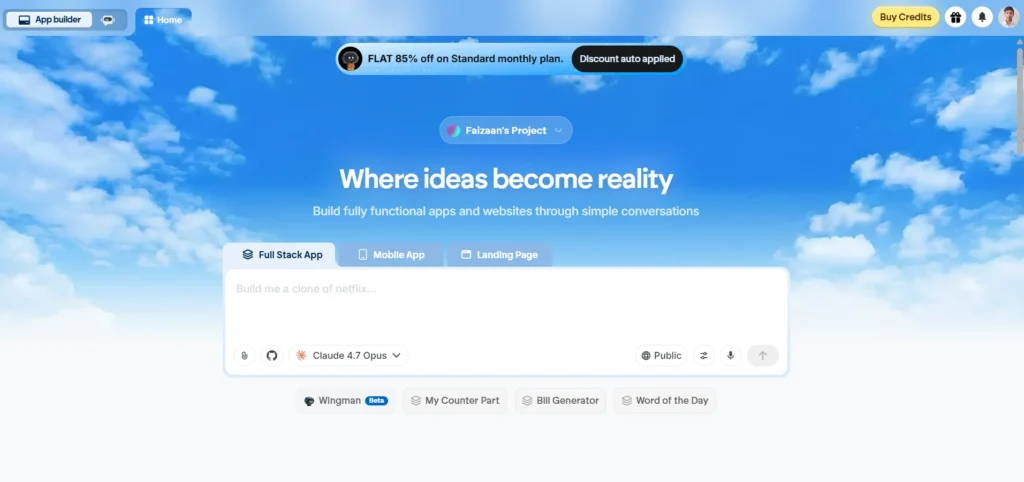
Its key strengths are: it generates the full stack meaning both frontend and backend, so you get real data, real users, and real orders. It supports both Android and iOS. It works through a prompt-based system where you simply describe your app and the AI builds it. The output is deployment-ready. And after the app is built, changes are still possible through chat.
Emergent vs Other AI App Builders
Compared to Glide, which is best for simple data-based apps with limited customization, and Adalo, which is decent for basic mobile apps but requires more manual work — Emergent is the strongest choice for a beginner who wants to build a genuinely working food delivery app.
Essential Features of a Zomato Clone App
A bare-minimum working food delivery app needs these features. Building them in phases is the advisable approach.
Phase 1 — Core Features (Must Have)
User login and signup with OTP or email authentication. Restaurant listings showing name, rating, cuisine type, delivery time, and distance. A menu page for each restaurant with categories, images, and prices. Add to cart functionality with an order summary. Order placement with address entry and order confirmation. Real-time order tracking with status updates — accepted, preparing, out for delivery, delivered. Payment integration supporting UPI, credit and debit cards, and cash on delivery. A review and ratings system where customers can rate restaurants after ordering.
Phase 2 — Advanced Features (Growth Stage)
Coupon and promo code system. Subscription plans like a Gold Membership offering free delivery. Push notifications. A loyalty points system. Multi-language support. Admin dashboard. Restaurant partner panel. Delivery partner app.
When working with AI tools like Emergent, your prompt is essentially your code. The better the prompt, the better the app. This is a skill that improves with practice — and here we are giving you a shortcut.
Weak Prompt vs Strong Prompt
A weak prompt says: “Create a food delivery app.” This gives the AI almost no direction and results in something generic and incomplete.
A strong prompt says: “Create a Zomato-style food delivery mobile app with OTP-based login, restaurant listings with cuisine filters and star ratings, a food menu with categories and dish images, add-to-cart functionality with quantity controls, real-time order tracking with step-by-step status updates, UPI and card payment options, a coupon system, push notifications, and a clean UI using an orange and white color scheme. Include a home screen with banners, food category icons, and featured restaurant cards. Use dummy data for initial setup.”
The difference is night and day.
Copy-Paste Ready Prompt Template
You can use this prompt directly in Emergent to get started:
“Create a modern food delivery mobile app similar to Zomato with features like: restaurant listings with cuisine filters and ratings, food menu with categories and images, add to cart functionality, user login via OTP, real-time order tracking with status steps, coupon and promo code system, UPI and card payment options, push notifications, and a clean UI with orange and white color scheme. Include a home screen with banners, categories like Pizza, Biryani, and Chinese, featured restaurants, and smooth navigation. Use dummy data for initial setup.”
Prompt Refinement Tips
Describe each feature separately rather than dumping everything together. Mention UI color, font style, and layout details. Comparisons like “similar to Zomato” or “like Swiggy” give the AI useful context. If the output is not right, add specific changes to the existing prompt rather than rewriting everything from scratch.
Step-by-Step Guide: Build Your Zomato Clone App
Step 1: Create Your Account on Emergent
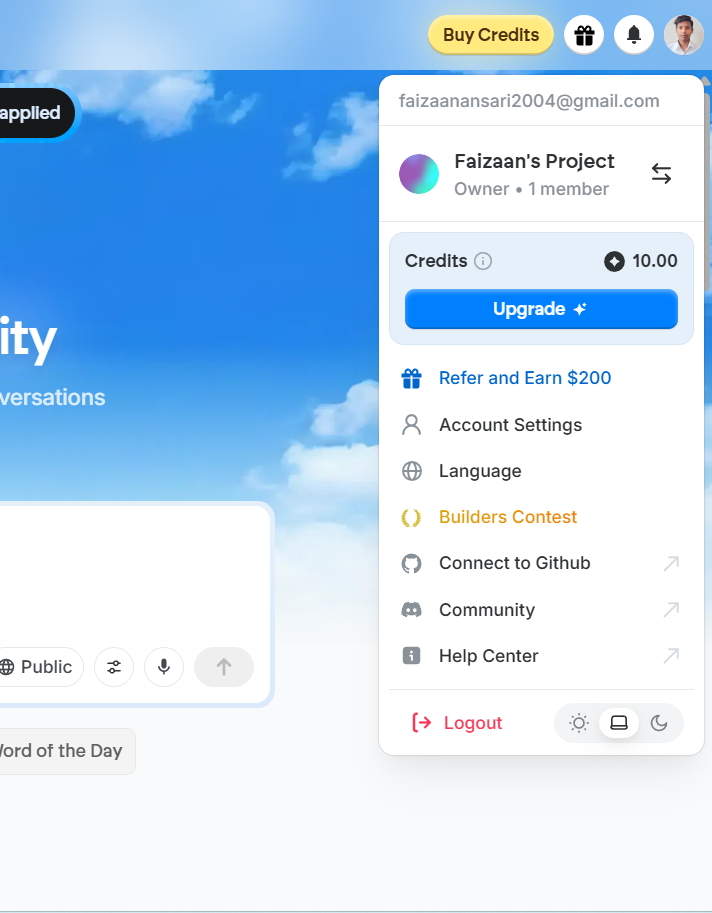
Go to Emergent’s website and sign up with Google or email. The process is simple. A free tier is available for practice, but for serious development, upgrading to a paid plan is worth it.
Step 2: Create a New Project
Click the New Project button on the dashboard. Name your project something relevant — for example, FoodRush Delhi or QuickBite Mumbai. This name is just for your reference and can be changed later.
Step 3: Enter Your Prompt
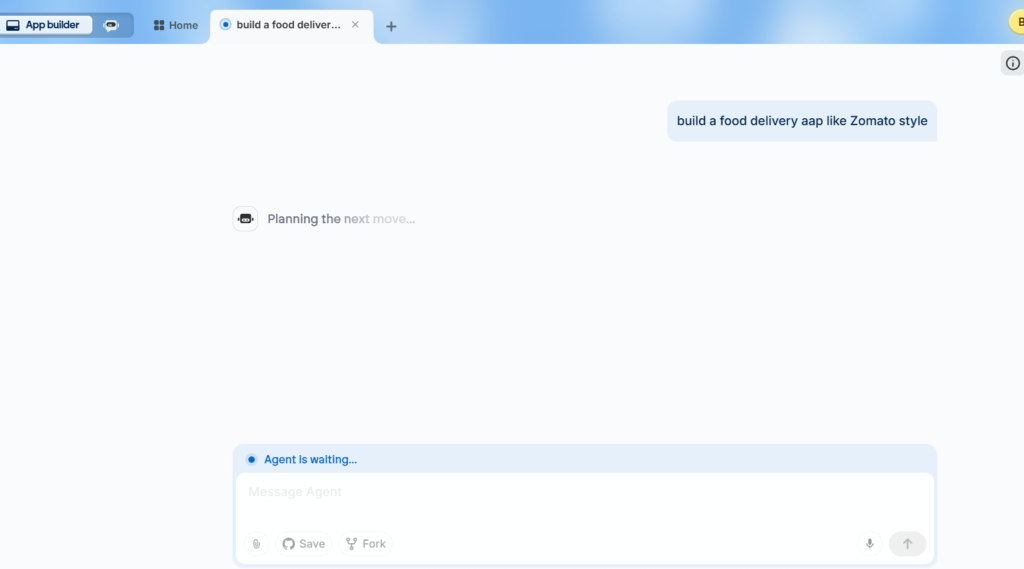
Use the ready-made prompt shared above, or customize it based on your specific needs. Paste it into the prompt box and click Generate. The AI will start working — it usually takes 5 to 15 minutes.
Step 4: Preview and Give Feedback
Once the app is generated, open it in preview mode. Are the features working correctly? Does the UI look the way you imagined? If something is off, describe that specific issue and ask the AI to fix it — for example: “The search bar is missing from the restaurant listing page, please add it.”
Step 5: Add Dummy Data
The first version of your app will not have real restaurants — it starts with sample data. The AI automatically adds dummy restaurants, menus, and images. This is perfect for testing.
Step 6: Set Up the Admin Panel
The admin panel gives you the power to manage your app without any coding. From here you can add or remove restaurants, view and update order statuses, manage users, create coupons, and change app settings. The admin panel has a separate login — your personal access. Keep it secure.
Step 7: Test on Real Device Using Expo Go
Testing the app on a real mobile device is absolutely essential — something that looks fine on a laptop screen can behave incorrectly on a phone.
Install the Expo Go app on your phone from the Play Store or App Store. Find the Preview on Mobile option in the Emergent dashboard. Scan the QR code with Expo Go. The app will open live on your phone. Test every feature for real — login, cart, order placement, and tracking.
A useful testing tip: have a friend or family member test it too. They will find errors you would never notice yourself.
Step 8: Build and Publish
When you are satisfied with testing, it is time to publish. For Android, generate an APK or AAB file and upload it through your Google Play Store account. For iOS, you will need an App Store account and an Apple Developer account. Emergent streamlines the build process and detailed guidance is available on the platform.
How to Make Money From Your Food Delivery App
This is the heart of the guide. Building the app is one thing — generating real income from it is a different game entirely. Here is how Zomato-type apps actually make money, and how you can apply the same models.
Revenue Stream 1: Commission Per Order
This is the primary and most powerful revenue model. You collect a percentage commission from restaurants on every order placed. The industry standard ranges from 10% to 30% depending on restaurant size and location. If you get 50 orders per day at ₹500 average with a 20% commission, that is ₹5,000 per day — or ₹1.5 lakh per month — from commission alone.
Revenue Stream 2: Delivery Charges
Charging customers a delivery fee is a simple and direct income source. Typically ₹20 to ₹50 per order. Some platforms offer free delivery with subscriptions, earning on the subscription instead.
Revenue Stream 3: Restaurant Listing Fees
Restaurants can pay you for featured placement on your platform. A Sponsored badge, a Top Restaurant highlight, or a special banner — these are valuable to restaurants and are extra income for you.
Revenue Stream 4: In-App Advertising
Restaurants can pay to promote their upcoming deals, new launches, or special offers. Banner ads and push notifications are both monetizable.
Revenue Stream 5: Subscription Plans
Similar to Zomato Gold, you can launch a subscription model where users pay ₹149 to ₹299 per month for benefits like free delivery, exclusive deals, and priority support. This model gives you predictable recurring income that helps with planning and stability.
Cost Breakdown: What Will It Actually Cost?
Traditional development for a food delivery app would cost ₹5 lakh to ₹20 lakh and take 6 to 12 months. With Emergent, the development cost drops to an affordable monthly subscription and the time drops to 1 to 7 days.
Other costs remain the same regardless of approach: Google Play Store account is a one-time ₹2,000 fee. Apple App Store account is $99 per year. Domain and hosting with Emergent is often included. Marketing costs are variable depending on your strategy.
Total estimated first-year cost with AI development: ₹15,000 to ₹50,000. Compare that to ₹10 lakh to ₹25 lakh for traditional development.
Post-Launch: What to Do After Your App Goes Live
Launching the app is only the beginning — the real work starts after launch.
Build a User Feedback Loop
Within the first 30 days, collect as much feedback as possible through an in-app feedback form, direct calls with your first 10 to 20 users, and through WhatsApp groups or community channels.
Local Marketing Strategy
The most common mistake after launch is sitting back and expecting traffic to come automatically. It does not. You need to actively market. Post in local Facebook and Instagram groups. Share in WhatsApp communities. Onboard restaurant partners first — their word-of-mouth is powerful. Launch with an offer like “50% off on first order.” Create a Google Business Profile for your area.
Iterative Improvement Through Emergent
A huge advantage of Emergent is that even after launch, changes are possible through chat. There is a bug? Describe it and the AI fixes it. You want a new feature? Prompt it and the AI adds it. This continuous improvement cycle keeps your app fresh and relevant without requiring a developer on payroll.
Troubleshooting Guide: Common Problems and Solutions
Problem 1: App is not generating or output is incomplete. This usually happens when the prompt is too vague or too complex all at once. Solution: Break the prompt into smaller parts. First generate just the basic structure, then add features one by one.
Problem 2: Credits are running out too quickly. Each generation iteration uses credits. Solution: Make only one or two specific changes per iteration. Avoid regenerating the entire app from scratch every time.
Problem 3: The UI design does not look right. Sometimes the AI’s default design does not match your expectations. Solution: Give specific design instructions like “The home screen should have a full-width hero image,” or “Restaurant cards should have an orange color header,” or “The bottom navigation should have four icons — Home, Search, Cart, and Profile.”
Problem 4: Payment system is not working. This is a common issue because payment gateways require real API integration. Solution: Get API keys from Indian payment gateways like Razorpay or PayU — free accounts are available. API integration is possible within Emergent by following the platform documentation.
Problem 5: App Store or Play Store rejection. Apps go through a strict review process during publishing. Solution: Read the App Store guidelines carefully. The most common rejection reason is an incomplete privacy policy or an unclear app description. Prepare these documents before submitting.
Pro Tips That Separate Successful Apps From Forgotten Ones
Dominate your local niche first. Serve one specific area or neighborhood perfectly before expanding. Word-of-mouth works powerfully at a local level.
Keep the UI simple. The simpler, the better. Do not confuse users. Zomato’s UI is simple because they have analyzed data from crores of users.
Make restaurant partners happy first. If restaurants are happy on your platform, they will recommend it to customers themselves. That is free marketing.
Track data from Day 1. Which restaurants are getting the most orders? Which time slots have the highest demand? This data will guide your growth strategy better than any guess.
Build your delivery partner network alongside the app. Without delivery, the platform is incomplete. Start recruiting delivery partners before your launch.
Use coupons strategically. Be generous with coupons during the launch phase, then reduce them gradually — but never compromise the customer experience in the process.
Common Mistakes to Avoid From the Beginning
Skipping planning. “Build first, think later” is a costly approach. Do market research and planning before touching any tool.
Using a weak prompt. Vague prompts produce vague apps. Invest time in crafting your prompt well.
Over-engineering the MVP. Building all features at once is expensive and time-consuming. MVP means minimum viable — not maximum features.
Ignoring testing. Launching without proper testing means breaking user trust. One bad experience leads to a negative review which leads to lost customers.
Ignoring marketing. “Build it and they will come” is a myth. Active, consistent marketing is non-negotiable.
Not thinking about scalability. If your app suddenly goes viral, can the server handle the load? Plan your infrastructure in advance.
Conclusion: Your App, Your Platform, Your Income
One truth is becoming very clear in 2026 — technology has opened doors that were previously available only to a select few. Today a student can build a functional app without any coding skills. A local business owner can launch their own delivery platform. A startup founder can show investors a real, working MVP.
AI tools like Emergent have made this possible — but having the tool alone is not enough. You need a clear idea, a well-crafted prompt, consistent testing, and a solid go-to-market strategy. All of that has been covered in this guide.
Remember — Zomato also started from a small website. Their first version was not perfect. What made them successful was their speed, their willingness to iterate constantly, and their obsession with customer experience.
You can do the same. In your city, in your area — think small first, improve repeatedly, and one day that small idea can become a real, profitable platform.
Start today. There is no reason to wait for tomorrow.