By JKS Digital | Updated 2026
5 Real Digital Marketing Case Studies:- Digital marketing is no longer just an optional business strategy — it has become the backbone of modern brand growth. In 2026, businesses are using SEO, social media, influencer marketing, content creation, paid advertising, and AI-powered tools to reach customers faster than ever before.
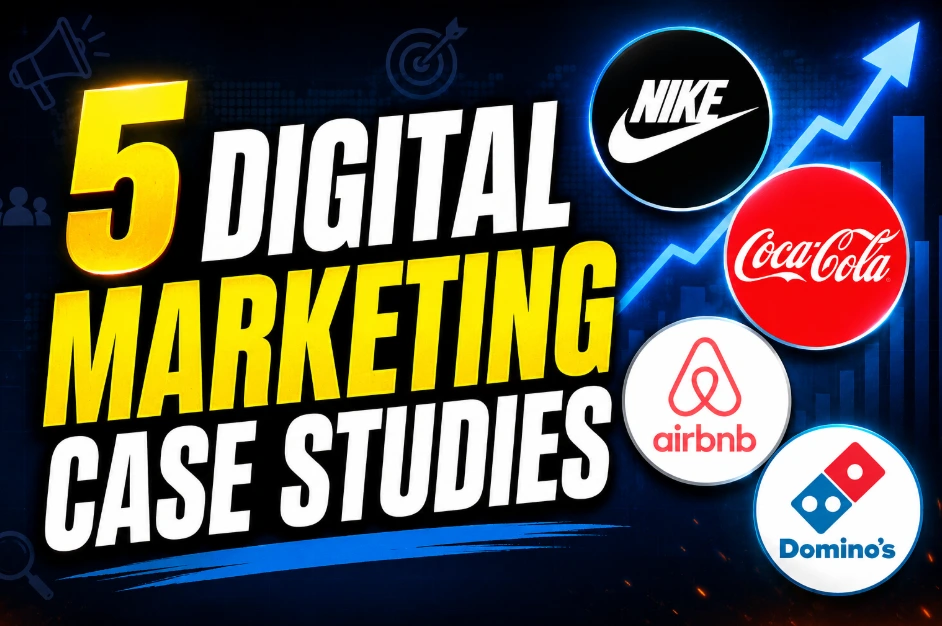
From global companies like Coca-Cola and Nike to small local businesses, digital marketing is helping brands increase visibility, build trust, and generate real sales online.
But instead of talking only about theory, let’s look at real digital marketing case studies that prove how powerful online marketing can be when used correctly.
What Makes Digital Marketing So Powerful?
Traditional advertising often depends on large budgets and limited audience targeting. Digital marketing changed this completely.
Today, businesses can:
- Reach highly targeted audiences
- Track every click and conversion
- Improve campaigns using real-time data
- Build direct relationships with customers
- Generate leads and sales at lower costs
This is the reason why companies across the world continue shifting their focus toward digital platforms in 2026.
1. Coca-Cola’s “Share a Coke” Campaign
Goal
Coca-Cola wanted to increase customer engagement and make its marketing feel more personal.
Strategy Used
Instead of printing only the Coca-Cola logo on bottles, the company started printing popular names. Customers were encouraged to find bottles with their own names or share them with friends and family.
At the same time, Coca-Cola promoted the campaign heavily on social media platforms using hashtags and user-generated content.
Results
- Millions of people shared photos online
- Social media engagement increased massively
- Coca-Cola experienced a noticeable boost in sales after years of slow growth
Why This Campaign Worked
People naturally love personalization. Coca-Cola successfully turned a simple product into a social experience that customers wanted to post online themselves.
Even in 2026, this campaign is still considered one of the best examples of emotional digital marketing.
2. Airbnb’s Content Marketing Success
Goal
Airbnb wanted to build trust and position itself as more than just a booking platform.
Strategy Used
The company focused heavily on content marketing by publishing travel stories, local guides, and real experiences from hosts and travelers.
Read Also:- AI Agents for Digital Marketing: How to Build Your First Automated Campaign (Step-by-Step)
Instead of directly pushing sales, Airbnb created useful and engaging travel-related content that people genuinely enjoyed reading.
Results
- Organic website traffic increased significantly
- Brand authority grew worldwide
- More users trusted the platform and started booking regularly
Key Lesson
Good content does more than attract visitors — it builds long-term trust.
This strategy still works strongly in 2026, especially for brands investing in SEO and informational content.
3. Nike’s Influencer Marketing Campaign
Goal
Nike wanted to increase product awareness among younger audiences online.
Strategy Used
Nike partnered with influencers and creators on Instagram and other social media platforms to promote new product launches.
Instead of traditional advertisements, Nike allowed influencers to showcase products naturally through lifestyle content, reels, and short videos.
Results
- Massive social media reach
- High audience engagement
- Products sold out quickly in several regions
Why It Worked
Modern audiences trust creators more than traditional ads. Nike understood this shift early and used influencer marketing to connect with younger consumers in a more authentic way.
In 2026, influencer marketing continues to be one of the strongest digital marketing strategies for brand visibility.
4. Domino’s Digital Ordering Strategy
Goal
Domino’s wanted to make food ordering faster and easier for customers.
Strategy Used
The company invested heavily in digital technology and mobile ordering systems. Customers could place orders using apps, websites, smart devices, and even social media platforms.
Read Also:- Why Businesses That Ignore AI Will Struggle in the Next 5 Years
Domino’s focused on reducing effort and improving customer convenience.
Results
- Significant growth in online sales
- Better customer retention
- Strong digital brand image
Key Lesson
Sometimes the best marketing strategy is improving customer experience itself.
Domino’s showed that convenience and technology can directly increase sales and customer loyalty.
5. Sephora’s Omnichannel Marketing Approach
Goal
Sephora wanted to create a smooth shopping experience across both online and offline platforms.
Strategy Used
The company connected its mobile app, website, loyalty programs, and physical stores into one unified system.
Customers could:
- Try virtual makeup tools
- Save products online
- Use loyalty rewards both online and offline
Results
- Increased repeat customers
- Higher engagement levels
- Strong customer loyalty
Why This Strategy Worked
Customers today expect convenience everywhere. Sephora successfully combined technology with customer experience to keep users connected across multiple platforms.
Why These Digital Marketing Case Studies Matter in 2026
One thing is common in all these success stories:
They focused on customer experience instead of only selling products.
Whether through personalization, influencer marketing, SEO content, or technology, these brands understood what their audiences actually wanted.
That is the real power of digital marketing.
Key Digital Marketing Trends in 2026
Digital marketing continues evolving rapidly. Some major trends dominating 2026 include:
- AI-powered marketing tools
- Short-form video content
- Voice search optimization
- Personalized advertising
- Creator and influencer partnerships
- Data-driven SEO strategies
Businesses adapting to these trends are growing much faster than those still depending only on traditional marketing methods.
Read Also:- The Real Formula for Google AdSense Approval (Tested & Honest Guide)
Final Thoughts
These real digital marketing case studies prove that online marketing is not just about running ads — it is about building relationships, improving experiences, and creating content people genuinely connect with.
From Coca-Cola’s personalization strategy to Nike’s influencer campaigns, every brand used digital marketing differently, but the goal remained the same: reaching the right audience in the most engaging way possible.
In 2026, digital marketing is no longer optional for businesses that want long-term growth. Whether you are running a startup, local business, or global company, the ability to market effectively online can completely change your brand’s future.
Frequently Asked Questions (FAQs)
What is a digital marketing case study?
A digital marketing case study is a real example showing how a company used online marketing strategies to achieve business growth, increase sales, or improve customer engagement.
Why are digital marketing case studies important?
They help businesses understand which strategies work in real-world situations and how successful brands achieve results online.
Which company has one of the best digital marketing strategies?
Companies like Coca-Cola, Nike, Airbnb, and Sephora are often considered strong examples because of their creative and customer-focused marketing campaigns.
Is digital marketing still worth learning in 2026?
Yes. Digital marketing continues to grow rapidly in 2026 due to increasing online businesses, social media usage, AI tools, and digital advertising opportunities.