Which Platform is Best for Lead Generation in 2026:- Generating leads has become one of the biggest challenges for businesses in 2026. Whether you’re running a startup, a digital marketing agency, an eCommerce store, or a local business, your success depends on attracting the right people—not just more people.
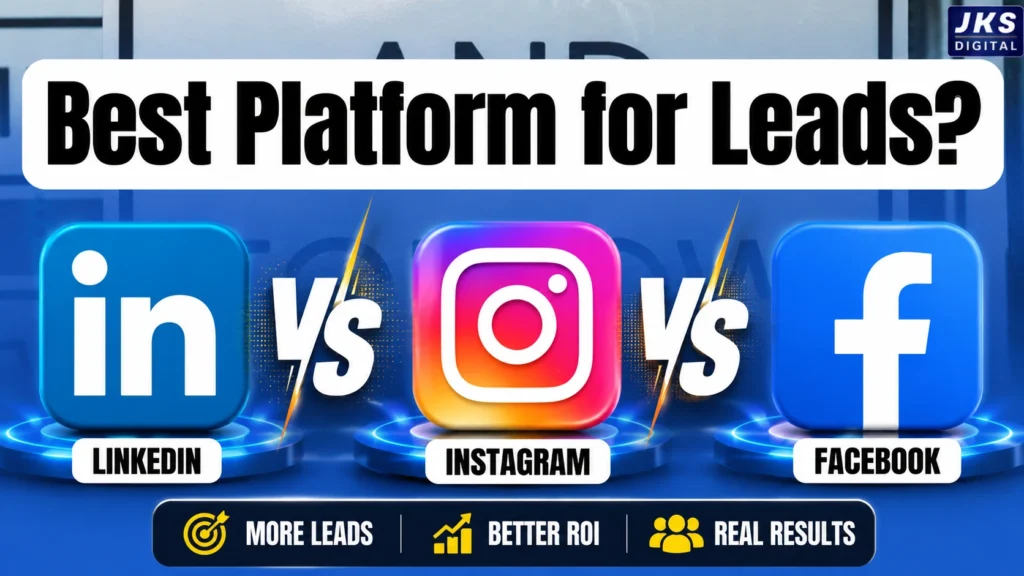
When it comes to lead generation, three platforms dominate the conversation: LinkedIn, Instagram, and Facebook. Each offers unique opportunities, but they serve different audiences and support different business goals. Choosing the wrong platform can lead to wasted time, higher marketing costs, and poor-quality leads.
So, which platform is actually the best for generating leads in 2026?
The answer isn’t as simple as picking the most popular platform. It depends on your target audience, business model, and marketing objectives. In this comprehensive guide, we’ll compare LinkedIn, Instagram, and Facebook across lead quality, audience intent, advertising, organic reach, and conversion potential to help you choose the platform that delivers the best results for your business.
What Is Lead Generation?
Before comparing platforms, it’s important to understand what lead generation actually means.
Many people assume that lead generation simply means collecting phone numbers or receiving messages on social media. In reality, it goes much deeper than that.
A lead is a person or business that has shown genuine interest in your product or service.
That interest can be expressed in many different ways.
For example, a visitor who fills out a contact form on your website is a lead.
Someone who downloads your free eBook after providing an email address is also a lead.
A business owner who sends you a message asking for pricing is a lead.
Even a person who schedules a free consultation after watching your content becomes a potential lead.
The key point is that a lead has already taken the first step toward becoming your customer.
Lead generation is the process of attracting these interested people and encouraging them to begin a conversation with your business.
It is not about forcing people to buy.
It is about creating enough trust, value, and interest that they willingly reach out to you.
Why Lead Generation Is More Important Than Ever in 2026
Digital marketing has changed dramatically over the past few years.
Customers have become more informed, more selective, and less likely to trust businesses immediately.
They compare prices, read reviews, watch videos, browse social media profiles, and often interact with a brand multiple times before making a purchase.
This means businesses can no longer depend on random advertising or occasional social media posts.
They need a consistent system that attracts qualified prospects every day.
Lead generation provides exactly that.
Instead of waiting for customers to discover your business by chance, a structured lead-generation strategy helps you build predictable opportunities for growth.
It also improves sales efficiency.
Sales teams no longer waste time contacting people who have no interest in the product.
Instead, they communicate with prospects who have already shown buying intent.
This increases conversion rates, reduces marketing costs, and improves overall business performance.
Whether you’re a startup, a freelancer, a digital agency, or an established company, lead generation is no longer optional. It has become one of the most valuable business assets.
Not All Leads Are Equal
One of the biggest mistakes businesses make is measuring success by the number of leads they receive.
Read Also:- YouTube or Blogging in 2026: Which One Gives Higher Income and Better Growth?
More leads do not automatically mean more revenue.
Imagine two businesses.
Business A generates 500 inquiries every month, but only five people become paying customers.
Business B generates just 50 inquiries, but 20 of those become customers.
Which business is performing better?
Clearly, Business B.
The difference lies in lead quality.
High-quality leads already match your target audience.
They have a genuine problem.
They have the budget to purchase.
They are actively searching for a solution.
Most importantly, they are ready to have a meaningful conversation.
Low-quality leads, on the other hand, often have no buying intent.
Some are simply collecting information.
Others are comparing prices without any immediate plan to purchase.
Some may not even fit your ideal customer profile.
This is why experienced marketers focus on attracting qualified leads rather than large quantities of random inquiries.
The platform you choose plays a major role in determining the quality of the leads you receive.
Why Platform Choice Matters More Than Ever
Imagine opening a luxury jewellery showroom in the middle of an industrial area where almost nobody buys jewellery.
Even if your products are exceptional, sales would likely remain low because the audience is not aligned with your business.
The same principle applies to digital marketing.
Every social media platform attracts different types of users with different intentions.
People visit LinkedIn to build professional relationships.
People visit Instagram to consume visual content.
People visit Facebook to connect with communities, family, local businesses, and interest groups.
Because user intent differs, marketing strategies must also differ.
A strategy that works exceptionally well on LinkedIn may fail completely on Instagram.
Likewise, content that performs brilliantly on Instagram may receive very little engagement on LinkedIn.
Understanding this difference is the first step toward successful lead generation.
Rather than asking, “Which platform is the most popular?” businesses should ask a far more valuable question:
“Where are my ideal customers already spending their time?”
The answer to that question often determines the success or failure of an entire marketing campaign.
Introducing the Three Major Platforms
Before diving into detailed comparisons, let’s briefly understand what makes each platform unique.
LinkedIn is designed for professionals and businesses.
Unlike traditional social media platforms, LinkedIn focuses on careers, networking, business growth, recruitment, thought leadership, and professional education.
Read Also:- Where to Start Content Creation in 2026: YouTube, Facebook or Instagram? (Best Choice Guide)
People log in expecting to learn, connect, and discover business opportunities.
This makes LinkedIn one of the strongest platforms for B2B lead generation.
If your target audience includes business owners, CEOs, HR managers, marketing directors, consultants, or decision-makers, LinkedIn deserves serious attention.
Instagram is a visual-first platform built around images, videos, Stories, and Reels.
Users typically visit Instagram to discover trends, follow creators, explore brands, and consume entertaining or educational content.
Because of its visual nature, Instagram excels at building brand awareness and emotional connections.
Businesses that invest in storytelling, creative visuals, customer success stories, and educational videos often build highly engaged communities that eventually convert into customers.
Although many people believe Facebook has declined, it remains one of the world’s largest social platforms.
Its strength lies in communities, groups, local business discovery, recommendations, and highly advanced advertising tools.
For small businesses targeting specific cities, regions, or local markets, Facebook continues to deliver impressive results.
Groups, reviews, events, and Marketplace also provide additional opportunities to generate business inquiries.
Understanding the Biggest Myth About Lead Generation
One of the most common misconceptions in digital marketing is believing that more followers automatically mean more customers.
This is rarely true.
A business account may have hundreds of thousands of followers and still struggle to generate qualified leads. On the other hand, another company with only a few thousand followers may consistently generate high-value clients every month.
The difference lies in audience intent.
Some people visit social media platforms to be entertained.
Others visit to learn.
Some want to connect with professionals.
Some are actively searching for products or services.
Understanding this intent is far more valuable than simply looking at follower counts.
Lead Quality Comparison
Lead quality should always be your first consideration.
Not every lead becomes a customer.
The objective is not to collect the maximum number of inquiries. The objective is to attract people who are genuinely interested in purchasing your products or services.
LinkedIn consistently produces the highest quality leads for service-based businesses and B2B companies.
People visiting LinkedIn are generally looking for:
- Business partnerships
- Professional networking
- Service providers
- Hiring opportunities
- Industry knowledge
They already have a business mindset.
Because of this, conversations usually begin with professional intent instead of casual browsing.
If your ideal customer is a company owner, CEO, HR manager, marketing director, consultant, or decision-maker, LinkedIn offers unmatched opportunities.
Although lead volume may be lower than other platforms, the conversion rate is often significantly higher because the audience is more qualified.
Instagram offers a completely different environment.
Users primarily visit Instagram for entertainment, inspiration, lifestyle content, and discovering new brands.
This means your business first has to capture attention before generating trust.
The customer journey on Instagram usually looks like this:
A person watches your Reel.
They visit your profile.
They browse your posts.
They read testimonials.
They decide whether they trust your brand.
Only then do they send a message or inquire.
Read Also:- YouTube vs Facebook vs Instagram in 2026: Which Platform Has Highest Earning Potential?
Instagram therefore works exceptionally well for businesses that can build visual trust through consistent content.
Examples include:
- Fitness coaches
- Fashion brands
- Restaurants
- Beauty clinics
- Personal brands
- Interior designers
- Travel companies
Lead quality can be excellent, but it depends heavily on your content strategy and consistency.
Facebook continues to generate valuable leads despite the rise of newer platforms.
Its biggest strength lies in communities and advertising.
Facebook Groups remain powerful because members often join around shared interests, industries, or local communities.
Businesses can establish authority by genuinely helping members rather than constantly promoting services.
Facebook Ads also remain one of the most cost-effective advertising options for local businesses.
However, organic reach is generally lower than Instagram, making paid advertising more important than before.
Audience Intent: The Hidden Factor Most Businesses Ignore
Every platform has a different user mindset.
Understanding this single concept can completely change your marketing results.
LinkedIn Audience
Visitors are looking for opportunities.
They expect professional discussions.
Educational content performs exceptionally well.
Case studies, business insights, industry reports, and expert opinions build authority quickly.
Instagram Audience
Visitors are looking for inspiration.
They respond emotionally before logically.
Strong visuals, storytelling, and authenticity outperform purely promotional posts.
Your content must stop the scroll before it can generate leads.
Facebook Audience
Visitors are looking for community.
Recommendations.
Discussions.
Reviews.
Local information.
Facebook users trust businesses that actively participate in conversations instead of simply advertising.
Advertising Comparison
Advertising budget is an important consideration for every business.
However, choosing the cheapest platform does not necessarily produce the best return on investment.
LinkedIn Advertising
LinkedIn advertising is generally the most expensive.
The reason is simple.
You are targeting professionals with specific job titles, industries, company sizes, and decision-making roles.
Higher advertising costs often result in better business opportunities.
For companies selling premium services or enterprise solutions, this investment can be worthwhile.
Instagram Advertising
Instagram offers a balanced advertising environment.
It combines detailed audience targeting with visually engaging formats.
Video advertisements, carousel posts, Stories, and Reels provide multiple ways to capture attention.
Businesses with attractive products usually perform exceptionally well here.
Facebook Advertising
Facebook remains one of the most budget-friendly advertising platforms.
Its advanced targeting capabilities allow businesses to reach users based on location, interests, demographics, purchasing behavior, and online activity.
Small businesses with limited budgets often achieve strong results through well-optimized Facebook campaigns.
Organic Growth vs Paid Growth
One important lesson every marketer eventually learns is this:
Paid advertising creates visibility.
Organic content creates trust.
Businesses that rely only on advertising often struggle when campaigns stop.
Businesses that invest only in organic marketing usually grow more slowly.
The most successful brands combine both strategies.
Organic content establishes authority.
Paid campaigns accelerate lead generation.
Together, they produce sustainable business growth.
Which Platform Works Best for Different Business Types?
Choosing a platform becomes much easier when viewed from the perspective of your business model.
If you own a digital marketing agency
LinkedIn should be your primary platform.
Business owners actively search for agencies, consultants, and marketing experts there.
Instagram can strengthen your brand identity.
Facebook can support remarketing and community engagement.
If you sell physical products
Instagram should receive the highest priority.
Customers want to see products in action.
Short-form videos, customer reviews, and lifestyle content strongly influence purchasing decisions.
Facebook advertising can further increase product visibility.
If you operate a local business
Facebook continues to provide excellent opportunities for local targeting.
Instagram helps attract nearby customers through location-based content.
LinkedIn is usually less important unless your services target businesses rather than consumers.
If you are a consultant, coach, or freelancer
LinkedIn offers the strongest opportunity to establish authority.
Educational content, professional networking, and consistent value-sharing naturally attract qualified inquiries.
Instagram can strengthen your personal brand, but LinkedIn should remain your primary focus.
The Winning Strategy for 2026
The smartest businesses no longer ask,
“Which platform should we choose?”
Instead, they ask,
“How can each platform support a different stage of our customer journey?”
An effective strategy could look like this:
LinkedIn builds credibility with decision-makers.
Instagram builds visibility and emotional connection.
Facebook strengthens community relationships and supports paid advertising campaigns.
Instead of depending on a single platform, businesses create an ecosystem where every channel serves a specific purpose.
This approach not only increases lead generation but also creates a stronger and more resilient brand.
Final Verdict
There is no universal winner because every business serves a different audience.
If your goal is to generate high-quality B2B leads, LinkedIn remains the strongest platform in 2026.
If your business depends on visual branding, engagement, and product discovery, Instagram offers outstanding opportunities.
If you want affordable advertising, local visibility, and community-driven marketing, Facebook continues to deliver reliable results.
The businesses that achieve the best results are not the ones that chase every new platform. They are the ones that deeply understand where their customers spend time, what information they need, and how trust is built before a buying decision is made.
Lead generation is ultimately not about choosing the most popular platform. It is about reaching the right audience with the right message at the right time.
When you understand that principle, every marketing platform becomes a powerful business tool rather than just another social network.