Is Dropshipping Dead in 2026:- For years, drop shipping was presented as the ultimate internet dream.
A laptop.
A Shopify store.
A few Facebook ads.
And suddenly, strangers online claimed they were making thousands of dollars every single day.
Social media transformed dropshipping into something much bigger than just an ecommerce model. It became a symbol of freedom. Millions of students, job seekers, freelancers, and struggling middle-class individuals entered the industry hoping to escape financial pressure and build an independent future online.
But by 2026, the conversation around dropshipping has completely changed. People are no longer asking how to start dropshipping. They are asking something far more serious:
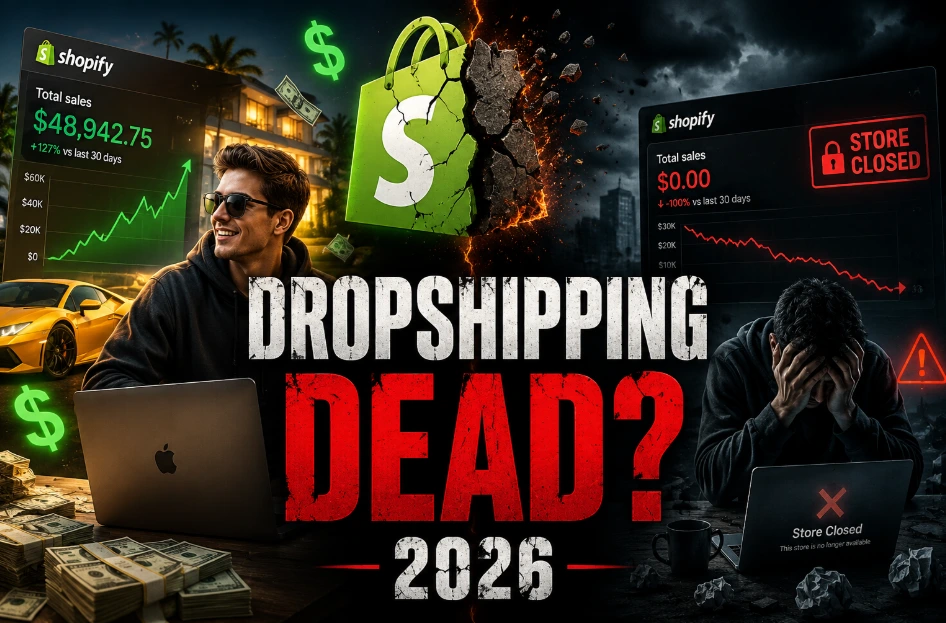
“Is dropshipping dead?”
The internet today is filled with conflicting opinions. Some creators claim dropshipping is still one of the best online business models in the world. Others argue that the industry has become oversaturated, unprofitable, and controlled by expensive advertising platforms and giant ecommerce brands.
The reality, however, is far more complex than either side admits.
Dropshipping is not completely dead. But the version of dropshipping that once went viral on YouTube and TikTok is slowly collapsing. The business model is evolving, and the people who fail to adapt are disappearing faster than ever before.
The Rise of the Dropshipping Dream
To understand where dropshipping stands in 2026, it is important to understand why it exploded in the first place.
Traditional businesses required inventory, warehouses, logistics, and significant capital investment. Dropshipping changed that equation completely. Entrepreneurs could launch online stores without manufacturing products or storing inventory themselves. A supplier handled shipping while the seller focused on marketing and customer acquisition.
This low barrier to entry created a global ecommerce revolution.
Platforms like Shopify simplified store creation. AliExpress made international suppliers accessible. Facebook and Instagram ads allowed even beginners to reach millions of people instantly. TikTok later accelerated the trend by making viral product marketing easier than ever.
For a brief period, dropshipping felt almost unstoppable.
Teenagers started ecommerce stores from their bedrooms. Content creators showcased luxury lifestyles funded by online sales. Gurus sold courses promising financial freedom through “winning products” and automated stores.
But underneath the success stories, several structural problems were already growing.
Why Many People Believe Dropshipping Is Dead
The biggest reason people believe dropshipping is dying is because the market no longer behaves the way it did five years ago.
In the early days, attention on social media platforms was relatively cheap. Facebook ads could generate strong profits even for inexperienced sellers. Competition was lower, and customers were more willing to purchase from unknown websites.
Read Also:- How to Earn Money from Instagram Reels in 2026: Complete Guide for India
That environment no longer exists.
Advertising costs have increased dramatically. Customer acquisition has become more expensive across almost every platform. Thousands of stores now sell nearly identical products using similar marketing strategies. Consumers have also become more skeptical after years of encountering misleading ecommerce ads and low-quality products.
The result is a severe trust problem.
Modern consumers expect fast shipping, professional branding, clear return policies, and reliable customer support. Random one-product stores with copied descriptions and aggressive countdown timers no longer convert as easily as they once did.
At the same time, ecommerce giants like Amazon have trained customers to expect convenience and speed. This has made low-quality dropshipping stores appear unreliable by comparison.
Many beginners enter the industry expecting quick profits, only to discover that paid advertising, product testing, and refunds can destroy margins rapidly. Some stores generate impressive revenue numbers while remaining barely profitable after expenses.
This harsh reality has led many people to conclude that dropshipping itself is finished.
But that conclusion ignores an important shift happening inside the industry.
The Old Model Is Dying, Not Ecommerce Itself
The real issue is not that ecommerce is disappearing. The issue is that old-school dropshipping strategies are becoming obsolete.
In the past, success often depended on finding a trending product quickly, launching aggressive ads, and scaling before competitors copied the idea. The system rewarded speed more than long-term brand building.
Today, that strategy is far less effective.
The internet has matured. Customers are more informed. Algorithms are more competitive. Artificial intelligence has made it easier for almost anyone to create stores, advertisements, and product pages within hours.
Ironically, technology has lowered the entry barrier while making sustainable success harder.
As a result, ecommerce is shifting toward branding, trust, and audience ownership.
The stores performing well in 2026 are usually not anonymous websites built overnight. They are businesses with recognizable identities, strong content strategies, customer communities, and creator-driven marketing systems.
The focus has moved away from simply selling products. Modern ecommerce is increasingly about building attention and trust.
This is why many creator-led brands are outperforming traditional dropshipping stores. Audiences prefer buying from people they recognize instead of random websites that appear for a few weeks and disappear shortly afterward.
Read Also:- What is Claude AI? Complete Guide for 2026
The Psychological Trap of Online Earning Culture
One of the most overlooked aspects of dropshipping is the emotional psychology behind its popularity.
For many people, dropshipping was never just about ecommerce. It represented escape.
Escape from low-paying jobs.
Escape from financial uncertainty.
Escape from traditional career systems.
This emotional desire made the industry extremely powerful.
Social media amplified the dream by constantly showing luxury lifestyles, revenue screenshots, and stories of overnight success. However, platforms rarely showed the hidden side of ecommerce: failed stores, advertising losses, customer disputes, and mental exhaustion.
This created unrealistic expectations for beginners.
Thousands of people entered the market believing dropshipping was passive income when, in reality, successful ecommerce businesses require research, branding, testing, customer service, and long-term strategy.
The emotional damage caused by unrealistic expectations is rarely discussed. Many beginners lose money not because ecommerce is impossible, but because they enter the industry chasing speed instead of sustainability.
How Artificial Intelligence Is Changing Dropshipping
Artificial intelligence is now reshaping the ecommerce industry at an unprecedented pace.
AI tools can generate product descriptions, create ad creatives, write email campaigns, analyze trends, and even automate customer support. This allows businesses to scale faster while reducing operational costs.
However, AI is also increasing competition dramatically.
Read Also:- How to Make Money with Notion AI in 2026: Best Beginner Guide
When anyone can launch a professional-looking store within hours, differentiation becomes far more difficult. The internet is becoming crowded with automated businesses using identical strategies and recycled products.
This creates a dangerous future scenario.
Consumers may become increasingly resistant to generic ecommerce stores. Trust and authenticity may become the most valuable assets online. Businesses without unique branding or emotional connection could struggle to survive in an AI-driven marketplace.
In many ways, the future of ecommerce may belong less to stores and more to personalities, communities, and trusted creators.
What Still Works in 2026
Despite the challenges, opportunities still exist for entrepreneurs willing to adapt.
Successful ecommerce businesses in 2026 usually focus on several key areas:
Brand Building
Strong visual identity, storytelling, and consistent customer experience matter more than ever before.
Content Marketing
Organic traffic from TikTok, YouTube Shorts, Instagram Reels, and search engines can reduce dependence on expensive paid ads.
Niche Communities
General stores are struggling, while niche-focused brands with loyal audiences are growing.
Fast Shipping and Better Suppliers
Customer expectations are now shaped by Amazon-level convenience.
Creator-Led Commerce
People increasingly buy from creators and influencers they trust rather than anonymous online stores.
Read Also:- ?Top 7 Ways to Make Money with Jasper AI in 2026
Long-Term Thinking
Quick-profit strategies are becoming less reliable. Sustainable ecommerce now requires patience and strategic positioning.
The Future of Dropshipping
Dropshipping in 2026 is not dead, but it is undergoing a painful transformation.
The easy-money era that dominated YouTube advertisements and social media marketing is fading. Shortcut-based ecommerce models are becoming increasingly unstable as customer expectations rise and competition intensifies.
However, ecommerce itself continues to grow globally.
Online shopping behavior is deeply integrated into modern society, and digital commerce will likely expand even further over the next decade. The businesses that survive will not necessarily be the ones with the cheapest products or the most aggressive ads.
They will be the ones capable of building trust in an internet economy overwhelmed by automation and noise.
The future belongs to businesses that combine technology with authenticity.
Final Thoughts
The question is no longer whether dropshipping is dead.
The real question is whether entrepreneurs are willing to evolve beyond outdated internet business models.
For years, social media sold the idea that ecommerce success was easy. But sustainable online businesses have never been built on shortcuts alone. They are built through branding, customer trust, audience attention, and long-term consistency.
Read Also:- How to Earn Money from DeepSeek? New Income Ways in 2026
Dropshipping is changing because the internet itself is changing.
Consumers are becoming smarter. Artificial intelligence is increasing competition. Attention is becoming more expensive. Trust is becoming more valuable.
The people who continue chasing quick trends may struggle in this new environment.
But those who understand branding, storytelling, and genuine customer connection may still find enormous opportunities in the future of ecommerce.