WhatsApp Account Ban or Restriction:- WhatsApp is one of the most widely used messaging platforms in the world, used for personal communication, business marketing, customer support, and daily information sharing. However, many users suddenly face a serious issue where their account stops working or gets limited access. This situation is known as WhatsApp Account Ban or Restriction.
In many cases, users do not understand why this happens, how serious it is, or what steps should be taken to recover the account. The issue can range from temporary limitations to permanent account bans, depending on the severity of the activity detected.
This complete guide explains everything about WhatsApp Account Ban or Restriction, including the reasons behind it, how WhatsApp detects violations, recovery methods, and prevention strategies in a structured and practical way.
1. What is WhatsApp Account Ban or Restriction?
WhatsApp Account Ban or Restriction refers to a situation where WhatsApp limits or blocks your account due to violation of its policies or suspicious activity. This restriction can either be temporary or permanent depending on the nature of the violation.
A temporary restriction usually limits certain actions like sending messages, while a permanent ban completely disables access to the account.
In simple terms, WhatsApp Account Ban or Restriction means your account has been flagged by WhatsApp’s system for behavior that does not match its usage guidelines.
2. Types of WhatsApp Account Ban or Restriction
When we talk about WhatsApp Account Ban or Restriction, it is important to understand that WhatsApp does not apply the same level of punishment in every case. The platform uses different levels of action depending on the severity of the violation, user behavior, and risk detection signals. Broadly, there are two main types of restrictions: temporary restriction and permanent ban.
2.1 Temporary Restriction
A temporary WhatsApp Account Ban or Restriction is the first level of action taken by WhatsApp when it detects unusual or policy-violating activity that is not severe enough for a permanent ban. In this case, your account is not completely removed, but certain features are limited for a specific period of time.
This type of restriction is often applied when WhatsApp’s system identifies suspicious behavior such as rapid messaging, bulk forwarding, or activity that resembles spam but is not confirmed as harmful.
What Happens in Temporary Restriction?
When a temporary WhatsApp Account Ban or Restriction is applied, you may face the following limitations:
- You may be unable to send messages to individual contacts or groups for a limited time
- Some features like forwarding messages or adding new contacts may be temporarily disabled
- You may receive an in-app warning message stating that your activity is restricted
- Your messages may not be delivered to recipients during the restriction period
Why Temporary Restrictions Happen
Temporary restrictions are usually triggered due to:
- Sending a high volume of messages in a short time
- Forwarding the same message to multiple users repeatedly
- Being reported by a small number of users
- Using messaging patterns that resemble automated behavior
- Engaging in suspicious login or device activity
Duration of Temporary Restriction
In most cases, a temporary WhatsApp Account Ban or Restriction lasts anywhere from a few hours to a few days. The system automatically restores access once the risk behavior is no longer detected. However, repeated violations can increase the severity of future restrictions.
2.2 Permanent Ban
A permanent WhatsApp Account Ban or Restriction is the most serious action taken by WhatsApp. It means the platform has determined that the account has violated its policies in a significant or repeated manner, or is involved in activities that pose a high risk to users or the platform.
Unlike temporary restrictions, a permanent ban usually results in complete loss of access to the account.
What Happens in Permanent Ban?
When a permanent WhatsApp Account Ban or Restriction is applied, the impact is much more severe:
- You are completely logged out of your WhatsApp account
- You cannot send or receive messages anymore
- Your chat history may become inaccessible through the app
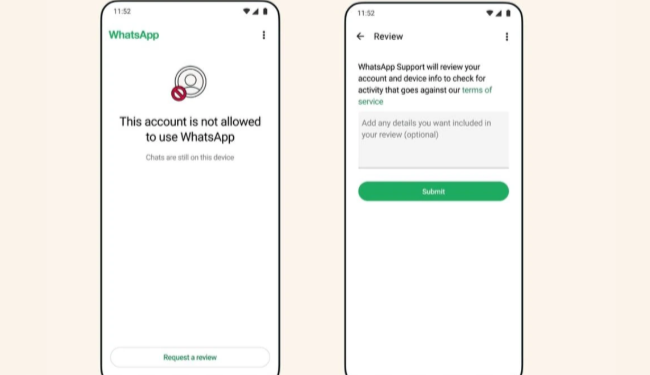
- WhatsApp displays a message stating that the account is not allowed to use the service
- You are prevented from re-registering with the same number in many cases
Common Reasons for Permanent Ban
Permanent bans usually occur due to serious violations such as:
- Continuous use of unofficial or modified WhatsApp applications
- Large-scale spam or marketing abuse
- Sending harmful, illegal, or abusive content
- Multiple user reports against the account
- Repeated violation of WhatsApp policies even after warnings
- Automated bot usage or unauthorized tools
Recovery Possibility in Permanent Ban
Recovery from a permanent WhatsApp Account Ban or Restriction is difficult but not always impossible. WhatsApp may allow recovery in some cases after reviewing an appeal. However, if the violation is severe or repeated, the ban can become final.
Users can still attempt recovery by contacting WhatsApp support and requesting a manual review of their account, but approval depends entirely on WhatsApp’s internal decision system.
Key Difference Summary
To clearly understand WhatsApp Account Ban or Restriction, the difference between both types is:
- Temporary restriction limits features for a short time, while permanent ban removes access completely
- Temporary restriction may recover automatically, but permanent ban requires review and may not be reversible
- Temporary restriction is often triggered by suspicious behavior, while permanent ban is linked to serious policy violations
3. Reasons for WhatsApp Account Ban or Restriction
There are several underlying factors that can lead to account limitations or blocking on WhatsApp. Most of these are related to user behavior and how the platform is being used. WhatsApp follows strict policies to protect users from spam, scams, and misuse. When any activity appears suspicious or violates these rules, the system may automatically apply restrictions or bans.
Understanding these reasons is important because even normal-looking usage can sometimes be flagged if it matches risky patterns detected by WhatsApp’s system.
3.1 Spam Messaging Behavior
One of the most common triggers is spam-like communication. This includes sending repetitive, irrelevant, or unwanted messages to users who have not shown interest in your content.
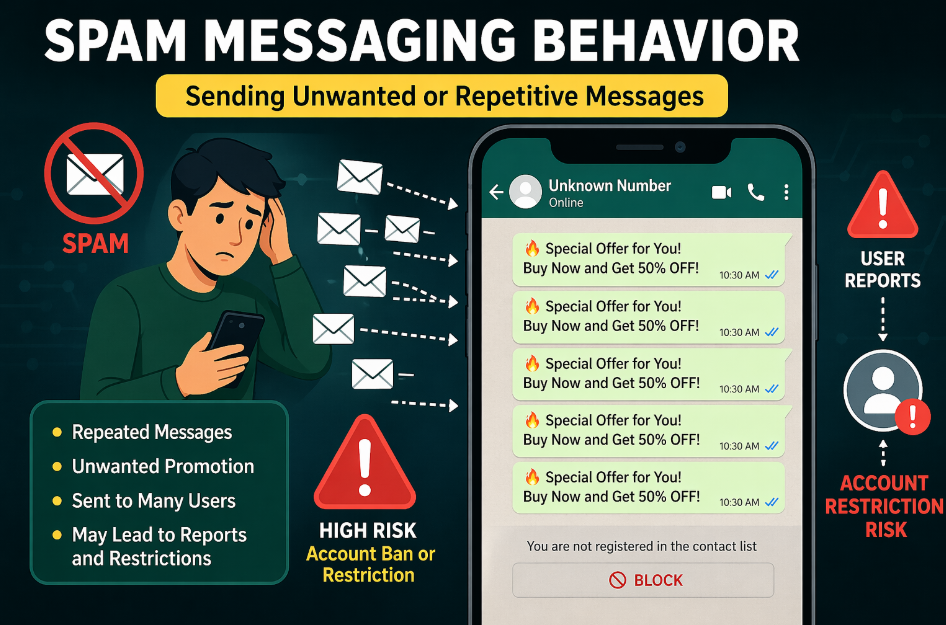
Spam is not only defined by quantity but also by pattern and intent. Even a small number of messages can be flagged if multiple recipients report them or if they are sent without proper consent.
3.2 High-Volume or Bulk Messaging
When a large number of messages are sent within a short time, the system may consider it abnormal activity. This is especially common in cases where identical messages are forwarded repeatedly or sent in bulk.
Such behavior resembles automated marketing tools, which are not allowed under WhatsApp policies and can lead to account limitations or blocking.
3.3 Use of Unauthorized or Modified Applications
Using unofficial versions of WhatsApp is a major risk factor. These applications are not approved by the platform and often bypass official security systems.
Read Also:- Facebook Account Suspended in 2026? How to Recover It Fast
These apps may:
- Change normal messaging behavior
- Enable hidden or automated features
- Bypass official restrictions
Because of this, WhatsApp can quickly detect such usage and take action to protect the platform.
3.4 User Reports and Blocking Activity
WhatsApp depends heavily on user feedback for safety. If multiple users report or block an account, it signals that the activity may be unwanted or harmful.
Even if the behavior seems normal to the user, a high number of reports can still lead to restrictions because user safety is the top priority.
3.5 Suspicious Login or Device Activity
Unusual login patterns can also trigger system alerts. This includes:
- Frequent switching between devices
- Rapid changes in location, especially using VPNs
- Access from unknown or unusual environments
Such activity may appear as unauthorized access, which increases the chances of account restrictions or blocking.
3.6 Policy Violations and Harmful Content
WhatsApp has strict rules regarding content sharing. Any violation of these policies can result in immediate action.
This includes:
- Sharing false or misleading information
- Distributing illegal or harmful content
- Engaging in abusive or offensive communication
Repeated violations significantly increase the risk of account action or permanent blocking.
4. How WhatsApp Detects Violations
WhatsApp does not rely only on manual reporting. Instead, it uses advanced automated systems and behavioral analysis tools to identify risky activity. This helps the platform detect violations even before users report them.
4.1 Artificial Intelligence Monitoring
AI systems continuously analyze message patterns, frequency, and interaction behavior. If activity resembles spam or automation, it can be flagged instantly for review or action.
4.2 Message Pattern Analysis
Every message contributes to behavioral tracking. The system evaluates:
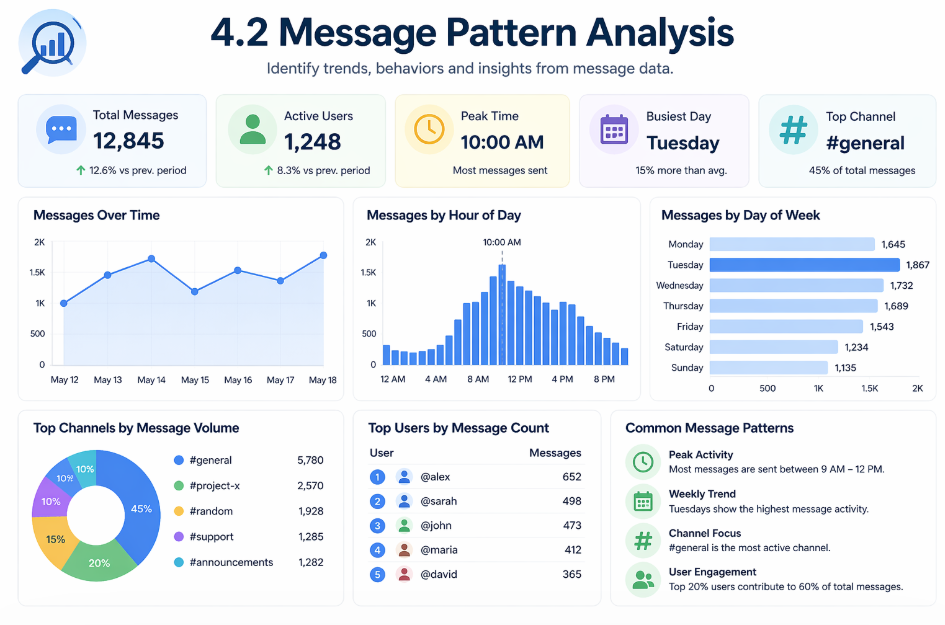
- Repetition of messages
- Frequency of communication
- Number of recipients
- Forwarding behavior
If patterns look unnatural or automated, it may trigger restrictions.
4.3 User Reporting System
User reports play an important role in moderation. When multiple reports are received for a single account, WhatsApp prioritizes safety checks and may restrict the account to prevent further issues.
4.4 Device and IP Tracking
WhatsApp monitors device details and login locations. If an account is accessed from multiple unusual locations or devices in a short period, it may raise security concerns and trigger action.
4.5 Behavioral Risk Scoring
Each account is assigned an internal risk score based on activity patterns. If the score crosses a certain limit, the system may automatically apply restrictions even without user reports.
This is why some users face account limitations without clearly understanding the cause.
5. How to Fix WhatsApp Account Ban or Restriction
If your account is limited or blocked, recovery depends on the type of restriction and the severity of the issue. Following the correct steps can improve the chances of restoring access.
5.1 Wait for Temporary Restriction to End
If the restriction is temporary, it is best to stop all activity and wait. Repeated login attempts or reinstalling the app will not help and may worsen the situation.
5.2 Request a Manual Review
WhatsApp provides an option to request a review from within the app. You should clearly explain your situation and confirm that you will follow platform rules going forward.
5.3 Switch to Official WhatsApp Application
If you are using any unofficial or modified version, uninstall it immediately. Install only the official application from trusted sources to avoid further issues.
5.4 Complete Account Verification
After reinstalling, verify your phone number using OTP. If backup is available, restore your chats to regain normal access.
5.5 Contact WhatsApp Support
If the issue continues, contact WhatsApp support with complete details such as:
- Phone number with country code
- Description of the issue
- Screenshots (if available)
This helps in manual review and further assistance for account recovery cases.
6. Recovery Process for Permanent Ban
When an account is permanently banned, it means WhatsApp has flagged it as seriously violating its policies or engaging in risky behavior. In such cases, normal usage is completely blocked, and the user loses access to chats, messages, and account features. However, even in this situation, there is still a structured recovery process that users can follow, although success is not guaranteed.
Understanding this process is important because a permanent ban does not always mean immediate and final rejection. WhatsApp may still review cases based on appeal quality, account history, and severity of violation.
6.1 Submitting an Official Appeal to WhatsApp Support
The first and most important step in recovery is submitting an official appeal. WhatsApp provides users with a direct method to request account review either through the app (if accessible) or via email support.

When submitting an appeal, the request is forwarded to WhatsApp’s internal moderation team, which re-checks the account using system logs and automated risk analysis.
Key points while submitting appeal:
- Always use the same registered mobile number
- Send only one clear request instead of multiple repeated messages
- Keep the message simple and focused on account review
Multiple repeated appeals can slow down the process, as the system may treat them as spam-like behavior.
Read Also:- Facebook Account Disabled 2026: Ultimate Guide to Reasons, Hidden Causes & Instant Recovery Tricks
6.2 Writing a Clear and Honest Explanation
The explanation you provide plays a major role in the recovery process. WhatsApp does not rely only on emotional requests; instead, it evaluates clarity, honesty, and context.
A strong explanation should:
- Clearly state that you believe the ban may be a mistake or misunderstanding
- Mention that you were not aware of any policy violation (if applicable)
- Avoid blaming WhatsApp or using aggressive language
- Keep the message factual and respectful
The goal is to help the review team understand your side of the situation without confusion.
6.3 Requesting Reactivation in a Professional Way
Instead of demanding recovery, it is important to frame your appeal as a polite request for reconsideration. Support systems respond better to calm and respectful communication.
A good appeal tone includes:
- A respectful request for account review
- Assurance that future usage will follow WhatsApp guidelines
- A willingness to cooperate with any verification process
This approach increases the chances of your case being taken seriously during evaluation.
6.4 Internal Review Process by WhatsApp
Once your appeal is submitted, WhatsApp does not rely on manual reading alone. The system performs a deeper technical analysis of your account, including:
- Message activity patterns over time
- Frequency and type of communication
- Number of reports or blocks received
- Device history and login behavior
- Risk score generated by internal systems
This combination of AI-based detection and user feedback determines whether the ban was justified or may have been triggered incorrectly.
In some cases, accounts are restored if the system identifies low-risk or accidental behavior. However, if the account shows repeated violations or high-risk activity, the decision usually remains unchanged.
6.5 Possible Outcomes of a Permanent Ban Appeal
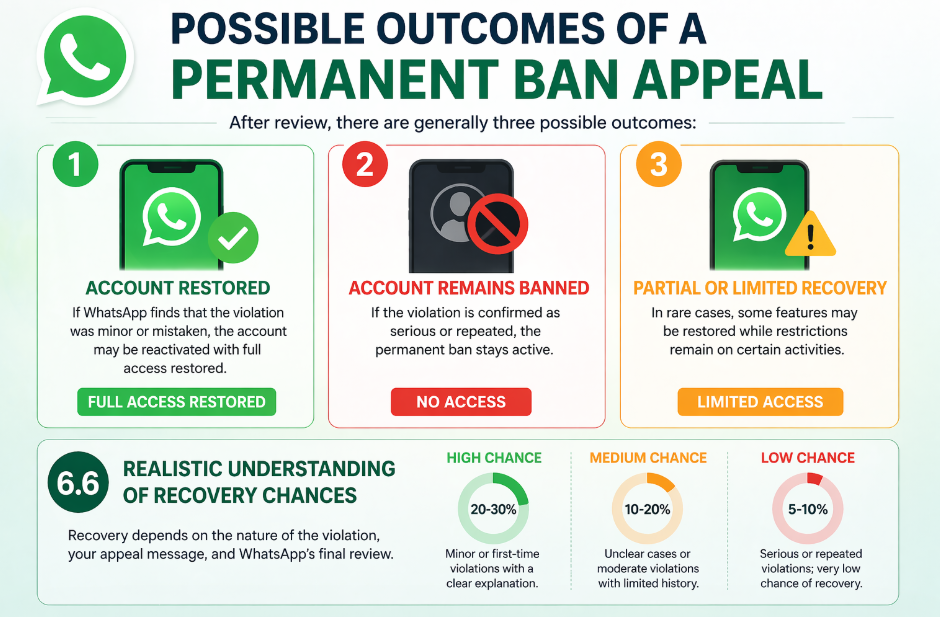
After review, there are generally three possible outcomes:
1. Account Restored
If WhatsApp finds that the violation was minor or mistaken, the account may be reactivated with full access restored.
2. Account Remains Banned
If the violation is confirmed as serious or repeated, the permanent ban stays active.
3. Partial or Limited Recovery
In rare cases, some features may be restored while restrictions remain on certain activities.
Read Also:- How to Earn Money from Pinterest in India for Students Without Investment (2026 Guide)
6.6 Realistic Understanding of Recovery Chances
It is important to understand that permanent bans are not easily reversed. WhatsApp applies strict security policies, and only a small percentage of cases are approved after review.
Factors that reduce recovery chances include:
- Use of unofficial applications
- Repeated spam or bulk messaging
- Multiple user reports
- Severe policy violations
Because of this, prevention is always more effective than recovery. Maintaining proper usage habits is the only long-term solution to avoid permanent account loss.
7. How to Prevent WhatsApp Account Ban or Restriction
Prevention is always better than recovery. Most account issues happen due to spam-like behavior or policy violations. By following proper usage habits, you can easily avoid restrictions.
7.1 Use Only Official WhatsApp
Always use the official WhatsApp application. Unofficial or modified apps can trigger security systems and lead to account issues.
7.2 Avoid Spam Messaging
Do not send repeated or unwanted messages to unknown users. Messaging without consent increases the risk of reports and restrictions.
7.3 Do Not Add Unknown Users to Groups
Only add people who agree to join. Adding unknown users often leads to complaints and account flags.
7.4 Avoid Bots and Automation Tools
Automation tools and bots are not allowed. They create unnatural activity patterns that can result in restrictions.
7.5 Respect Privacy and Consent
Only message users who have given permission. Respecting privacy is key to keeping your account safe.
7.6 Avoid Excessive Forwarding
Repeated forwarding of messages can look like spam behavior. Keep sharing limited and natural.
8. WhatsApp Account Ban or Restriction in Business Usage
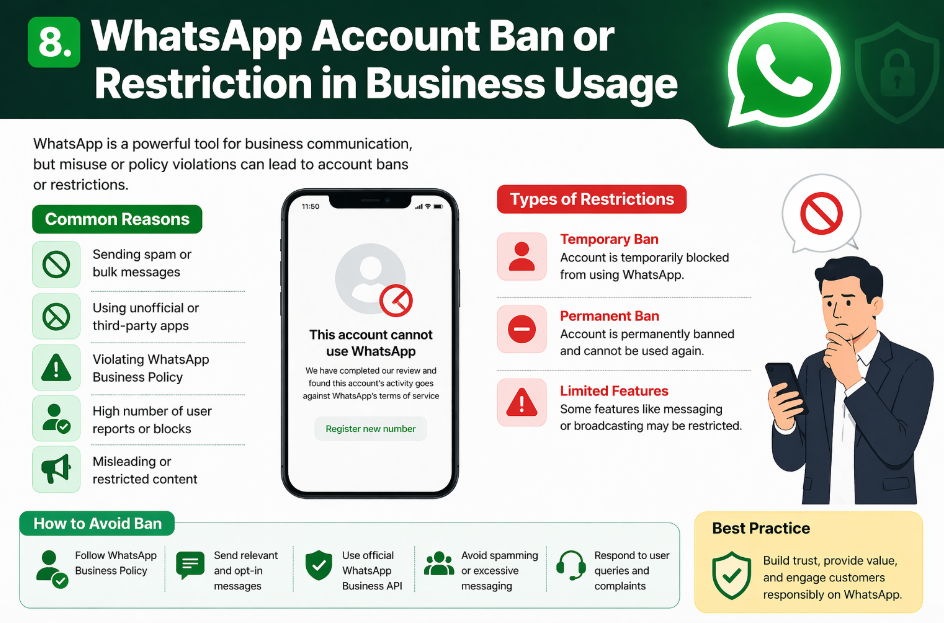
Business users face higher monitoring because of increased messaging activity. Misuse can quickly lead to account issues.
8.1 Common Mistakes
- Sending promotional messages without permission
- Using scraped or purchased contact lists
- Running bulk or automated campaigns
Read Also:- How to Make Money with Notion AI in 2026: Best Beginner Guide
8.2 Safe Business Practices
To stay safe:
- Use only opt-in contacts
- Follow WhatsApp Business policies
- Focus on personal and value-based communication
8.3 Key Insight
Businesses that respect user consent and avoid spam behavior are far less likely to face restrictions and can use WhatsApp safely for long-term growth.
9. Frequently Asked Questions
Why did my WhatsApp account get banned suddenly?
This usually happens due to spam activity, policy violation, or user reports.
Can WhatsApp Account Ban or Restriction be reversed?
Temporary bans can be reversed. Permanent bans are harder to recover.
How long does a WhatsApp restriction last?
It can last from a few hours to several days depending on severity.
Does WhatsApp warn before banning?
Not always. Some bans are immediate based on system detection.
Conclusion
WhatsApp Account Ban or Restriction is a serious issue that can affect personal and business communication. However, most cases happen due to policy violations, spam behavior, or unauthorized app usage. By understanding the reasons and following proper guidelines, users can easily avoid restrictions and maintain a safe WhatsApp experience.
Following ethical usage and official app guidelines is the best way to ensure your account remains active and secure without facing WhatsApp Account Ban or Restriction in the future.